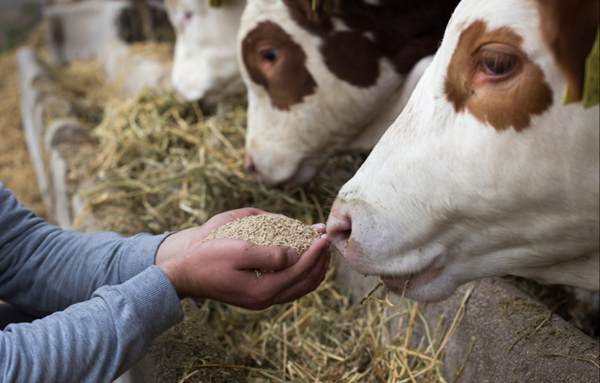
Animal Nutrition
Animal feed producers are under increasing pressure to do more with less, higher throughput, tighter quality control, fewer operators, and equipment that can adapt as product demands change. For more than 70 years, Symach and Thiele, among other BW Packaging brands, have helped animal nutrition facilities modernize their packaging operations with reliable, automated solutions built for today’s realities.
From bag filling and sealing to palletizing, conveying, labeling and more, our equipment supports some of the most demanding feed operations globally. Our animal nutrition packaging systems are designed to handle the full spectrum of feed applications, from dry and bulk products to specialized formulations. Whether you’re packaging livestock feed, horse feed, or small-animal feed, BW Packaging delivers integrated solutions that reduce downtime, improve pallet quality, and scale with your operation as production demands grow.
Explore by Equipment
Explore BW Packaging’s animal nutrition packaging equipment, including automated bag filling, sealing, conveying, labeling, and palletizing systems designed for high‑throughput feed operations. Built to handle a wide range of feed types and bag sizes, these integrated solutions help producers reduce downtime, improve pallet quality, and maintain consistent performance as production demands evolve.
Related Posts
 Palletizing in Harsh Environments: Dust, Moisture, and Temperature Considerations
July 13, 2026
<h2>The High Cost of Failure in Demanding Environments</h2><p>Unplanned downtime costs manufacturers over <a href="https://partners.wsj.com/emerson/unlocking-performance/how-manufacturers-can-achieve-top-quartile-performance/">$50 billion annually</a>. For food and beverage processors, a single hour of equipment failure can cost more than $100,000. Those numbers represent more than abstract statistics—they represent production schedules thrown into chaos, customer commitments missed, and profits evaporating while your team scrambles to get equipment back online.</p><p>Now consider where your palletizer operates. Not in a climate-controlled cleanroom, but in the real world of industrial manufacturing. Flour dust hangs in the air at your bakery. Caustic washdown chemicals spray across equipment at your dairy plant. Temperatures in your freezer warehouse hover at minus twenty degrees. Your production floor gets so humid in summer that condensation drips from every surface.</p><p>These are the environments where palletizers work—and where standard equipment often fails prematurely. The bearings seize from dust infiltration. Electronics short-circuit from moisture ingress. Components become brittle and crack in the cold. What was supposed to be a reliable workhorse becomes a source of constant headaches and emergency maintenance calls.</p><p>Here's what many equipment buyers learn the hard way: the initial purchase price of a palletizer matters far less than whether it can survive your actual operating conditions. A machine that costs less upfront but fails repeatedly in your harsh environment will cost you far more in downtime, repairs, and frustration than purpose-built equipment designed for the challenges you face.</p><p>At BW Packaging, we learned palletizing in the real world: onions and potatoes, where soil, skins, and debris don’t politely stay off your equipment. That’s why SYMACH palletizers are built around an open‑frame design: instead of trapping dust and buildup, debris falls through, surfaces stay accessible, and teams can spot issues early. This design philosophy came directly from our agricultural install base—potatoes, onions, carrots—where conditions are anything but ideal.</p><p>And because “dirty” doesn’t always mean “hard to clean,” we’ve extended that thinking into Stage 1 Clean Design, engineered specifically to reduce accumulation points and make cleaning faster in dusty environments—helping equipment stay in proper operating condition despite constant debris.</p><div align="center"></div><h2>Who We Are</h2><p>BW Packaging helps manufacturers across agriculture, pet food, industrial, and bulk ingredients sectors transform their end-of-line operations through flexible bag filling, sealing, and palletizing solutions. Our automated <a href="https://www.bwpackaging.com/products/flexible-bagging-wrapping/bag-filling">Thiele bagging</a>, <a href="https://www.bwpackaging.com/products/palletizing/bag-palletizers">SYMACH conventional palletizing</a>, and <a href="https://www.bwintegratedsystems.com/products/palletizing"></a><a href="https://www.bwpackaging.com/products/palletizing/case-tray-bulk-package-palletizers">robotic palletizing </a>solutions are known for their efficiency, versatility, precision, and ease of operation. We offer our clients training, service, and a lifetime of support for every solution sold.</p><div align="center"></div><h2>The Triple Threat: Understanding Your Harsh Environment Challenges</h2><p>Before you can solve harsh environment challenges, you need to understand exactly what you're dealing with. Most facilities face one or more of three primary environmental stressors—and many face all three simultaneously.</p><h3>The Dust Dilemma: Abrasive and Combustible Particles</h3><p>Walk through a feed mill, fertilizer plant, or flour processing facility and you'll understand immediately why dust is enemy number one for palletizing equipment. Fine particles are everywhere—suspended in the air, settling on every surface, working their way into every gap and crevice.</p><p>That dust doesn't just make equipment dirty. It actively destroys components.</p><p>Abrasive particles infiltrate bearings and accelerate wear. Sensors become coated and lose accuracy. Electrical cabinets fill with conductive dust that causes short circuits. In some facilities—where the dust comes from flour, grain, sugar, or certain chemicals—there's also the risk of combustible dust explosions if concentrations reach dangerous levels.</p><p>The industries most affected include pet food manufacturing, agricultural products (fertilizer, grain, seed), chemical processing, and any facility handling bulk powders or granular materials. If your operators wear dust masks, your palletizer is breathing the same air—and suffering for it.</p><h3>The Moisture Menace: Washdowns, Humidity, and Corrosive Agents</h3><p>Food safety regulations have transformed manufacturing facilities. Regular washdowns with high-pressure hot water and caustic cleaning chemicals are now standard practice in dairy, meat, produce, and beverage operations. That's great for food safety. It's brutal on equipment that wasn't designed for it.</p><p>Water finds its way into electrical enclosures, shorting circuits and corroding connections. Caustic cleaning agents attack standard steel, causing corrosion that weakens structures and creates harborage points for bacteria. High humidity creates condensation on cool surfaces—including electronics that really shouldn't get wet.</p><p>The consequences extend beyond equipment damage. Corroded equipment with pitting and crevices can harbor bacteria, creating the food safety risks that washdowns were supposed to prevent. Equipment that can't withstand your sanitation protocols becomes a compliance liability.</p><p>This challenge hits hardest in dairy processing, fresh produce packing, meat processing, bakeries, and beverage facilities—anywhere that strict sanitation standards meet aggressive cleaning regimens.</p><h3>The Temperature Test: Extreme Cold and High Heat</h3><p>Temperature extremes create problems that standard equipment simply isn't built to handle. And as cold chain logistics continues growing (the global cold chain market is expected to reach $628 billion by 2030), more palletizing operations are moving into freezer environments.</p><p>In cold storage facilities operating at -20°F or below, standard steel becomes brittle and prone to cracking. Lubricants thicken until they barely flow, starving bearings and gears. Condensation forms when equipment moves between temperature zones, coating electronics with moisture that freezes, thaws, and freezes again. Seals and gaskets lose flexibility and fail to maintain proper protection.</p><p>High-temperature environments create opposite but equally damaging effects. Electronics overheat and fail. Components expand at different rates, throwing off precision alignments. Motors work harder to overcome increased resistance, shortening their lifespan.</p><p>Frozen food processing, cold storage warehousing, food distribution centers, and certain high-temperature manufacturing environments all face these challenges. If your team needs special clothing to work in the production area, your equipment needs special engineering too.</p><div align="center"></div><h2>Engineering for Resilience: Key Features of a Harsh-Environment Palletizer</h2><p>Understanding the challenges is the first step. The second is knowing what engineering solutions actually work. Purpose-built harsh environment our conventional and robotic palletizers incorporate specific features designed to resist dust, moisture, and temperature extremes.</p><h3>Built to Resist: Superior Materials and Construction</h3><p>Material selection determines how long equipment survives in corrosive, abrasive, or extreme temperature environments. The difference between standard construction and purpose-built durability starts here.</p><p><strong>Stainless steel construction</strong> provides the foundation for equipment that needs to withstand washdowns and corrosive environments. Unlike painted mild steel that chips and corrodes, stainless steel maintains its integrity under repeated exposure to moisture and cleaning chemicals. For food applications, it's often non-negotiable—75% of food manufacturers cite hygienic design as critical or very important when selecting equipment, according to PMMI.</p><p><strong>Hygienic design principles</strong> go beyond material selection to address how equipment is constructed. Sloped surfaces prevent water from pooling. Welded seams eliminate the crevices where bacteria can hide. Minimal flat surfaces reduce accumulation points. Open-frame designs—a hallmark of SYMACH palletizers—prevent dust and debris from accumulating in hidden cavities and make cleaning faster and more effective.</p><p><strong>Robust frame construction</strong> ensures equipment can withstand the mechanical stresses of thermal cycling without losing precision or structural integrity. When temperatures swing between ambient loading docks and freezer storage, lesser equipment warps and fails. Properly engineered frames maintain their geometry across the operating range.</p><h3>Sealed for Survival: Ingress Protection Ratings</h3><p>Ingress Protection (IP) and NEMA ratings tell you exactly how well enclosures protect sensitive components from dust and water. These aren't marketing terms—they're standardized specifications that predict real-world performance.</p><p><strong>Understanding the ratings:</strong></p><ul><li><strong>IP65</strong> indicates complete protection against dust ingress and protection against water jets from any direction. Suitable for dusty environments and light washdown.<br><br></li><li><strong>IP67</strong> adds protection against temporary immersion in water—important for equipment that might be directly sprayed during cleaning.<br><br></li><li><strong>IP69K</strong> provides protection against high-pressure, high-temperature washdowns—the gold standard for equipment in sanitary food processing environments.<br><br></li><li><strong>NEMA 4X</strong> enclosures resist corrosion in addition to providing dust and water protection, making them ideal for facilities using caustic cleaning agents.<br><br></li></ul><p>These ratings apply to electrical enclosures, motors, sensors, and other components that contain electronics or precision mechanisms. When evaluating equipment for harsh environments, ask specifically about IP/NEMA ratings—and verify that the entire system is protected, not just selected components.</p><h3>Climate-Proof Components and Specialization</h3><p>Beyond basic dust and water resistance, equipment destined for temperature extremes requires specialized components throughout.</p><p><strong>Freezer-grade packages</strong> for cold storage applications include low-temperature rated steel that maintains ductility at -20°F and below, specialized lubricants that maintain proper viscosity in extreme cold, heated control cabinets that prevent condensation on electronics, and cold-resistant wiring and seals that remain flexible rather than becoming brittle.</p><p><strong>Climate-controlled enclosures</strong> protect main electrical cabinets in both hot and cold environments. Integrated heaters prevent condensation in freezers while vortex coolers or air conditioning systems prevent overheating in high-temperature facilities. PLCs and drives operate best within a specific temperature range—maintaining that range regardless of ambient conditions is critical for reliability.</p><p><strong>Specialized safety components</strong> address the risks of combustible dust environments. ATEX or Class/Division certified electrical components prevent ignition sources in facilities where dust concentrations could create explosion hazards. These certifications aren't optional in applicable environments—they're required for safe operation.</p><div align="center"></div><h2>How BW Packaging Delivers: SYMACH and Thiele Solutions</h2><p>Engineering principles matter, but what matters more is how those principles translate into actual equipment you can buy and install. SYMACH palletizers incorporate harsh-environment features that address the real-world challenges our customers face.</p><p><strong>Open-frame design</strong> is a defining characteristic of <a href="https://www.bwpackaging.com/products/palletizing/bag-palletizers">SYMACH palletizers</a>. Unlike enclosed designs that trap dust and make cleaning difficult, open frames allow debris to fall through rather than accumulate. Cleaning crews can access all surfaces quickly. Maintenance technicians can see potential problems before they become failures. This design philosophy emerged directly from our experience palletizing agricultural products—potatoes, onions, carrots—where soil and debris are constant challenges.</p><p><strong>Clean design philosophy</strong> has led to our latest stage 1 clean design model, which specifically addresses the cleaning challenges in dusty and dirty environments. By eliminating dust accumulation points and facilitating easier sanitation, this approach reduces cleaning time and ensures equipment remains in proper operating condition despite challenging conditions.</p><p><strong>Material options</strong> allow customers to specify construction appropriate for their environment. Stainless steel frames and components are available for food and corrosive applications. Sealed bearings and enclosed motors protect against dust infiltration. Control cabinet specifications can be tailored to meet washdown requirements or temperature extremes.</p><p><strong>Proven performance</strong> across industries demonstrates that these aren't theoretical capabilities. SYMACH palletizers operate successfully in pet food facilities filled with dust, in dairy plants subject to daily washdowns, in fertilizer plants where corrosive chemicals are everywhere, and in freezer warehouses where temperatures never rise above zero. That breadth of application comes from decades of experience solving real problems for real customers.</p><p>The<a href="https://www.bwflexiblesystems.com/products/symach-palletizers/symach-3500s-palletizer"> </a><a href="https://www.bwpackaging.com/products/palletizing/bag-palletizers/symach-3500s-palletizer">3500S palletizer </a>exemplifies this clean design approach with its next-generation architecture specifically designed to minimize maintenance requirements and maximize cleanability. The<a href="https://www.bwflexiblesystems.com/products/symach-palletizers/mach-series-palletizers"> </a><a href="https://www.bwpackaging.com/products/palletizing/bag-palletizers/mach-series-palletizers">MACH series </a>offers flexibility across product types while maintaining the robust construction that harsh environments demand.</p><div align="center"></div><h3>Beyond the Machine: A Partnership for Long-Term Success</h3><p>Selecting the right equipment is essential—but equipment alone doesn't guarantee success in harsh environments. The relationship between equipment supplier and customer matters just as much over the long term.</p><h2>Total Cost of Ownership: The True Measure of Value</h2><p>BW Packaging positions ourselves as a premium provider, and that positioning is deliberate. We focus on Total Cost of Ownership rather than initial purchase price because we've seen too many customers learn expensive lessons from cheaper equipment that couldn't survive their environment.</p><p>Consider the math. A palletizer that costs 20% less upfront but requires twice as many repairs, experiences three times the downtime, and needs replacement five years sooner isn't actually cheaper. It's dramatically more expensive when you account for maintenance costs, production losses, and replacement capital.</p><p>Durable, specialized equipment designed for harsh environments delivers lower TCO through reduced maintenance requirements, fewer unplanned breakdowns, longer service life, and more consistent production output. The premium you pay upfront returns to you many times over across the equipment lifecycle.</p><h3>Lifetime Support and Technical Expertise</h3><p>Operating equipment in harsh environments creates ongoing needs that extend far beyond the initial purchase. Components wear differently in dusty, wet, or cold conditions. Maintenance schedules need adjustment for actual operating realities. Problems arise that require expert diagnosis.</p><p>BW Packaging' commitment to lifetime equipment support addresses these realities. Our<a href="https://www.bwflexiblesystems.com/customer-services/service"> service teams</a> understand harsh environment challenges because they work with customers facing them every day. Our<a href="https://www.bwflexiblesystems.com/customer-services/parts"> parts organization</a> stocks the specialized components that harsh environment equipment requires. Our<a href="https://www.bwflexiblesystems.com/customer-services/training"> training programs</a> equip your team to maintain equipment properly despite challenging conditions.</p><p>This isn't about selling additional services—it's about ensuring that your equipment investment delivers the performance and longevity you expect. Equipment operating in harsh environments needs a partner who understands those environments and provides appropriate support throughout the equipment lifecycle.</p><h3>Customization for Your Specific Challenges</h3><p>No two facilities are identical, and cookie-cutter solutions often fail in challenging environments. The specific combination of dust types, moisture exposure, temperature ranges, and production requirements in your facility may not match anyone else's exactly.</p><p>BW Packaging' approach emphasizes customization to specific needs. Our engineering teams work with customers to understand their unique challenges and configure solutions accordingly. That might mean specifying particular IP ratings for your washdown requirements, selecting materials appropriate for your corrosive environment, or designing control cabinet protection for your temperature extremes.</p><p>This customization capability—backed by deep knowledge across diverse applications—ensures that the equipment you receive is engineered for your environment, not just for generic industrial conditions.</p><div align="center"></div><h2>Don't Let Your Environment Dictate Your Uptime</h2><p>Dust fills the air in your facility. Washdown chemicals spray across equipment daily. Temperatures swing from ambient to freezing. These are the realities of industrial manufacturing—and they're not going to change.</p><p>What can change is whether your palletizing equipment is built to handle those realities or destined to fail because of them. The choice between standard equipment and purpose-built harsh environment solutions determines whether your end-of-line operations become a reliable asset or a constant source of problems.</p><p>Investing in the right palletizing technology is an investment in operational reliability, food safety compliance, worker safety, and long-term profitability. The equipment that survives your environment year after year costs far less than the equipment you have to repair, work around, and eventually replace.</p><p>Is your palletizer built to withstand your environment?<a href="https://www.bwflexiblesystems.com/our-company/contact"> </a><a href="/contact">Contact the experts at BW Packaging </a>to discuss a solution engineered for your unique challenges. Whether you're dealing with dust, moisture, temperature extremes, or all three, our SYMACH and Thiele palletizers are designed to ensure your production runs smoothly—no matter the conditions.</p><div><div><div id="_com_3"><p></p></div></div></div><h2></h2>
 The Hidden Costs of a Bad Pallet
May 4, 2026
<h2><strong>The Perfect Pallet: Built for the Automated Warehouse</strong></h2><p>What's changed isn't your product, it's the environment your pallets are entering.</p><p>More and more customers are moving toward highly automated warehouses equipped with AS/RS systems, robotic pallet handling, automated depalletizing, and zero tolerance for instability or variation. In these environments, there is no forklift operator compensating for a soft corner or a slightly uneven layer. Every movement is programmed. Every handoff is precise. The system assumes one thing: every pallet is perfect.</p><p>If a load shifts, overhangs, or deviates even slightly from specification, the automation doesn't adapt, it stops. What might pass in a manual operation becomes a rejection in an automated one: delayed shipments, rework, and added cost.</p><p>As automated warehousing becomes the standard, pallet quality is emerging as a critical success factor. Variability that once went unnoticed now directly impacts throughput, warehouse acceptance, and customer satisfaction. Pallet pattern optimization is no longer optional, it's the foundation for building stable, dimensionally consistent, automation-ready loads that move seamlessly through today's most demanding distribution environments.</p><h2>Who We Are</h2><p>BW Packaging helps manufacturers across agriculture, pet food, industrial, and bulk ingredients sectors transform their end-of-line operations through flexible bag filling, sealing, and palletizing solutions. Our automated <a href="https://www.bwpackaging.com/products/palletizing/bag-palletizers">SYMACH conventional palletizing</a>, and <a href="https://www.bwpackaging.com/products/palletizing/case-tray-bulk-package-palletizers">robotic palletizing</a> solutions are known for their efficiency, versatility, precision, and ease of operation. We offer our clients training, service, and a lifetime of support for every solution sold.</p><h2>What is Pallet Overhang (And Why Is It Costing You Money)?</h2><p>Pallet overhang occurs when products extend beyond the edge of the pallet footprint. You might see bags or cases hanging over by just an inch or two and think it's not a big deal. But that small overhang creates a cascade of expensive problems.</p><p>Products extending beyond the pallet edge are highly susceptible to compression damage. When pallets are stacked in a warehouse or truck, the weight doesn't rest on the pallet deck, it rests on your product. That overhang gets crushed, compressed, and damaged before it ever reaches your customer. During transit, those exposed edges are vulnerable to punctures and impacts from other pallets, warehouse equipment, and handling.</p><p>The flip side - underhang - creates its own problems. When products are placed too far inside the pallet edge, you're wasting valuable space and creating instability. The load becomes unbalanced and is more likely to shift during transport.</p><p>Here's where it gets expensive. Many distribution centers now use automated storage and retrieval systems (AS/RS) that require precise pallet dimensions. A load with overhang won't fit properly and will be automatically rejected. Your shipment goes back, your customer waits, and you absorb the cost of rework.</p><p>Industry research shows that up to 11% of products arriving at distribution centers have some level of damage, according to <a href="https://www.packagingdigest.com/trends-issues/mitigating-packaging-damage-in-the-supply-chain" data-sf-ec-immutable="">Packaging Digest,</a> with a significant portion attributed to poor palletizing and transit-related issues. In the CPG and grocery sectors alone, damaged goods result in an estimated $1 billion to $2 billion in annual losses in the U.S. That's money coming directly out of manufacturers' margins, and much of it is preventable.</p><h2>The Pillars of an Optimized Pallet Pattern</h2><p>Getting palletization right requires balancing three interconnected factors: stability, density, and integrity. Each one impacts the others, and all three affect your costs.</p><h3>Stability: The Foundation of Safe Shipping</h3><p>The way you arrange products on a pallet determines whether that load arrives intact or becomes a mess in the back of a truck. There are two primary stacking approaches and understanding when to use each is critical.</p><p>Columnar stacking places products directly on top of each other in vertical columns. This approach offers excellent compression strength because the weight transfers straight down through aligned units. However, it provides poor lateral stability, meaning loads can topple sideways if they shift during transit.</p><p>Interlocking patterns rotate product orientation between layers, so units overlap, creating a unified block that resists lateral movement. This approach sacrifices some compression strength but dramatically improves stability during handling and transport.</p><p>For most applications, interlocking patterns deliver superior results. Our experience with agricultural products, pet food, and industrial materials has taught us that this stacking method guarantees the best stability for challenging products like filled bags that can shift and settle.</p><h3>Density: Maximizing Every Shipment</h3><p>Cube utilization—how efficiently you fill available space—directly impacts your shipping costs. Every inch of wasted space on a pallet translates to more pallets shipped, more trucks on the road, and higher freight expenses.</p><p>Optimizing pallet density means calculating the ideal arrangement to achieve the highest product count per pallet while respecting weight limits and stability requirements. When done correctly, companies can improve truckload space utilization by 5-10%, directly reducing fuel consumption and freight costs. For a facility shipping thousands of pallets annually, those percentage points translate into substantial savings.</p><h3>Integrity: Protecting Products from Bottom to Top</h3><p>A proper pallet pattern maintains the structural integrity of every unit in the stack. Products at the bottom bear the weight of everything above them, and a poorly designed pattern can crush lower layers while leaving space wasted at the top.</p><p>Pattern optimization considers product characteristics—bag stiffness, settling behavior, surface friction—to distribute weight appropriately and prevent damage at every level. This is especially critical for products like pet food or agricultural commodities where bag contents can shift during handling.</p><h2>From Manual Chaos to Automated Consistency: Solving the Optimization Puzzle</h2><p>If you're still relying on manual pallet stacking, you're fighting an uphill battle. Human error introduces inconsistency into every load—varying techniques between operators, fatigue-related mistakes during long shifts, and the simple reality that people can't maintain machine-level precision over thousands of repetitions.</p><p>Traditional slide valve systems or conventional grippers can stack inaccurately and damage packaging. You might achieve a good pattern on one pallet and find the next one off by inches. That inconsistency creates quality issues, rework, and customer complaints that are impossible to eliminate through training alone.</p><p>Automated palletizing solves this problem at its root. Modern systems execute patterns with precision every single time, eliminating the variability that causes problems downstream. For operations requiring maximum pallet pattern flexibility, robotic palletizers provide virtually unlimited pattern combinations and rapid changeovers—particularly for case‑packed products.</p><h2>What Makes SYMACH Palletizers Different</h2><p>Not all automated palletizers are created equal. SYMACH solutions incorporate unique features specifically designed to address the challenges of pallet pattern optimization.</p><p><strong>Product-Friendly Handling with the Manipulator: </strong>A unique and important feature of SYMACH palletizers is the manipulator, which handles each bag individually. Unlike systems that drop or slide products into position, bags glide horizontally into the manipulator over a smooth surface. Once inside, bags are stopped by a fixed final partition and carefully centered. The position is secured before the bag is released exactly over the programmed position. This method enables precise stacking with overlaps while protecting product and packaging integrity.</p><p><strong>The Stacking Cage: Eliminating Overhang at the Source: </strong>The optional stacking cage is a SYMACH innovation that prevents overlapping stacked bags from gliding on one another and causing the load to extend beyond the pallet. By completely enclosing bags when stacking them onto the pallet, bag gliding is prevented. The load maintains the desired measurements and has a tight, professional appearance that meets AS/RS requirements and impresses customers.</p><p><strong>Intuitive Software for Fast Changeovers: </strong>SYMACH palletizers feature user-friendly software with intuitive drag-and-drop operation. Operators can create and switch patterns for different SKUs quickly—critical for facilities managing multiple products. The system stores up to 250 programs and 350 sack configurations, enabling rapid changeovers without reprogramming.</p><p><strong>Flexibility Across Product Types: </strong>The Symach philosophy is that any palletizer should be capable of producing the same level of stacking quality, regardless of speed. Unlike other palletizer systems, SYMACH will stack any bag, regardless of type. Whether you're handling pet food, onions, carrots, potatoes, grass seed, cartons, or bakery products, the system adapts without compromising quality.</p><p>For high-speed applications, the <a href="https://www.bwpackaging.com/products/palletizing/bag-palletizers/mach-series-palletizers">MACH series with Rotax technology</a> achieves speeds of up to 50 bags per minute without compromising stacking quality. The Rotax technology enables bags to be positioned quickly and accurately, resulting in stable pallets without overhang.</p><p>For facilities with space constraints or those primarily handling boxes and crates, the <a href="https://www.bwpackaging.com/products/palletizing/bag-palletizers/symach-3500s-palletizer">3500S palletizer</a> combines a compact footprint with the stacking cage technology to ensure tight, stable stacks even at higher speeds.</p><h2>The ROI of Getting It Right: Quantifying the Benefits</h2><p>When you move from manual or inconsistent palletizing to an optimized, automated approach, the benefits compound across your operation:</p><p><strong>Reduced Product Damage: </strong>Fewer unsaleable goods, improved customer satisfaction, and reduced returns. Every bag that arrives intact is revenue protected.</p><p><strong>Lower Shipping Costs: </strong>Maximize truckload capacity through optimized cube utilization, leading to fewer shipments and reduced freight expenses.</p><p><strong>Improved Warehouse Safety: </strong>Eliminate unstable loads and the risk of collapses. Protect your workers and avoid costly incidents.</p><p><strong>Enhanced Sustainability: </strong>Reduce product waste from damage and decrease your carbon footprint through optimized transportation. Fewer trucks, less fuel, smaller environmental impact.</p><p><strong>Increased Throughput: </strong>Automate what's often a manual bottleneck at the end of the line. Companies that implement automated palletizing can see a 10-15% reduction in packaging material costs due to more stable, uniform loads, and can increase end-of-line throughput by over 25%.</p><p><strong>Material Savings: </strong>Stable, uniform loads require less stretch wrap to secure. Those material savings add up across thousands of pallets.</p><h2>Build a Better Pallet, Build a Better Bottom Line</h2><p>A well-built, optimized pallet is more than just the last step in your production process, it's a competitive advantage that impacts profitability with every shipment. The pallet that arrives at your customer's dock is often the first physical impression they have of your operation. A tight, stable, professional-looking load communicates quality. A shifted, damaged mess communicates the opposite.</p><p>Moving from manual methods to an automated, optimized approach isn't just about preventing problems. It's about transforming the end of your line from a potential liability into a calling card you can be proud of.</p><p>The technology exists today to solve pallet pattern challenges at their root—with precision, consistency, and features like the stacking cage and product-friendly manipulator that address the specific problems manufacturers face. The question isn't whether you can afford to upgrade your palletizing operation. It's whether you can afford not to.</p><p>Ready to see how an optimized pallet pattern can transform your end-of-line efficiency and reduce costs? <a href="/contact">Contact BW Packaging </a>to learn more about our integrated palletizing solutions and how they can benefit your operation.</p>
 Palletizer Uptime Optimization: A Practical Guide to Preventive Maintenance Schedules
June 22, 2026
<h2>The High Cost of a Single Stop</h2><p>Oxmaint cite $50,000–$300,000 per hour for unplanned downtime in a food and beverage plant (<a href="https://oxmaint.com/blog/post/food-manufacturing-maintenance-complete-guide" data-sf-ec-immutable="">Oxmaint, 2025</a>). Lost production, labor, scrap, and downstream penalties are costly and preventable.</p><p>Now consider that your palletizer sits at the end of your packaging line. When it stops, everything upstream grinds to a halt. Your bag fillers keep running until conveyors back up. Your production team stands around waiting. Product sits in hoppers getting stale or clumping. And every minute that ticks by, you're falling further behind on customer orders.</p><p>If you've lived through an unexpected palletizer failure during a peak production window, you know exactly how painful this scenario is. The frantic calls to find parts. The pressure from sales asking when shipments will go out. The overtime costs to catch up once you're back online. The damage to customer relationships when deliveries slip.</p><p>Here's the reality: most of those emergency stops are preventable. Not with hope or luck, but with a structured preventive maintenance program that catches problems before they become failures. Companies that implement effective preventative maintenance (PM) programs see equipment breakdowns reduced and ROI increased.</p><p>This guide will show you how to build a palletizer maintenance schedule that maximizes uptime, protects product quality, and keeps your end-of-line operations running smoothly.</p><h3>Who We Are</h3><p>BW Packaging helps manufacturers across agriculture, pet food, industrial, and bulk ingredients sectors transform their end-of-line operations through flexible bag filling, sealing, and palletizing solutions. Our automated <a href="https://www.bwpackaging.com/products/flexible-bagging-wrapping/bag-filling">Thiele bagging</a>, <a href="https://www.bwpackaging.com/products/palletizing/bag-palletizers">SYMACH conventional palletizing</a>, and <a href="https://www.bwpackaging.com/products/palletizing/case-tray-bulk-package-palletizers">robotic palletizing</a> solutions are known for their efficiency, versatility, precision, and ease of operation. We offer our clients training, service, and a lifetime of support for every solution sold.</p><h2>The Foundation: Building Your Palletizer Preventative Maintenance Schedule</h2><p>Effective preventive maintenance (PM) isn't about doing more work—it's about doing the right work at the right time. A tiered approach distributes tasks appropriately between operators, technicians, and OEM specialists, ensuring nothing falls through the cracks while keeping your team focused on production.</p><h3>Daily Operator Checks: The First Line of Defense</h3><h3></h3><p>Your operators interact with the palletizer every shift. They're the first to notice when something doesn't look, sound, or feel right. Empowering them with a simple daily checklist transforms them from equipment users into your early warning system.</p><h4>Start-of-shift inspection checklist:</h4><h4></h4><ul><li><strong>Visual scan for debris and obstructions.</strong> Check the infeed area, layer forming zone, and pallet discharge for anything that doesn't belong—product spillage, broken pallets, foreign objects, accumulated dust</li><li><strong>Listen for unusual noises.</strong> Before production ramps up, run the machine briefly and listen. Grinding, squealing, clicking, or any sound that wasn't there yesterday deserves attention.</li><li><strong>Confirm safety guards are in place and secure.</strong> Every guard, every interlock, every time. No exceptions.</li><li><strong>Check for obvious leaks.</strong> Look for pneumatic air leaks (listen for hissing), hydraulic fluid on the floor, or any sign of fluid where it shouldn't be.</li><li><strong>Verify basic functionality.</strong> Run through a few cycles before full production starts. Confirm the gripper opens and closes smoothly, conveyors run at proper speed, and sensors are responding correctly.<br></li></ul><p>This inspection takes five minutes. It catches problems when they're small annoyances, not production-stopping emergencies.</p><h2>Weekly and Monthly Technician Tasks</h2><p>Some maintenance tasks require more technical expertise and time than operators can provide during production. These checks dig deeper into the mechanical and electrical systems that keep your palletizer performing reliably.</p><h4>Weekly tasks:</h4><ul><li><strong>Lubrication of chains, bearings, and moving parts.</strong> Use the correct lubricant in the correct amount. Over-lubrication causes as many problems as under-lubrication.</li><li><strong>Inspection and adjustment of belt and chain tension.</strong> Loose belts slip and wear prematurely. Over-tensioned belts stress bearings and shorten component life.</li><li><strong>Cleaning and testing of sensors and photo-eyes.</strong> Dust, product residue, and film buildup cause false readings that lead to jams, misaligned layers, and rejected loads.</li><li><strong>Verification of pneumatic pressure levels.</strong> Confirm system pressure meets specifications. Pressure drops indicate leaks or compressor issues that will only get worse.</li></ul><h4>Monthly tasks:</h4><ul><li><strong>Detailed inspection of grippers, forks, or other end-of-arm tooling.</strong> Look for wear patterns, damaged surfaces, or any sign of fatigue. These components handle every product that moves through your system.</li><li><strong>Electrical connection inspection.</strong> Check for loose terminals, damaged cables, and signs of overheating at junction boxes and motor connections.</li><li><strong>Calibration verification.</strong> Confirm that positioning systems, sensors, and controls are still operating within specifications.</li><li><strong>Review of fault logs and error history.</strong> Patterns in error codes often reveal developing problems before they cause failures.</li></ul><h2>OEM Service Intervals: Applying Expertise Where It Matters Most</h2><p>Even the strongest in-house maintenance teams benefit from occasional outside perspective—not because routine work is being overlooked, but because certain insights only emerge over longer operating cycles and across many installations.</p><p>In practice, most well-run facilities already handle the majority of preventive maintenance tasks internally. OEM service delivers the greatest value when it focuses on areas where design knowledge, system authority, and low-frequency exposure make a meaningful difference to long-term performance.</p><h3>What OEM service is best suited to support:</h3><ul><li><strong>Restoring baseline performance –</strong> Over time, normal wear, process changes, and incremental adjustments can cause systems to drift from original operating intent. OEM technicians can help re-establish design baselines and confirm the machine is still performing within intended tolerances.</li><li><strong>Addressing complex or infrequent failure modes –</strong> Some issues don’t appear often—but when they do, they can be difficult to diagnose. OEM teams bring experience from across many installations, helping identify patterns that aren’t always visible within a single plant.</li><li><strong>Evaluating design-specific tolerances and wear limits – </strong>Certain components require assessment against original engineering assumptions rather than generic maintenance guidelines. OEM insight helps ensure adjustments and replacements are made at the right point—not too early, and not too late.</li><li><strong>Advising on controls and software decisions – </strong>OEMs are uniquely positioned to guide control-system changes, including firmware considerations, parameter optimization, and compatibility with current operating conditions. Updates are most effective when driven by a clear operational benefit, not simply version availability.</li><li><strong>Confirming system-level integration.</strong> – As upstream and downstream equipment evolves, periodic verification of timing, communication, and coordination helps prevent subtle inefficiencies from becoming recurring stoppages.</li></ul><p>Service timing should be driven by usage and risk—not the calendar. There is no single interval that applies universally across duty cycles, environments, or throughput levels. The most effective OEM involvement is planned around operational demands, focusing expertise where it adds the greatest return. When applied this way, OEM service complements internal maintenance programs rather than replacing them—strengthening reliability, extending equipment life, and supporting consistent end‑of‑line performance.</p><p>The technicians who build SYMACH palletizers understand these machines at a level that's difficult to replicate with general maintenance training. That expertise translates into equipment that runs better, lasts longer, and delivers more consistent performance.</p><h2>Common Palletizer Failure Points and How to Prevent Them</h2><p>Understanding where failures typically occur helps you focus preventive efforts where they'll have the greatest impact. These three areas account for the majority of palletizer downtime across industries.</p><h3>End-of-Arm Tooling and Grippers</h3><p>The gripper touches every product that moves through your palletizer. It's exposed to constant stress, product residue, and the cumulative wear of thousands of pick-and-place cycles every day.</p><h4>Common issues:</h4><ul><li><strong>Wear and tear on contact surfaces.</strong> Gripper pads, fingers, and vacuum cups degrade over time, reducing grip reliability.</li><li><strong>Calibration drift.</strong> Gradual changes in gripper position lead to misaligned placements and unstable loads.</li><li><strong>Sensor failures.</strong> Position sensors and presence detectors can fail or become misaligned, causing the gripper to operate without proper feedback.<br></li></ul><h4>Prevention strategies:</h4><ul><li>Include gripper inspection in daily operator checks. They'll notice when grip becomes inconsistent before sensors detect a problem.</li><li>Schedule monthly calibration verification. Small adjustments made regularly prevent the larger corrections that require extended downtime.</li><li>Stock critical gripper components. When a vacuum cup fails, you want the replacement in your storeroom, not on a truck somewhere.</li></ul><p>For SYMACH palletizers, bag handling is driven by a manipulator concept that supports and stabilizes the product throughout the palletizing motion, rather than relying on high contact forces at a single grip point. While this approach significantly reduces stress on the bag, it still depends on consistent sensor feedback, alignment, and mechanical condition to perform as designed. Regular inspection ensures the system continues to place bags with the same stability and repeatability it was engineered to deliver.</p><p>STACT robotic palletizers reduce certain mechanical failure modes by replacing fixed mechanical systems with programmable motion—often resulting in fewer wear components and simplified maintenance.</p><h3>Conveyor and Product Handling Systems</h3><p>Product jams are the most common cause of unplanned stops. They're also among the most preventable issues when conveyor and handling systems receive proper attention.</p><h4>Common issues:</h4><ul><li><strong>Jams at transitions.</strong> Products hang up where conveyors meet, where guides narrow, or where speed changes occur.</li><li><strong>Misaligned products.</strong> Cases or bags enter the palletizing area at wrong angles, causing placement errors or gripper issues.</li><li><strong>Faulty sensors.</strong> Dirty or misaligned photo-eyes cause the system to think products are present when they're not (or vice versa).</li></ul><h4>Prevention strategies:</h4><ul><li>Check alignment at all transition points weekly. Small adjustments prevent jams that damage products and stop production.</li><li>Clean sensors during every shift. A thirty-second wipe-down prevents ten-minute jam clearances.</li><li>Ensure smooth transitions between conveyors. Gaps, height differences, and speed mismatches create problems that compound over time.</li></ul><h3>Pallet Dispenser and Base</h3><h3></h3><p>The pallet dispenser seems straightforward—it just needs to deliver empty pallets to the stacking position. But problems here stop production just as effectively as problems anywhere else.</p><h4>Common issues:</h4><ul><li><strong>Pallet jams.</strong> Damaged or out-of-spec pallets get stuck in the dispenser, stopping the flow.</li><li><strong>Sensor errors.</strong> Dusty or misaligned sensors fail to detect pallets correctly, causing the system to attempt impossible operations.</li><li><strong>Wear on rotating components.</strong> Chains, rollers, and guides wear gradually until they no longer position pallets accurately.</li></ul><h4>Prevention strategies:</h4><ul><li>Inspect incoming pallets before loading the dispenser. Reject damaged or non-standard pallets before they cause problems.</li><li>Clean sensors weekly. Pallet wood dust and debris accumulate quickly in dispenser areas.</li><li>Lubricate chains and moving parts per manufacturer specifications. Proper lubrication extends component life dramatically.</li></ul><h2>Beyond the Checklist: Partnering for Peak Performance</h2><p>Maintenance schedules and checklists are essential—but they're not the complete picture. Achieving truly optimized uptime requires thinking about maintenance as a strategic partnership rather than just a series of tasks.</p><h3>The OEM Advantage</h3><p>When components wear out, you have choices about replacement parts. Genuine OEM parts cost more than generic alternatives. They're also engineered specifically for your equipment, manufactured to tighter tolerances, and tested for fit and performance.</p><p>The price difference often disappears when you factor in installation time, adjustment requirements, and expected service life. A gripper pad that costs twice as much but lasts three times as long is a better value. More importantly, it's more reliable—and reliability is what keeps your line running.</p><p>BW Packaging maintains comprehensive parts inventories and can expedite shipments when you need components fast. But the better approach is planning parts replacement before you're in emergency mode.</p><h3>Investing in Your Team</h3><p>Your maintenance technicians determine how effectively your PM program performs. Training isn't a nice-to-have—it's the difference between a team that catches problems early and one that chases breakdowns.</p><p>Professional <a href="/aftermarket-support/services/training"> training programs</a> provide your staff with the knowledge to perform routine maintenance correctly, recognize early warning signs of developing problems, and make minor adjustments without waiting for outside support. That capability translates directly into faster response times and reduced downtime.</p><p>Training also reduces turnover costs. Technicians who feel competent and valued stay longer. The knowledge they accumulate about your specific equipment and production requirements becomes an increasingly valuable asset over time.</p><h3>Future-Proofing with Smart Technology</h3><p>Modern palletizers increasingly incorporate IoT connectivity, data analytics, and predictive maintenance capabilities. These Industry 4.0 features move maintenance from scheduled intervals to condition-based decisions.</p><p>Instead of replacing a belt every six months whether it needs it or not, the system monitors belt tension and wear indicators continuously. When parameters drift outside acceptable ranges, it alerts your team—giving you time to plan the replacement at a convenient moment rather than reacting to a failure.</p><p>SYMACH palletizers offer remote access capabilities that allow BW Packaging technicians to diagnose issues, verify settings, and guide your team through adjustments without travel delays. When problems occur, resolution comes faster because expert support is immediately available.</p><h2>Comprehensive Support and Total Cost of Ownership</h2><p>Some facilities treat maintenance as a cost to be minimized. The smartest operations recognize that strategic maintenance investment reduces total cost of ownership across the equipment lifecycle.</p><p>BW Packaging's TCO Flex program exemplifies this approach. Rather than managing parts inventory, tracking replacement schedules, and coordinating service visits yourself, the program provides predictable maintenance costs and access to expert technicians who know your equipment. You get the benefits of comprehensive preventive maintenance without the administrative burden of managing it internally.</p><p>This isn't outsourcing maintenance—it's partnering with the people who designed and built your equipment to ensure it delivers maximum value over its entire service life.</p><h2>From Cost Center to Profit Driver</h2><p>Most facilities view maintenance as a necessary expense—something you have to do to keep equipment running. That perspective misses the strategic value of a well-executed preventive maintenance program.</p><p>Consider the math. Top-performing manufacturing plants consistently achieve Overall Equipment Effectiveness (OEE) scores of 85% or higher. Average plants run closer to 60%. That 25-point gap represents enormous differences in output, quality, and profitability—and maintenance practices are one of the primary drivers of improvement.</p><p>Every hour of uptime you recover through preventive maintenance is an hour of production you didn't have before. Every breakdown you prevent is an emergency you don't have to manage, overtime you don't have to pay, and customer disappointment you don't have to explain.</p><p>Proactive, structured preventive maintenance transforms your palletizer from a potential bottleneck into a reliable asset. It reduces total cost of ownership by extending equipment life and preventing expensive emergency repairs. It improves product quality by maintaining precise positioning and handling. And it protects your customer relationships by enabling consistent, on-time deliveries.</p><p>The question isn't whether you can afford to invest in preventive maintenance. It's whether you can afford the consequences of not doing so.</p><h2>Ready to Optimize Your Palletizer Uptime?</h2><p><strong></strong>Is your palletizing system delivering the uptime and reliability you need to meet production goals? Whether you're operating SYMACH or Thiele equipment—or considering an upgrade from your current system—the experts at BW Packaging can help you develop a maintenance strategy that maximizes performance and minimizes costly downtime.</p><p><a href="/contact">Contact us today</a> to learn more about our bag filling and palletizing solutions and comprehensive <a href="/aftermarket-support/services/field-service">aftermarket support programs</a> designed for optimal performance and longevity. From parts and service to training and TCO Flex programs, we provide the lifetime support that keeps your end-of-line operations running smoothly.</p>