The High Cost of Failure in Demanding Environments
Unplanned downtime costs manufacturers over $50 billion annually. For food and beverage processors, a single hour of equipment failure can cost more than $100,000. Those numbers represent more than abstract statistics—they represent production schedules thrown into chaos, customer commitments missed, and profits evaporating while your team scrambles to get equipment back online.
Now consider where your palletizer operates. Not in a climate-controlled cleanroom, but in the real world of industrial manufacturing. Flour dust hangs in the air at your bakery. Caustic washdown chemicals spray across equipment at your dairy plant. Temperatures in your freezer warehouse hover at minus twenty degrees. Your production floor gets so humid in summer that condensation drips from every surface.
These are the environments where palletizers work—and where standard equipment often fails prematurely. The bearings seize from dust infiltration. Electronics short-circuit from moisture ingress. Components become brittle and crack in the cold. What was supposed to be a reliable workhorse becomes a source of constant headaches and emergency maintenance calls.
Here's what many equipment buyers learn the hard way: the initial purchase price of a palletizer matters far less than whether it can survive your actual operating conditions. A machine that costs less upfront but fails repeatedly in your harsh environment will cost you far more in downtime, repairs, and frustration than purpose-built equipment designed for the challenges you face.
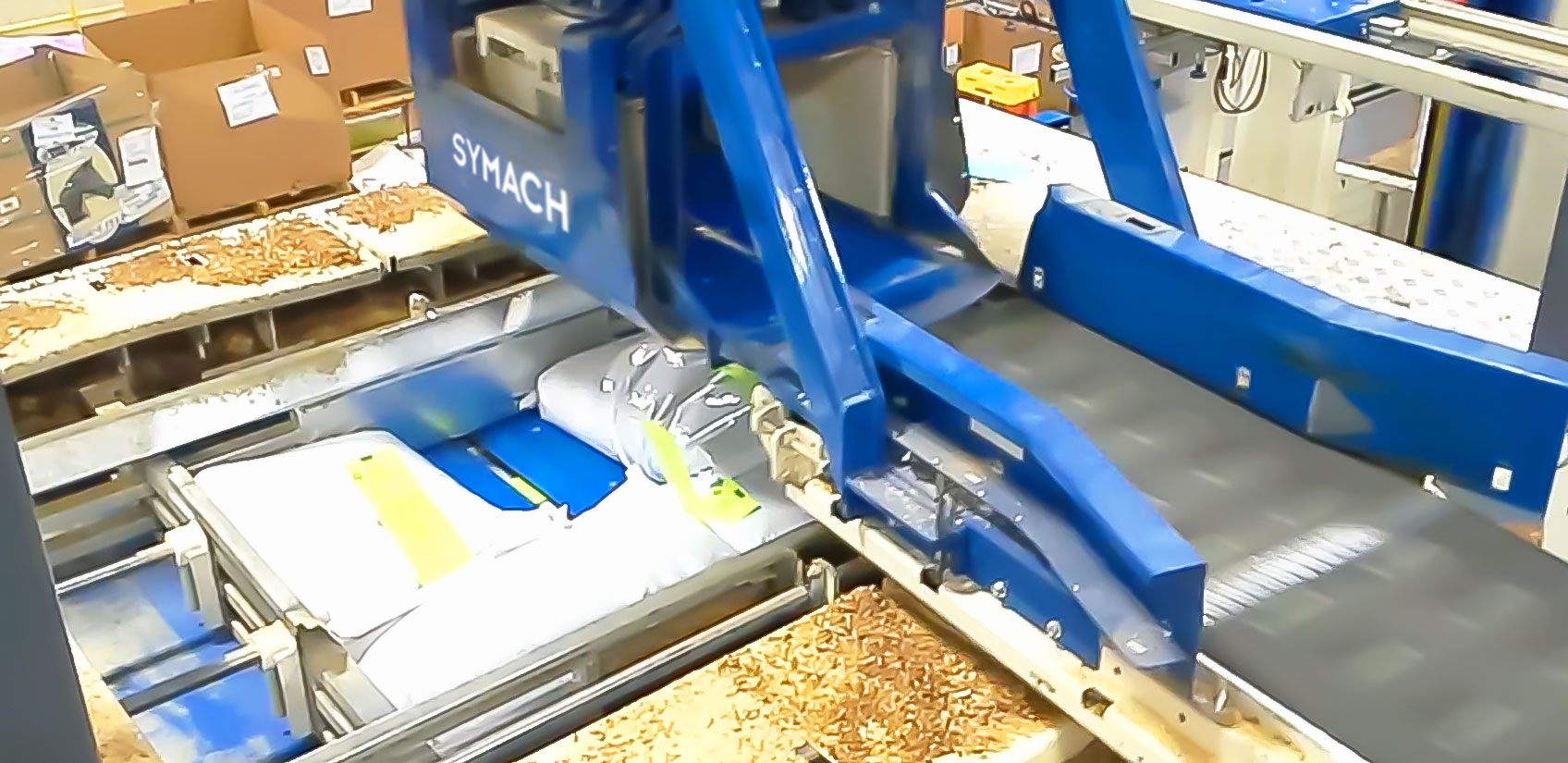
At BW Packaging, we learned palletizing in the real world: onions and potatoes, where soil, skins, and debris don’t politely stay off your equipment. That’s why SYMACH palletizers are built around an open‑frame design: instead of trapping dust and buildup, debris falls through, surfaces stay accessible, and teams can spot issues early. This design philosophy came directly from our agricultural install base—potatoes, onions, carrots—where conditions are anything but ideal.
And because “dirty” doesn’t always mean “hard to clean,” we’ve extended that thinking into Stage 1 Clean Design, engineered specifically to reduce accumulation points and make cleaning faster in dusty environments—helping equipment stay in proper operating condition despite constant debris.
Who We Are
BW Packaging helps manufacturers across agriculture, pet food, industrial, and bulk ingredients sectors transform their end-of-line operations through flexible bag filling, sealing, and palletizing solutions. Our automated Thiele bagging, SYMACH conventional palletizing, and robotic palletizing solutions are known for their efficiency, versatility, precision, and ease of operation. We offer our clients training, service, and a lifetime of support for every solution sold.
The Triple Threat: Understanding Your Harsh Environment Challenges
Before you can solve harsh environment challenges, you need to understand exactly what you're dealing with. Most facilities face one or more of three primary environmental stressors—and many face all three simultaneously.
The Dust Dilemma: Abrasive and Combustible Particles
Walk through a feed mill, fertilizer plant, or flour processing facility and you'll understand immediately why dust is enemy number one for palletizing equipment. Fine particles are everywhere—suspended in the air, settling on every surface, working their way into every gap and crevice.
That dust doesn't just make equipment dirty. It actively destroys components.
Abrasive particles infiltrate bearings and accelerate wear. Sensors become coated and lose accuracy. Electrical cabinets fill with conductive dust that causes short circuits. In some facilities—where the dust comes from flour, grain, sugar, or certain chemicals—there's also the risk of combustible dust explosions if concentrations reach dangerous levels.
The industries most affected include pet food manufacturing, agricultural products (fertilizer, grain, seed), chemical processing, and any facility handling bulk powders or granular materials. If your operators wear dust masks, your palletizer is breathing the same air—and suffering for it.
The Moisture Menace: Washdowns, Humidity, and Corrosive Agents
Food safety regulations have transformed manufacturing facilities. Regular washdowns with high-pressure hot water and caustic cleaning chemicals are now standard practice in dairy, meat, produce, and beverage operations. That's great for food safety. It's brutal on equipment that wasn't designed for it.
Water finds its way into electrical enclosures, shorting circuits and corroding connections. Caustic cleaning agents attack standard steel, causing corrosion that weakens structures and creates harborage points for bacteria. High humidity creates condensation on cool surfaces—including electronics that really shouldn't get wet.
The consequences extend beyond equipment damage. Corroded equipment with pitting and crevices can harbor bacteria, creating the food safety risks that washdowns were supposed to prevent. Equipment that can't withstand your sanitation protocols becomes a compliance liability.
This challenge hits hardest in dairy processing, fresh produce packing, meat processing, bakeries, and beverage facilities—anywhere that strict sanitation standards meet aggressive cleaning regimens.
The Temperature Test: Extreme Cold and High Heat
Temperature extremes create problems that standard equipment simply isn't built to handle. And as cold chain logistics continues growing (the global cold chain market is expected to reach $628 billion by 2030), more palletizing operations are moving into freezer environments.
In cold storage facilities operating at -20°F or below, standard steel becomes brittle and prone to cracking. Lubricants thicken until they barely flow, starving bearings and gears. Condensation forms when equipment moves between temperature zones, coating electronics with moisture that freezes, thaws, and freezes again. Seals and gaskets lose flexibility and fail to maintain proper protection.
High-temperature environments create opposite but equally damaging effects. Electronics overheat and fail. Components expand at different rates, throwing off precision alignments. Motors work harder to overcome increased resistance, shortening their lifespan.
Frozen food processing, cold storage warehousing, food distribution centers, and certain high-temperature manufacturing environments all face these challenges. If your team needs special clothing to work in the production area, your equipment needs special engineering too.
Engineering for Resilience: Key Features of a Harsh-Environment Palletizer
Understanding the challenges is the first step. The second is knowing what engineering solutions actually work. Purpose-built harsh environment our conventional and robotic palletizers incorporate specific features designed to resist dust, moisture, and temperature extremes.
Built to Resist: Superior Materials and Construction
Material selection determines how long equipment survives in corrosive, abrasive, or extreme temperature environments. The difference between standard construction and purpose-built durability starts here.
Stainless steel construction provides the foundation for equipment that needs to withstand washdowns and corrosive environments. Unlike painted mild steel that chips and corrodes, stainless steel maintains its integrity under repeated exposure to moisture and cleaning chemicals. For food applications, it's often non-negotiable—75% of food manufacturers cite hygienic design as critical or very important when selecting equipment, according to PMMI.
Hygienic design principles go beyond material selection to address how equipment is constructed. Sloped surfaces prevent water from pooling. Welded seams eliminate the crevices where bacteria can hide. Minimal flat surfaces reduce accumulation points. Open-frame designs—a hallmark of SYMACH palletizers—prevent dust and debris from accumulating in hidden cavities and make cleaning faster and more effective.
Robust frame construction ensures equipment can withstand the mechanical stresses of thermal cycling without losing precision or structural integrity. When temperatures swing between ambient loading docks and freezer storage, lesser equipment warps and fails. Properly engineered frames maintain their geometry across the operating range.
Sealed for Survival: Ingress Protection Ratings
Ingress Protection (IP) and NEMA ratings tell you exactly how well enclosures protect sensitive components from dust and water. These aren't marketing terms—they're standardized specifications that predict real-world performance.
Understanding the ratings:
- IP65 indicates complete protection against dust ingress and protection against water jets from any direction. Suitable for dusty environments and light washdown.
- IP67 adds protection against temporary immersion in water—important for equipment that might be directly sprayed during cleaning.
- IP69K provides protection against high-pressure, high-temperature washdowns—the gold standard for equipment in sanitary food processing environments.
- NEMA 4X enclosures resist corrosion in addition to providing dust and water protection, making them ideal for facilities using caustic cleaning agents.
These ratings apply to electrical enclosures, motors, sensors, and other components that contain electronics or precision mechanisms. When evaluating equipment for harsh environments, ask specifically about IP/NEMA ratings—and verify that the entire system is protected, not just selected components.
Climate-Proof Components and Specialization
Beyond basic dust and water resistance, equipment destined for temperature extremes requires specialized components throughout.
Freezer-grade packages for cold storage applications include low-temperature rated steel that maintains ductility at -20°F and below, specialized lubricants that maintain proper viscosity in extreme cold, heated control cabinets that prevent condensation on electronics, and cold-resistant wiring and seals that remain flexible rather than becoming brittle.
Climate-controlled enclosures protect main electrical cabinets in both hot and cold environments. Integrated heaters prevent condensation in freezers while vortex coolers or air conditioning systems prevent overheating in high-temperature facilities. PLCs and drives operate best within a specific temperature range—maintaining that range regardless of ambient conditions is critical for reliability.
Specialized safety components address the risks of combustible dust environments. ATEX or Class/Division certified electrical components prevent ignition sources in facilities where dust concentrations could create explosion hazards. These certifications aren't optional in applicable environments—they're required for safe operation.
How BW Packaging Delivers: SYMACH and Thiele Solutions
Engineering principles matter, but what matters more is how those principles translate into actual equipment you can buy and install. SYMACH palletizers incorporate harsh-environment features that address the real-world challenges our customers face.
Open-frame design is a defining characteristic of SYMACH palletizers. Unlike enclosed designs that trap dust and make cleaning difficult, open frames allow debris to fall through rather than accumulate. Cleaning crews can access all surfaces quickly. Maintenance technicians can see potential problems before they become failures. This design philosophy emerged directly from our experience palletizing agricultural products—potatoes, onions, carrots—where soil and debris are constant challenges.
Clean design philosophy has led to our latest stage 1 clean design model, which specifically addresses the cleaning challenges in dusty and dirty environments. By eliminating dust accumulation points and facilitating easier sanitation, this approach reduces cleaning time and ensures equipment remains in proper operating condition despite challenging conditions.
Material options allow customers to specify construction appropriate for their environment. Stainless steel frames and components are available for food and corrosive applications. Sealed bearings and enclosed motors protect against dust infiltration. Control cabinet specifications can be tailored to meet washdown requirements or temperature extremes.
Proven performance across industries demonstrates that these aren't theoretical capabilities. SYMACH palletizers operate successfully in pet food facilities filled with dust, in dairy plants subject to daily washdowns, in fertilizer plants where corrosive chemicals are everywhere, and in freezer warehouses where temperatures never rise above zero. That breadth of application comes from decades of experience solving real problems for real customers.
The 3500S palletizer exemplifies this clean design approach with its next-generation architecture specifically designed to minimize maintenance requirements and maximize cleanability. The MACH series offers flexibility across product types while maintaining the robust construction that harsh environments demand.
Beyond the Machine: A Partnership for Long-Term Success
Selecting the right equipment is essential—but equipment alone doesn't guarantee success in harsh environments. The relationship between equipment supplier and customer matters just as much over the long term.
Total Cost of Ownership: The True Measure of Value
BW Packaging positions ourselves as a premium provider, and that positioning is deliberate. We focus on Total Cost of Ownership rather than initial purchase price because we've seen too many customers learn expensive lessons from cheaper equipment that couldn't survive their environment.
Consider the math. A palletizer that costs 20% less upfront but requires twice as many repairs, experiences three times the downtime, and needs replacement five years sooner isn't actually cheaper. It's dramatically more expensive when you account for maintenance costs, production losses, and replacement capital.
Durable, specialized equipment designed for harsh environments delivers lower TCO through reduced maintenance requirements, fewer unplanned breakdowns, longer service life, and more consistent production output. The premium you pay upfront returns to you many times over across the equipment lifecycle.
Lifetime Support and Technical Expertise
Operating equipment in harsh environments creates ongoing needs that extend far beyond the initial purchase. Components wear differently in dusty, wet, or cold conditions. Maintenance schedules need adjustment for actual operating realities. Problems arise that require expert diagnosis.
BW Packaging' commitment to lifetime equipment support addresses these realities. Our service teams understand harsh environment challenges because they work with customers facing them every day. Our parts organization stocks the specialized components that harsh environment equipment requires. Our training programs equip your team to maintain equipment properly despite challenging conditions.
This isn't about selling additional services—it's about ensuring that your equipment investment delivers the performance and longevity you expect. Equipment operating in harsh environments needs a partner who understands those environments and provides appropriate support throughout the equipment lifecycle.
Customization for Your Specific Challenges
No two facilities are identical, and cookie-cutter solutions often fail in challenging environments. The specific combination of dust types, moisture exposure, temperature ranges, and production requirements in your facility may not match anyone else's exactly.
BW Packaging' approach emphasizes customization to specific needs. Our engineering teams work with customers to understand their unique challenges and configure solutions accordingly. That might mean specifying particular IP ratings for your washdown requirements, selecting materials appropriate for your corrosive environment, or designing control cabinet protection for your temperature extremes.
This customization capability—backed by deep knowledge across diverse applications—ensures that the equipment you receive is engineered for your environment, not just for generic industrial conditions.
Don't Let Your Environment Dictate Your Uptime
Dust fills the air in your facility. Washdown chemicals spray across equipment daily. Temperatures swing from ambient to freezing. These are the realities of industrial manufacturing—and they're not going to change.
What can change is whether your palletizing equipment is built to handle those realities or destined to fail because of them. The choice between standard equipment and purpose-built harsh environment solutions determines whether your end-of-line operations become a reliable asset or a constant source of problems.
Investing in the right palletizing technology is an investment in operational reliability, food safety compliance, worker safety, and long-term profitability. The equipment that survives your environment year after year costs far less than the equipment you have to repair, work around, and eventually replace.
Is your palletizer built to withstand your environment? Contact the experts at BW Packaging to discuss a solution engineered for your unique challenges. Whether you're dealing with dust, moisture, temperature extremes, or all three, our SYMACH and Thiele palletizers are designed to ensure your production runs smoothly—no matter the conditions.