
Bulk Agriculture
Bulk agricultural products such as potatoes, carrots, and onions require packaging solutions that balance throughput, gentle handling, and pallet stability in demanding environments. From field conditions to distribution, minimizing product damage while maintaining efficiency is critical to protecting both yield and profitability.
At BW Packaging, we bring decades of experience designing bag filling and palletizing systems for bulk agriculture operations. Our solutions are engineered to support high‑volume production while reducing manual handling, improving pallet quality, and helping producers meet seasonal demand with confidence.
Explore by Equipment
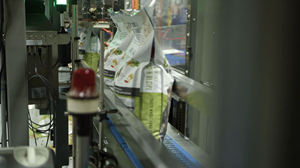
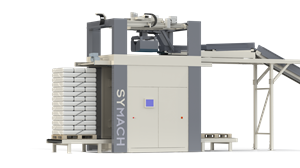
Explore BW Packaging’s bulk agriculture packaging equipment, including robust bag filling systems and high‑speed palletizers designed to protect product integrity and produce stable, square pallets. These solutions can be deployed individually or as part of a fully integrated line to improve efficiency, reduce damage, and scale output across bulk agricultural operations.
"The fact that Symach comes here and that we can look at the problem together. And that they actually do not let go until it is solved.”Chayenne Wiskerke, Managing Director, Wiskerke Onions
Read the full testimonial
Related Posts
 How Modern Palletizing Protects Delicate Agricultural Products
December 11, 2025
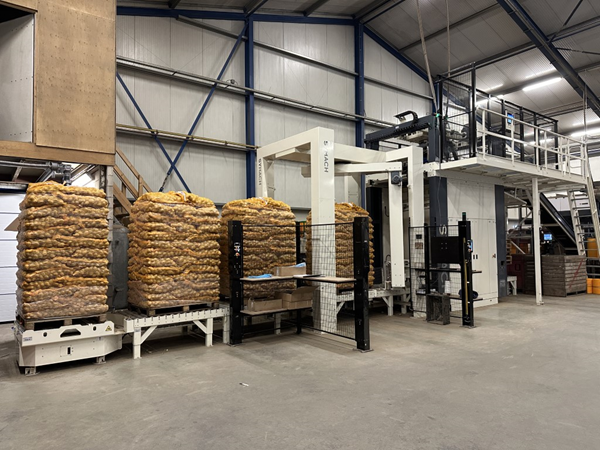
<p>At BW Packaging, we’ve witnessed firsthand how sensitive agricultural goods can suffer losses without the right packaging and palletizing approach. Our mission is to help producers maintain the quality, value, and appearance of crops through every stage of the supply chain.</p><p>Below, we will explore the key challenges of agricultural product packaging, from preserving produce integrity during transport to managing fast-paced harvest cycles, and we’ll discuss modern palletizing solutions that keep delicate items safe. By the end, you’ll see how advanced bag-filling and palletizing systems can become an essential part of a profitable and efficient agricultural operation.</p><h2 id="the-evolving-challenges-of-agricultural-product-packaging">The Evolving Challenges of Agricultural Product Packaging</h2><p>Delicate <a title="Agriculture | BW Packaging" href="https://www.bwflexiblesystems.com/markets/agriculture">agricultural products</a>, ranging from fruit and vegetables to grains and nuts, must handle a variety of external stressors. One major challenge is seasonal variation: harvest yields can skyrocket at certain times of the year, placing sudden strain on packaging lines. A packaging system that operates smoothly in low-volume months may struggle to keep pace when volume spikes, leading to bottlenecks and product mishandling. Modern solutions aim to adapt quickly to these seasonal fluctuations, ensuring that farms and facilities can scale production without sacrificing quality.</p><p>Another key issue is preserving product integrity throughout long-distance transport. Regardless of the commodity, be it apples, onions, potatoes, or grains, any damage along the way can reduce quality, increase shrink, and erode profits. Climate factors, including humidity shifts and temperature extremes, can sap freshness and invite mold or decay. Packaging and palletizing equipment must remain robust enough to form secure, uniform loads that stay stable on trucks, ships, or trains, even when road conditions are bumpy.</p><h3 id="meeting-seasonal-variations-and-demand">Meeting Seasonal Variations and Demand</h3><p>Agricultural enterprises face unpredictable harvest cycles. In bumper-crop years, volumes may exceed the typical capacity of an older, partially automated system. Operators are forced to rely on manual pallet stacking risk injuries, slow throughput, and inconsistent loads.</p><p>On the flip side, investing in an oversized or inflexible palletizing system that sits idle for part of the year can be financially draining. As a result, many producers seek modular palletizing solutions that can be expanded or reduced based on actual harvest output.</p><h3 id="preserving-quality-in-transport-and-storage">Preserving Quality in Transport and Storage</h3><p>Beyond harvest logistics, producers need to maintain product quality until the items reach wholesalers or consumers. For many types of produce, minor bruises or cracks can accelerate spoilage, while for grains, improper moisture levels can trigger mold growth or pest infestation.</p><p>A carefully optimized palletizing layout helps ensure gentle handling, minimal vibration, and stable stacking patterns that reduce the chance of goods shifting or toppling mid-transit. This stability is especially crucial for long hauls, where miles of road vibrations or ship movements could otherwise degrade product condition.</p><h2 id="understanding-the-role-of-palletizing-in-agriculture">Understanding the Role of Palletizing in Agriculture</h2>Palletizing is the process of stacking items, whether they’re in bags, crates, or boxes, onto pallets in neat layers. By mechanizing this task, farms and processing facilities can achieve consistent, uniform loads that withstand typical transportation rigors. Robust palletizing provides a protective cushion against shock, ensuring that delicate produce remains intact and unblemished. Modern palletizing lines often integrate with upstream bag-filling or crate-loading stations. This synergy means that once items are packaged, they move directly to a palletizing zone without manual intervention. Not only does this minimize human error (e.g., haphazard stacking), but it also significantly speeds up packing operations and lowers labor costs.<h3 id="why-palletizing-matters-for-agricultural-products">Why Palletizing Matters for Agricultural Products</h3><ul><li>Gentle Handling: Automated systems can lower bags or crates onto pallets rather than dropping them, reducing bruising or compression.</li><li>Stable Stacking Patterns: Proper layering and interlocking help pallets remain stable even when subjected to sudden movements or abrupt stops in transit.</li><li>Adjustable Configuration: Many palletizers allow different patterns or bag orientations so that facilities can pack multiple product types on the same line.</li><li>Contamination Control: Automated stacking zones can isolate the product from outside contaminants or foreign materials.</li><li>Scalability: Small producers can start with a basic robotic palletizer and add modules as volume grows.</li></ul><h2 id="key-technologies-in-modern-palletizing">Key Technologies in Modern Palletizing</h2><p>Advancements in engineering and automation now let producers pick from a variety of palletizing technologies. Two common categories are robotic palletizers and conventional (layer-forming) palletizers. While both can handle delicate goods, each approach has distinct pros and cons.</p><h3 id="robotic-vs-conventional-palletizers">Robotic vs. Conventional Palletizers</h3><p><a href="https://www.bwintegratedsystems.com/product-group/robotic-solutions" target="_blank" title="Labeling and End-of-Line Packaging Equipment | BW Packaging" data-sf-ec-immutable="" data-sf-marked="">Robotic palletizers</a> rely on multi-axis arms equipped with specialized end effectors (like grippers or suction cups). They can handle multiple bag shapes and sizes, adapt to new patterns quickly through software, and work within compact footprints. However, their throughput rates may be limited compared to layer-forming systems if extremely high speed is required.</p><p><a title="Symach Palletizers | BW Packaging" href="https://www.bwflexiblesystems.com/products/symach-palletizers">Conventional layer-forming palletizers</a>, on the other hand, use mechanisms like turning devices and layer squaring to build entire layers of product before placing them onto a pallet. These systems can achieve very high throughput and produce exceptionally stable loads. Yet, they can be less flexible if a facility needs to switch bag sizes or patterns frequently.</p><h3 id="in-line-vision-systems-and-sensors">In-Line Vision Systems and Sensors</h3><p>Modern palletizing equipment frequently includes vision systems to verify item orientation and alignment. Sensors can detect if a bag is misaligned on the conveyor, automatically pausing the process and alerting operators to prevent jam-ups. Advanced software then compensates for minor variations in bag positioning, ensuring neat, consistent layers.</p><h2>Benefits of Automated Palletizing for Delicate Produce</h2><p>When it comes to crops like tomatoes, peaches, and even bagged produce, mechanized stacking can provide remarkable advantages. While it’s tempting to assume only manual workers can “feel” the fragility of items, the latest robotic end effectors, combined with advanced controls, can emulate gentle handling and create stable, damage-free loads.</p><ol><li>Reduced Product Damage: Automated systems use low-impact gripping or controlled pushers that carefully position bags or crates.</li><li>Enhanced Speed and Throughput: Instead of waiting for human operators to align every layer, the line can run continuously, even during peak harvest periods.</li><li>Greater Consistency: Standardized stacking patterns mean less risk of collapsed pallets in transit.</li><li>Labor Efficiency: Workers can focus on supervising and quality checks instead of repetitive lifting.</li><li>Data Integration: Many palletizers log production metrics, allowing managers to track rates and identify bottlenecks over time.</li></ol><p>Each of these benefits directly contributes to maintaining product integrity and an efficient overall operation.</p><h2 id="designing-an-efficient-palletizing-layout">Designing an Efficient Palletizing Layout</h2><p>Even the best palletizing technology won’t perform optimally if the facility’s layout isn’t planned carefully. In some agricultural operations, space is at a premium, especially near post-harvest cleaning or sorting stations. The flow of product, from washing or sorting lines to bag filling and eventually to palletizing, must be smooth.</p><h3 id="managing-workflow-and-floor-space">Managing Workflow and Floor Space</h3><p>A layout that minimizes travel distance between stations is preferable. For instance, placing a bag-filling machine next to a conveyor that feeds directly into the palletizing cell keeps each step in close proximity. This reduces handling time and the chance of accidental drops or collisions. In addition, creating ample forklift lanes ensures pallets can be swiftly moved to cold storage or loading docks without crossing paths with ongoing production lines.</p><h3 id="adjusting-for-seasonal-surges">Adjusting for Seasonal Surges</h3><p>Producers often see large spikes in output during harvest peaks. A modular palletizing cell can be expanded by adding another robotic arm or layer-forming module for these high-demand periods. Once the season ends, portions of the system can be idled or reconfigured. This flexibility helps maintain consistent speed without overinvesting in permanent capacity that might remain underutilized for part of the year.</p><h2 id="overcoming-common-palletizing-pitfalls">Overcoming Common Palletizing Pitfalls</h2><p>Switching to automated palletizing can solve many issues but also introduces new variables. One overlooked aspect is ensuring proper bag or crate filling so that each unit is symmetrical and stable. Irregular fill weights or shapes can hamper the robot or conventional palletizer, resulting in shaky layers.</p><h3 id="proper-bag-crate-filling">Proper Bag/Crate Filling</h3><p>Using high-precision weighers ensure each bag meets a target fill weight, which not only complies with labeling laws but also fosters consistent stacking. Overfilled bags can bulge, while underfilled ones may be too flimsy. In both scenarios, the risk of toppling increases. Employing bag vibrators or spreaders during the filling process can help distribute products evenly, especially for granular or irregularly shaped goods.</p><h3 id="material-compatibility">Material Compatibility</h3><p>Agricultural products come in all shapes and densities; some are dusty, oily, or prone to static cling. Likewise, bag materials can range from woven polypropylene to biodegradable paper-based sacks. Each of these factors influences how well a palletizer’s gripper or layer pusher can handle the units. Thorough testing with actual products and packaging materials is key to verifying system compatibility before finalizing a palletizing solution.</p><h2 id="best-practices-for-employee-training-and-maintenance">Best Practices for Employee Training and Maintenance</h2><p>Beyond hardware and software, employee expertise plays a pivotal role. Operators should understand how to perform basic troubleshooting, such as clearing minor jams or recalibrating the end effector. Written SOPs and <a title="Cross Training Strategies for Packaging Line Efficiency" href="https://www.bwflexiblesystems.com/our-company/blog/post/2025/05/22/cross-training-strategies-for-packaging-line-efficiency">consistent training sessions</a> equip staff to resolve issues swiftly, minimizing costly downtime.</p><p>Scheduled maintenance is equally crucial. Replacing worn grippers, recalibrating sensors, and lubricating moving parts help maintain gentle, accurate stacking. For facilities that run around the clock during harvest season, a <a title="Proactive Strategies for Packaging Machine Maintenance" href="https://www.bwflexiblesystems.com/our-company/blog/post/2025/05/20/proactive-strategies-for-packaging-machine-maintenance">robust preventive maintenance plan</a> can be the difference between on-time shipment and a backlog of produce waiting for repair crews.</p><h2 id="protect-your-agricultural-products-with-bag-filling-palletizing">Protect Your Agricultural Products with Bag Filling & Palletizing</h2><p>We invite you to explore how <a title="Thiele Bag Filling | BW Packaging" href="https://www.bwflexiblesystems.com/products/thiele-bag-filling">Thiele</a>, <a title="Symach Palletizers | BW Packaging" href="https://www.bwflexiblesystems.com/products/symach-palletizers">Symach</a>, and integrated bag-filling technologies can bolster your agricultural packaging line. By combining gentle handling, robust construction, and modular expansion options, these systems offer a tailored approach to protecting delicate crops from the field to the destination.</p><p>When you partner with BW Packaging, you benefit from our extensive experience in optimizing production layouts and securing stable, damage-free loads. <a title="Contact Us" href="https://www.bwflexiblesystems.com/our-company/contact">Contact us today</a> to learn how we can design a solution that preserves freshness, reduces waste, and helps your operation thrive in a competitive market.</p>
 Floor Space Requirements for Palletizing Systems: A Layout Planning Guide
May 18, 2026
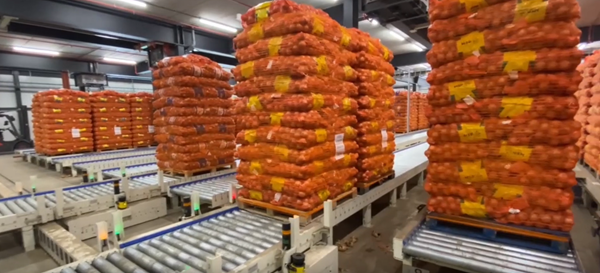
<h2>When Every Square Foot Counts</h2><p>Maximizing end-of-line efficiency often hinges on a single, critical factor: your palletizer floor plan. But how much space do you really need?</p><p>It's a question that trips up more engineering teams than you might expect. You've identified the throughput requirements. You've selected a palletizer that meets your speed and product handling needs. You've even gotten capital approval. Then reality hits: the machine that looked perfect on the spec sheet doesn't actually fit in your facility—at least not when you account for everything else that needs to go around it.</p><p>The palletizer itself is just the beginning. Infeed conveyors, pallet dispensers, stretch wrappers, safety fencing, maintenance access, forklift traffic patterns—all of these require floor space that's easy to underestimate during the planning phase. And the consequences of getting it wrong are expensive: production bottlenecks, safety hazards, costly redesigns, and systems that never achieve their rated throughput because everything is too cramped.</p><p>A well-planned palletizer layout is more than just fitting a machine into available space. It's the cornerstone of unlocking optimal efficiency, optimizing forklift traffic, ensuring operator safety, and future-proofing your packaging operations. Get this right, and your end-of-line becomes a competitive advantage. Get it wrong, and you'll be living with the consequences for years.</p><p>At BW Packaging, we've helped manufacturers across food, pet food, agriculture, and industrial sectors design palletizing systems that maximize performance within real-world space constraints. This guide shares what we've learned about getting floor plans right the first time.</p><h3>Who We Are</h3><p>BW Packaging helps manufacturers across agriculture, pet food, industrial, and bulk ingredients sectors transform their end-of-line operations through flexible bag filling, sealing, and palletizing solutions. Our automated <a href="https://www.bwpackaging.com/products/flexible-bagging-wrapping/bag-filling">Thiele bagging</a>, <a href="https://www.bwpackaging.com/products/palletizing/bag-palletizers">SYMACH conventional palletizing</a>, and <a href="https://www.bwintegratedsystems.com/products/palletizing" data-sf-ec-immutable=""></a><a href="https://www.bwpackaging.com/products/palletizing/case-tray-bulk-package-palletizers">robotic palletizing </a>solutions are known for their efficiency, versatility, precision, and ease of operation. We offer our clients training, service, and a lifetime of support for every solution sold.</p><h2>Why Your Palletizer Floor Plan is More Than Just a Footprint</h2><p>Floor space costs money—whether you're paying rent, maintaining climate control, or simply accounting for opportunity cost of what else could occupy that area. But cramming equipment into the minimum possible footprint creates problems that cost far more than the space you saved.</p><h3>Impact on Workflow and Throughput</h3><p>A palletizer's rated speed means nothing if upstream and downstream constraints prevent it from operating at capacity. Poor layouts create bottlenecks that ripple through your entire production line.</p><p>Without adequate accumulation space on the infeed, your palletizer starves whenever the filling line hiccups. Products back up, sensors trigger stops, and your theoretical 25 bags per minute becomes 18 in actual operation. Without proper buffering at the end of the line, completed pallets stack up waiting for forklifts, and the whole system grinds to a halt while operators scramble to clear the jam.</p><p>The most sophisticated palletizer in the world can't overcome a layout that doesn't allow products and materials to flow smoothly through the system.</p><h3>Safety First</h3><p>Layout decisions directly impact operator safety—and the regulatory compliance that goes with it. Cramped spaces create hazards: operators reaching into pinch points, forklifts navigating tight corners with limited visibility, maintenance technicians working in awkward positions because there's no room to access equipment properly.</p><p>OSHA takes a dim view of layouts that force workers into dangerous situations. Beyond regulatory concerns, manual palletizing is a leading cause of musculoskeletal injuries, costing businesses billions of dollars annually in direct costs. Automated palletizing reduces these injuries—but only if the layout provides adequate safety zoning and keeps operators out of harm's way.</p><h3>The High Cost of Poor Planning</h3><p>Layout problems are most costly when they surface after installation—especially in existing (brownfield) facilities. Failing to account for walls, utilities, access constraints, and legacy infrastructure often leads to reduced throughput, compromised safety, or expensive rework. Experienced layout planning anticipates these realities upfront, avoiding retrofits and ensuring the system performs as intended from day one.<br></p><h4>The Core Components of a Complete Palletizing Cell</h4><p>Palletizers come in two fundamental configurations, each with different space implications.</p><p><a data-sf-ec-immutable=""><strong></strong></a><strong><a href="https://www.bwpackaging.com/products/palletizing/bag-palletizers">Conventional (high-level) palletizers</a></strong> use mechanical layer-forming and placement mechanisms. They tend to have larger footprints but can achieve very high speeds. The <a href="https://www.bwpackaging.com/products/palletizing/bag-palletizers/mach-series-palletizers">MACH series</a> exemplifies this approach—combining robust construction, a compact footprint relative to many robotic alternatives, and speeds of up to 50 bags per minute—with options like the Multi‑gripper to handle bags, boxes, and crates on a single machine.</p><p><strong><a href="https://www.bwpackaging.com/products/palletizing/case-tray-bulk-package-palletizers">Robotic palletizers </a></strong>use articulated arms with end-of-arm tooling. They offer flexibility in handling multiple product types and pallet patterns but require safety cells that add to the overall footprint.<strong> </strong></p><h4>Infeed and Outfeed Conveying Systems</h4><p>Products don't teleport from your filling line to the palletizer. Conveyor systems bridge that gap—and they need space.</p><p><strong>Infeed conveyors</strong> must provide accumulation capacity to buffer variations in upstream production. If your filler runs in batches or experiences periodic slowdowns, the infeed accumulation zone absorbs those fluctuations without stopping the palletizer. Plan for at least 30-60 seconds of accumulation at your target throughput rate.</p><p><strong>Outfeed conveyors</strong> move completed pallets to stretch wrapping, labeling, or pickup points. The length depends on how quickly forklifts can remove finished pallets and whether you're integrating additional end-of-line processes.</p><p>Integration with upstream equipment matters too.<a href="https://bw1.sharepoint.com/products/flexible-filling-closing/bag-filling" data-sf-ec-immutable=""> </a><a href="https://www.bwpackaging.com/products/flexible-bagging-wrapping/bag-filling">Thiele & Symach bag filling systems </a>are designed to work seamlessly with our palletizers, but that integration requires proper conveyor design to maintain product orientation and spacing.</p><h4>Pallet Handling Equipment</h4><p>Empty pallets need to get into the system, and the mechanism for doing so requires dedicated space.</p><p><strong>Pallet dispensers</strong> hold stacks of empty pallets (typically 10-15 high) and feed them into the palletizing position automatically. They eliminate the need for operators to manually place pallets but add to the cell footprint.</p><p><strong>Pallet transport systems</strong> move pallets through the cell—from dispenser to stacking position to outfeed. Options include roller conveyors, chain conveyors, and turntables for changing pallet orientation. Each has different space requirements and traffic flow implications.</p><p><strong>Empty pallet staging</strong> requires space for forklift access to replenish the dispenser. If you're running multiple shifts without stopping, you need enough pallet capacity to avoid frequent replenishment interruptions.</p><h4>End-of-Line Integration</h4><p>Most palletizing systems don't end at the palletizer. Stretch wrapping, labeling, and other processes typically follow.</p><p><strong>Automatic stretch wrappers</strong> secure loads for shipping. Turntable wrappers rotate the pallet while applying film; rotary arm wrappers keep the pallet stationary while the arm orbits around it. Rotary arm systems often work better in tight spaces but have their own clearance requirements.</p><p><strong>Labeling systems</strong> apply shipping labels, barcodes, or RFID tags. While compact, they need integration into the material flow and access for label replenishment.</p><h4>Safety Systems</h4><p>Automated palletizing creates hazards that require proper safety protocol. The safety system often consumes as much floor space as the palletizer itself.</p><p><strong>Physical guarding</strong> (fencing, barriers) creates a perimeter around the automated cell. Standard industrial fencing requires posts every 6-8 feet with adequate clearance from moving equipment inside.</p><p><strong>Light curtains and safety scanners</strong> can reduce physical guarding requirements in some configurations, but they have their own installation requirements and monitored zones.</p><p><strong>Emergency stops</strong> need to be accessible from multiple positions around the cell—which means those positions need to exist in your layout.</p><p><strong>Access gates</strong> with interlocks allow entry for maintenance while ensuring the system stops when someone enters the guarded area. Gate locations influence traffic flow and maintenance accessibility.</p><h2>Four Critical Factors That Determine Your Space Requirements</h2><p>Every palletizing application is different. These four factors drive the specific space requirements for your system.</p><p>Throughput Needs</p><p>Higher throughput generally requires more space—not just for a larger or faster palletizer, but for the supporting systems that keep products flowing.</p><p>At 15 bags per minute, many palletizing setups can run with minimal accumulation and a single pallet position. As rates climb toward 40 bags per minute, continuous operation typically requires more buffer/accumulation and often dual or multiple pallet stations to keep the line running during pallet changeovers. SYMACH changes that equation: the <a href="https://www.bwpackaging.com/products/palletizing/bag-palletizers/mach-series-palletizers">ROTAX palletizing head</a> is designed for capacity, reducing movements and delivering positioning speeds up to 50 BPM so you can often maintain high‑speed bagging performance with less reliance on accumulation, making SYMACH the go‑to choice when throughput and uptime are non‑negotiable.</p><p>The relationship isn't linear. Doubling throughput might require tripling floor space once you account for all the supporting equipment.</p><h3>Product and Pallet Specifications</h3><p>The physical characteristics of what you're palletizing directly impact space requirements.</p><p><strong>Product dimensions</strong> determine how much accumulation space you need per unit of time. Large bags take more conveyor length than small cases at the same throughput rate.</p><p><strong>Product weight</strong> affects conveyor specifications and structural requirements. Heavy products need more robust (and often larger) equipment.</p><p><strong>Pallet dimensions</strong> set the baseline for the stacking area. Standard GMA pallets (48" x 40") are common, but if you're also handling Euro pallets (800mm x 1200mm) or other sizes, your system needs to accommodate the largest option.</p><p><strong>Stack height</strong> determines vertical clearance requirements. A 2650mm stack height (common for SYMACH systems) needs adequate overhead clearance plus room for the palletizer mechanisms above the stack.</p><h3>Number of Production Lines Served</h3><p>A palletizer that receives product from a single filling line has straightforward infeed requirements. A palletizer serving multiple lines requires merge conveying, traffic management, and potentially product identification systems—all of which consume floor space.</p><p>Each additional line feeding the palletizer adds complexity. Plan for the routing, merging, and buffering required to handle products from all sources without creating conflicts. Robotic palletizers often provide the most efficient use of floor space when flexibility, multi‑line feeding, or SKU variety is required.</p><h3>Level of Automation and Flexibility</h3><p>More automation typically means more equipment—and more space. But it also means less manual intervention, fewer operators, and more consistent operation.</p><p><strong>Automatic changeovers</strong> eliminate manual adjustments when switching products but require space for the mechanisms that enable them.</p><p><strong>Multiple pallet positions</strong> allow continuous operation (building one pallet while removing another) but double the space requirement in the stacking area.</p><p><strong>Integrated controls and sensors</strong> for automatic operation need cabinet space and wire routing that manual systems don't require.</p><p>The flexibility to handle multiple products, pallet patterns, and packaging formats adds value—but it also adds equipment. Plan accordingly.</p><h2>Partner with BW Packaging for an Optimized End-of-Line Solution</h2><p>Navigating the complexities of palletizer floor planning requires expertise that most facilities don't have in-house. The interactions between throughput requirements, product characteristics, safety systems, and physical constraints create a multidimensional puzzle that benefits from experienced guidance.</p><p>BW Packaging brings specific capabilities to this challenge:</p><p><strong>Technical expertise across diverse applications.</strong> We've designed palletizing systems for pet food, agricultural products, industrial chemicals, and food processing—each with unique requirements. That breadth of experience informs solutions that address your specific challenges.</p><p><strong>Integrated solutions from filling to palletizing.</strong> Our Thiele bag filling systems and SYMACH palletizers are designed to work together. That integration simplifies layout planning because we understand how the complete system functions, not just individual machines.</p><p><strong>Focus on total cost of ownership.</strong> The cheapest palletizer isn't the best value if layout compromises force you to accept reduced throughput or increased maintenance costs. We design for long-term performance, not just initial price.</p><p><strong>Lifetime support for sustained performance.</strong><a href="https://www.bwflexiblesystems.com/customer-services" data-sf-ec-immutable=""> Our service teams</a> support your system throughout its operational life. That ongoing relationship means we're invested in designs that work well over time, not just on day one.</p><p>Ready to design a palletizing system that maximizes your floor space and boosts end-of-line efficiency? <a href="/contact">Contact our integrated end-of-line automation experts</a> at BW Packaging today for a personalized layout consultation.</p><div align="center"></div><h2>Frequently Asked Questions</h2><p><strong>How much floor space does an automatic palletizer actually need?</strong></p><p>Space requirements vary significantly based on palletizer type, throughput, and required peripherals. A typical palletizing cell—including the machine, safety guarding, conveyors, and buffer zones—might range from 15' x 15' to 25' x 25' or more. High-speed applications or those with extensive pallet handling requirements need additional space. The most accurate answer comes from a detailed assessment of your specific application.</p><p><strong>What components must be included in a palletizer system floor plan besides the machine itself?</strong></p><p>Essential components include infeed and outfeed conveyors (with appropriate accumulation zones), pallet dispensers, pallet transport conveyors or turntables, stretch wrappers, safety guarding (fencing, light curtains, or scanners), maintenance access clearances, and staging areas for empty and full pallets. Depending on your application, you may also need labeling systems, inspection stations, or product conditioning equipment.</p><p><strong>How do you design a palletizer layout for maximum safety and efficiency?</strong></p><p>Start by mapping product flow from upstream processes through palletizing to shipping. Then map personnel flow for operators, maintenance technicians, and forklift drivers. Ensure these flows don't conflict. Define clear safety zones with appropriate guarding that doesn't impede necessary access. Position operator interfaces where they're accessible without entering hazardous areas. Design maintenance access that allows service without excessive disassembly. Finally, validate the layout against throughput requirements to ensure the system can actually achieve target performance.</p><p><strong>Can a palletizing system be integrated into an existing line with limited space?</strong></p><p>Yes, especially with compact solutions designed for space-constrained applications. The SYMACH 3500S palletizer, for example, combines high throughput with a compact footprint specifically suited to challenging installations. Careful planning of infeed/outfeed routing, creative use of vertical space, and selection of appropriately sized components can enable palletizing automation in facilities that seem too small for traditional systems. An experienced integration partner can identify opportunities that might not be obvious from catalog specifications alone.</p>
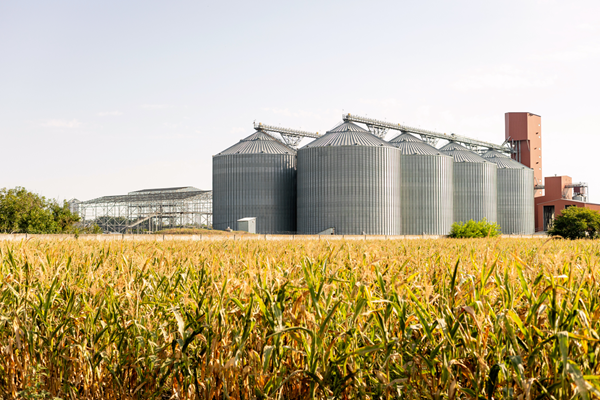 Flexible Packaging Solutions for Various Bag Sizes for Agricultural Products
July 7, 2025
<p>The agricultural industry requires packaging solutions that can accommodate a wide range of products, from delicate seeds that require precise portion control to bulk commodities that necessitate efficient large-scale packaging. At BW Flexible Systems, we recognize that successful agricultural packaging operations necessitate flexible packaging solutions that can accommodate diverse product characteristics, multiple bag sizes, and varying production volumes across seasonal cycles.</p><p>Our complete solution approach combines advanced bag filling technology with integrated palletizing systems to create packaging lines which adapt to the dynamic requirements of a modern agricultural operations.</p><h2 id="understanding-agricultural-product-packaging-needs">Understanding Agricultural Product Packaging Needs</h2><p>Agricultural packaging requirements span a broader range of applications than virtually any other industry, demanding equipment that quickly adapt to different products, while maintaining consistent performance standards. With the seasonal nature of agricultural production introducing additional complexity, packaging operations frequently experience significant volume fluctuations and product changeovers throughout the year.</p><p>The diversity of agricultural products require packaging systems to accommodate varying flow characteristics, density differences, and special handling requirements. From precision seed packaging, requiring exact counts, to bulk commodity packaging that prioritizes speed and efficiency, agricultural operations need flexible solutions that optimize performance for each specific application.</p><h3 id="product-characteristics-and-handling-requirements">Product Characteristics and Handling Requirements</h3><p>Agricultural products exhibit a wide range of flow characteristics that significantly impact packaging system design and operation. Free-flowing materials, such as grain, rice, and processed feeds, require different handling approaches compared to semi-free-flowing products, including seeds, pelletized feeds, and specialty crops. Understanding these characteristics is crucial for selecting suitable equipment and maximizing packaging performance.</p><p>Particle size variations create additional handling challenges, as some products contain uniform particles while others include mixed sizes which lead to segregation or bridging issues. Density differences between products require packaging systems which adjust and maintain accurate weights for consistent package appearance.</p><p>Moisture sensitivity affects both product handling and the selection of packaging materials. Some agricultural products must be protected from moisture exposure during packaging, while others require controlled humidity levels to maintain quality. Packaging systems must accommodate these requirements while ensuring product protection throughout storage and distribution to maintain optimal quality.</p><h3 id="bag-size-and-weight-considerations">Bag Size and Weight Considerations</h3><p>Agricultural packaging operations must accommodate an extensive range of bag sizes and weights to serve diverse market segments and applications. A few key points to note include:</p><ul><li><strong>Small retail packages (1-50 lbs)</strong> designed for consumer markets including home gardeners, pet owners, and specialty applications</li><li><strong>Medium commercial bags (50-100 lbs)</strong> serving smaller farms, feed stores, and regional distributors</li><li><strong>Large industrial bags (100+ lbs)</strong> for bulk applications, large-scale farming operations, and industrial users</li><li><strong>Custom sizes for specialized products</strong> including seed packets, specialty feeds, and premium products</li><li><strong>Multi-layer packaging for premium products</strong> requiring enhanced protection and extended shelf life</li></ul><p>The ability to changeover efficiently between different bag sizes represents a critical capability for agricultural packaging operations. Quick-changeover features minimize downtime while ensuring consistent performance across the entire range of package sizes and products.</p><h2 id="challenges-in-agricultural-packaging-operations">Challenges in Agricultural Packaging Operations</h2><p>Agricultural packaging operations face unique challenges that require specialized solutions and expertise. This is compounded by the seasonality of agricultural production, which creates periods of intense activity followed by reduced demand. Packaging systems need to be robust enough to handle peak loads, while remaining cost-effective during periods of lower demand.</p><h3 id="product-flow-and-handling-challenges">Product Flow and Handling Challenges</h3><p>Material flow characteristics have a significant impact on packaging system performance and require careful consideration during equipment selection and installation. Bridging<sup>Bridging occurs when a particulate forms a stable arch or crust over an outlet, preventing the uniform discharge of powder.</sup> and ratholing<sup>Ratholing occurs when a tunnel forms within a bulk powder material, causing the powder to channel through a specific region of a hopper while other areas remain stagnant.</sup> issues can occur with certain products, particularly those with irregular particle shapes or varying moisture content.</p><p>Segregation problems may occur when packaging products that contain particles of different sizes or densities. This segregation can impact package consistency and customer satisfaction, necessitating specialized handling techniques and equipment design features that ensure product uniformity.</p><p>The generation of static electricity can create handling difficulties with certain agricultural products, particularly in dry conditions. Static buildup can cause product adhesion to equipment surfaces, erratic flow patterns, and potential safety concerns. Effective static control measures must be integrated into the packaging system design.</p><p>Abrasive products, such as sand, certain fertilizers, and processed feeds, can cause accelerated wear on packaging equipment components. Systems designed for agricultural applications must incorporate wear-resistant materials and design features that minimize maintenance requirements and extend equipment life.</p><h3 id="packaging-consistency-and-quality-control">Packaging Consistency and Quality Control</h3><p>Weight accuracy requirements vary significantly across agricultural applications, ranging from precision seed packaging, which requires exact counts, to bulk commodity packaging, where slight variations are acceptable. Packaging systems must provide accurate results while maintaining the speed necessary for efficient operations.</p><p>Seal integrity standards ensure package protection during handling, storage, and transportation. Agricultural products often undergo rough handling and extended storage periods, requiring robust sealing that maintains integrity throughout the distribution cycle.</p><p>Package appearance considerations affect customer perception and brand value, particularly for retail and premium products. Consistent bag filling, proper seal formation, and a professional appearance all contribute to customer satisfaction and effective brand positioning.</p><h2 id="comprehensive-bag-filling-and-palletizing-solutions">Comprehensive Bag Filling and Palletizing Solutions</h2><p>Modern agricultural packaging operations require integrated systems that combine bag filling, sealing, and palletizing capabilities to create efficient, automated packaging lines. These comprehensive solutions eliminate manual handling between processes while improving consistency and reducing labor requirements.</p><p>Integrated packaging systems provide significant advantages over individual machines by optimizing material flow, reducing handling damage, and enabling centralized control and monitoring. The coordination between bag filling and palletizing operations ensures smooth production flow while maintaining the flexibility necessary for multi-product operations.</p><h3 id="thiele-bag-filling-technology">Thiele Bag Filling Technology</h3><p>Thiele bag filling systems represent the pinnacle of agricultural packaging technology, combining decades of experience with continuous innovation to deliver reliable, accurate, and efficient packaging solutions. These systems are engineered specifically for the demanding requirements of agricultural applications, where durability, flexibility, and accuracy are essential for profitable operations.</p><p>The Thiele approach to bag filling emphasizes versatility and broad application capability, enabling operations to handle diverse product ranges with minimal changeover requirements. Advanced weighing systems offer precise control, regardless of product characteristics, while their robust construction ensures reliable operation in demanding agricultural environments.</p><p>Gross and net weighing options accommodate different operational preferences and accuracy requirements. Net weighing systems provide maximum accuracy for precision applications, while gross weighing offers speed advantages for high-volume operations. The flexibility to select the most suitable weighing methods for various products optimizes overall system performance.</p><p>Multiple product handling capabilities enable efficient multi-product operations through quick changeover features and adaptable handling systems. Product-specific configurations can be stored and recalled automatically, minimizing changeover time while ensuring optimal performance for each application.</p><h3 id="symach-palletizing-systems-integration">Symach Palletizing Systems Integration</h3><p>Symach palletizing systems provide seamless integration with upstream filling equipment to create complete packaging lines that maximize efficiency while minimizing labor requirements. A few examples include:</p><ol><li><strong>Automated bag handling and positioning</strong> that eliminates manual lifting and reduces workplace injury risks</li><li><strong>Multiple pallet pattern configurations</strong> accommodating different bag sizes and customer requirements</li><li><strong>Variable bag size accommodation</strong> enabling efficient handling of diverse package formats without extensive changeover</li><li><strong>Integration with upstream filling equipment</strong> ensuring coordinated operation and optimal production flow</li><li><strong>Quality monitoring and reject systems</strong> that maintain package quality standards and prevent defective packages from reaching pallets</li></ol><p>The integration between Thiele filling systems and Symach palletizers enables optimized material flow, eliminating bottlenecks while maintaining precise control over the entire packaging process. This coordination enables higher overall line efficiency compared to individual machines operating independently.</p><h2 id="flexibility-in-bag-size-and-format-options">Flexibility in Bag Size and Format Options</h2><p>The ability to efficiently handle multiple bag sizes represents a critical competitive advantage for agricultural packaging operations. Modern equipment must accommodate rapid changeovers between different package formats while maintaining accuracy and speed throughout the transition process.</p><p>Flexibility requirements extend beyond simple size changes to include different bag materials, closure types, and handling requirements. Agricultural operations often package the same products in different formats for various market segments, requiring packaging systems that can quickly adapt to these different requirements.</p><h3 id="multi-size-bag-handling-capabilities">Multi-Size Bag Handling Capabilities</h3><p>Quick changeover features minimize production interruptions when transitioning between different bag sizes or products. Modern systems incorporate tool-free adjustments, automatic positioning systems, and stored configurations, enabling changeovers in minutes rather than hours.</p><p>Adjustable guides and support systems accommodate different bag dimensions while maintaining proper positioning and handling throughout the filling and sealing process. These systems must provide secure handling without causing damage to the bags or affecting fill accuracy.</p><p>Automated size detection systems can identify bag dimensions and automatically configure equipment settings for optimal performance. This capability reduces operator intervention while ensuring consistent performance across different package sizes.</p><h3 id="material-compatibility-and-bag-types">Material Compatibility and Bag Types</h3><p>Paper bag options offer excellent printability and environmental benefits for various agricultural applications. Modern filling systems accommodate various paper bag constructions, including multi-wall bags, valve bags, and specialty barrier bags designed for specific products.</p><p>Plastic bag alternatives provide superior moisture protection and durability for products that require extended storage or challenging distribution conditions. Packaging systems must handle different plastic film properties while maintaining consistent sealing performance.</p><p>Multi-wall bag construction provides enhanced strength and barrier properties for demanding applications. These bags require specialized handling and sealing techniques that must be integrated into the packaging system design.</p><p>Valve bag systems enable the efficient filling of free-flowing products while providing a secure closure and a professional appearance. Specialized equipment features support valve bag applications, including precision filling control and automatic valve closure systems.</p><p>Now is the time to transform your agricultural operations. Connect with our agricultural packaging experts to discuss your specific requirements and discover how our integrated bag filling and palletizing systems can enhance your competitive position while addressing the unique challenges of agricultural packaging.</p>
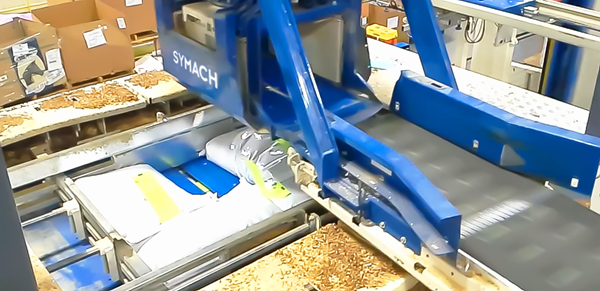 Palletizing in Harsh Environments: Dust, Moisture, and Temperature Considerations
July 13, 2026
<h2>The High Cost of Failure in Demanding Environments</h2><p>Unplanned downtime costs manufacturers over <a href="https://partners.wsj.com/emerson/unlocking-performance/how-manufacturers-can-achieve-top-quartile-performance/">$50 billion annually</a>. For food and beverage processors, a single hour of equipment failure can cost more than $100,000. Those numbers represent more than abstract statistics—they represent production schedules thrown into chaos, customer commitments missed, and profits evaporating while your team scrambles to get equipment back online.</p><p>Now consider where your palletizer operates. Not in a climate-controlled cleanroom, but in the real world of industrial manufacturing. Flour dust hangs in the air at your bakery. Caustic washdown chemicals spray across equipment at your dairy plant. Temperatures in your freezer warehouse hover at minus twenty degrees. Your production floor gets so humid in summer that condensation drips from every surface.</p><p>These are the environments where palletizers work—and where standard equipment often fails prematurely. The bearings seize from dust infiltration. Electronics short-circuit from moisture ingress. Components become brittle and crack in the cold. What was supposed to be a reliable workhorse becomes a source of constant headaches and emergency maintenance calls.</p><p>Here's what many equipment buyers learn the hard way: the initial purchase price of a palletizer matters far less than whether it can survive your actual operating conditions. A machine that costs less upfront but fails repeatedly in your harsh environment will cost you far more in downtime, repairs, and frustration than purpose-built equipment designed for the challenges you face.</p><p>At BW Packaging, we learned palletizing in the real world: onions and potatoes, where soil, skins, and debris don’t politely stay off your equipment. That’s why SYMACH palletizers are built around an open‑frame design: instead of trapping dust and buildup, debris falls through, surfaces stay accessible, and teams can spot issues early. This design philosophy came directly from our agricultural install base—potatoes, onions, carrots—where conditions are anything but ideal.</p><p>And because “dirty” doesn’t always mean “hard to clean,” we’ve extended that thinking into Stage 1 Clean Design, engineered specifically to reduce accumulation points and make cleaning faster in dusty environments—helping equipment stay in proper operating condition despite constant debris.</p><div align="center"></div><h2>Who We Are</h2><p>BW Packaging helps manufacturers across agriculture, pet food, industrial, and bulk ingredients sectors transform their end-of-line operations through flexible bag filling, sealing, and palletizing solutions. Our automated <a href="https://www.bwpackaging.com/products/flexible-bagging-wrapping/bag-filling">Thiele bagging</a>, <a href="https://www.bwpackaging.com/products/palletizing/bag-palletizers">SYMACH conventional palletizing</a>, and <a href="https://www.bwintegratedsystems.com/products/palletizing"></a><a href="https://www.bwpackaging.com/products/palletizing/case-tray-bulk-package-palletizers">robotic palletizing </a>solutions are known for their efficiency, versatility, precision, and ease of operation. We offer our clients training, service, and a lifetime of support for every solution sold.</p><div align="center"></div><h2>The Triple Threat: Understanding Your Harsh Environment Challenges</h2><p>Before you can solve harsh environment challenges, you need to understand exactly what you're dealing with. Most facilities face one or more of three primary environmental stressors—and many face all three simultaneously.</p><h3>The Dust Dilemma: Abrasive and Combustible Particles</h3><p>Walk through a feed mill, fertilizer plant, or flour processing facility and you'll understand immediately why dust is enemy number one for palletizing equipment. Fine particles are everywhere—suspended in the air, settling on every surface, working their way into every gap and crevice.</p><p>That dust doesn't just make equipment dirty. It actively destroys components.</p><p>Abrasive particles infiltrate bearings and accelerate wear. Sensors become coated and lose accuracy. Electrical cabinets fill with conductive dust that causes short circuits. In some facilities—where the dust comes from flour, grain, sugar, or certain chemicals—there's also the risk of combustible dust explosions if concentrations reach dangerous levels.</p><p>The industries most affected include pet food manufacturing, agricultural products (fertilizer, grain, seed), chemical processing, and any facility handling bulk powders or granular materials. If your operators wear dust masks, your palletizer is breathing the same air—and suffering for it.</p><h3>The Moisture Menace: Washdowns, Humidity, and Corrosive Agents</h3><p>Food safety regulations have transformed manufacturing facilities. Regular washdowns with high-pressure hot water and caustic cleaning chemicals are now standard practice in dairy, meat, produce, and beverage operations. That's great for food safety. It's brutal on equipment that wasn't designed for it.</p><p>Water finds its way into electrical enclosures, shorting circuits and corroding connections. Caustic cleaning agents attack standard steel, causing corrosion that weakens structures and creates harborage points for bacteria. High humidity creates condensation on cool surfaces—including electronics that really shouldn't get wet.</p><p>The consequences extend beyond equipment damage. Corroded equipment with pitting and crevices can harbor bacteria, creating the food safety risks that washdowns were supposed to prevent. Equipment that can't withstand your sanitation protocols becomes a compliance liability.</p><p>This challenge hits hardest in dairy processing, fresh produce packing, meat processing, bakeries, and beverage facilities—anywhere that strict sanitation standards meet aggressive cleaning regimens.</p><h3>The Temperature Test: Extreme Cold and High Heat</h3><p>Temperature extremes create problems that standard equipment simply isn't built to handle. And as cold chain logistics continues growing (the global cold chain market is expected to reach $628 billion by 2030), more palletizing operations are moving into freezer environments.</p><p>In cold storage facilities operating at -20°F or below, standard steel becomes brittle and prone to cracking. Lubricants thicken until they barely flow, starving bearings and gears. Condensation forms when equipment moves between temperature zones, coating electronics with moisture that freezes, thaws, and freezes again. Seals and gaskets lose flexibility and fail to maintain proper protection.</p><p>High-temperature environments create opposite but equally damaging effects. Electronics overheat and fail. Components expand at different rates, throwing off precision alignments. Motors work harder to overcome increased resistance, shortening their lifespan.</p><p>Frozen food processing, cold storage warehousing, food distribution centers, and certain high-temperature manufacturing environments all face these challenges. If your team needs special clothing to work in the production area, your equipment needs special engineering too.</p><div align="center"></div><h2>Engineering for Resilience: Key Features of a Harsh-Environment Palletizer</h2><p>Understanding the challenges is the first step. The second is knowing what engineering solutions actually work. Purpose-built harsh environment our conventional and robotic palletizers incorporate specific features designed to resist dust, moisture, and temperature extremes.</p><h3>Built to Resist: Superior Materials and Construction</h3><p>Material selection determines how long equipment survives in corrosive, abrasive, or extreme temperature environments. The difference between standard construction and purpose-built durability starts here.</p><p><strong>Stainless steel construction</strong> provides the foundation for equipment that needs to withstand washdowns and corrosive environments. Unlike painted mild steel that chips and corrodes, stainless steel maintains its integrity under repeated exposure to moisture and cleaning chemicals. For food applications, it's often non-negotiable—75% of food manufacturers cite hygienic design as critical or very important when selecting equipment, according to PMMI.</p><p><strong>Hygienic design principles</strong> go beyond material selection to address how equipment is constructed. Sloped surfaces prevent water from pooling. Welded seams eliminate the crevices where bacteria can hide. Minimal flat surfaces reduce accumulation points. Open-frame designs—a hallmark of SYMACH palletizers—prevent dust and debris from accumulating in hidden cavities and make cleaning faster and more effective.</p><p><strong>Robust frame construction</strong> ensures equipment can withstand the mechanical stresses of thermal cycling without losing precision or structural integrity. When temperatures swing between ambient loading docks and freezer storage, lesser equipment warps and fails. Properly engineered frames maintain their geometry across the operating range.</p><h3>Sealed for Survival: Ingress Protection Ratings</h3><p>Ingress Protection (IP) and NEMA ratings tell you exactly how well enclosures protect sensitive components from dust and water. These aren't marketing terms—they're standardized specifications that predict real-world performance.</p><p><strong>Understanding the ratings:</strong></p><ul><li><strong>IP65</strong> indicates complete protection against dust ingress and protection against water jets from any direction. Suitable for dusty environments and light washdown.<br><br></li><li><strong>IP67</strong> adds protection against temporary immersion in water—important for equipment that might be directly sprayed during cleaning.<br><br></li><li><strong>IP69K</strong> provides protection against high-pressure, high-temperature washdowns—the gold standard for equipment in sanitary food processing environments.<br><br></li><li><strong>NEMA 4X</strong> enclosures resist corrosion in addition to providing dust and water protection, making them ideal for facilities using caustic cleaning agents.<br><br></li></ul><p>These ratings apply to electrical enclosures, motors, sensors, and other components that contain electronics or precision mechanisms. When evaluating equipment for harsh environments, ask specifically about IP/NEMA ratings—and verify that the entire system is protected, not just selected components.</p><h3>Climate-Proof Components and Specialization</h3><p>Beyond basic dust and water resistance, equipment destined for temperature extremes requires specialized components throughout.</p><p><strong>Freezer-grade packages</strong> for cold storage applications include low-temperature rated steel that maintains ductility at -20°F and below, specialized lubricants that maintain proper viscosity in extreme cold, heated control cabinets that prevent condensation on electronics, and cold-resistant wiring and seals that remain flexible rather than becoming brittle.</p><p><strong>Climate-controlled enclosures</strong> protect main electrical cabinets in both hot and cold environments. Integrated heaters prevent condensation in freezers while vortex coolers or air conditioning systems prevent overheating in high-temperature facilities. PLCs and drives operate best within a specific temperature range—maintaining that range regardless of ambient conditions is critical for reliability.</p><p><strong>Specialized safety components</strong> address the risks of combustible dust environments. ATEX or Class/Division certified electrical components prevent ignition sources in facilities where dust concentrations could create explosion hazards. These certifications aren't optional in applicable environments—they're required for safe operation.</p><div align="center"></div><h2>How BW Packaging Delivers: SYMACH and Thiele Solutions</h2><p>Engineering principles matter, but what matters more is how those principles translate into actual equipment you can buy and install. SYMACH palletizers incorporate harsh-environment features that address the real-world challenges our customers face.</p><p><strong>Open-frame design</strong> is a defining characteristic of <a href="https://www.bwpackaging.com/products/palletizing/bag-palletizers">SYMACH palletizers</a>. Unlike enclosed designs that trap dust and make cleaning difficult, open frames allow debris to fall through rather than accumulate. Cleaning crews can access all surfaces quickly. Maintenance technicians can see potential problems before they become failures. This design philosophy emerged directly from our experience palletizing agricultural products—potatoes, onions, carrots—where soil and debris are constant challenges.</p><p><strong>Clean design philosophy</strong> has led to our latest stage 1 clean design model, which specifically addresses the cleaning challenges in dusty and dirty environments. By eliminating dust accumulation points and facilitating easier sanitation, this approach reduces cleaning time and ensures equipment remains in proper operating condition despite challenging conditions.</p><p><strong>Material options</strong> allow customers to specify construction appropriate for their environment. Stainless steel frames and components are available for food and corrosive applications. Sealed bearings and enclosed motors protect against dust infiltration. Control cabinet specifications can be tailored to meet washdown requirements or temperature extremes.</p><p><strong>Proven performance</strong> across industries demonstrates that these aren't theoretical capabilities. SYMACH palletizers operate successfully in pet food facilities filled with dust, in dairy plants subject to daily washdowns, in fertilizer plants where corrosive chemicals are everywhere, and in freezer warehouses where temperatures never rise above zero. That breadth of application comes from decades of experience solving real problems for real customers.</p><p>The<a href="https://www.bwflexiblesystems.com/products/symach-palletizers/symach-3500s-palletizer"> </a><a href="https://www.bwpackaging.com/products/palletizing/bag-palletizers/symach-3500s-palletizer">3500S palletizer </a>exemplifies this clean design approach with its next-generation architecture specifically designed to minimize maintenance requirements and maximize cleanability. The<a href="https://www.bwflexiblesystems.com/products/symach-palletizers/mach-series-palletizers"> </a><a href="https://www.bwpackaging.com/products/palletizing/bag-palletizers/mach-series-palletizers">MACH series </a>offers flexibility across product types while maintaining the robust construction that harsh environments demand.</p><div align="center"></div><h3>Beyond the Machine: A Partnership for Long-Term Success</h3><p>Selecting the right equipment is essential—but equipment alone doesn't guarantee success in harsh environments. The relationship between equipment supplier and customer matters just as much over the long term.</p><h2>Total Cost of Ownership: The True Measure of Value</h2><p>BW Packaging positions ourselves as a premium provider, and that positioning is deliberate. We focus on Total Cost of Ownership rather than initial purchase price because we've seen too many customers learn expensive lessons from cheaper equipment that couldn't survive their environment.</p><p>Consider the math. A palletizer that costs 20% less upfront but requires twice as many repairs, experiences three times the downtime, and needs replacement five years sooner isn't actually cheaper. It's dramatically more expensive when you account for maintenance costs, production losses, and replacement capital.</p><p>Durable, specialized equipment designed for harsh environments delivers lower TCO through reduced maintenance requirements, fewer unplanned breakdowns, longer service life, and more consistent production output. The premium you pay upfront returns to you many times over across the equipment lifecycle.</p><h3>Lifetime Support and Technical Expertise</h3><p>Operating equipment in harsh environments creates ongoing needs that extend far beyond the initial purchase. Components wear differently in dusty, wet, or cold conditions. Maintenance schedules need adjustment for actual operating realities. Problems arise that require expert diagnosis.</p><p>BW Packaging' commitment to lifetime equipment support addresses these realities. Our<a href="https://www.bwflexiblesystems.com/customer-services/service"> service teams</a> understand harsh environment challenges because they work with customers facing them every day. Our<a href="https://www.bwflexiblesystems.com/customer-services/parts"> parts organization</a> stocks the specialized components that harsh environment equipment requires. Our<a href="https://www.bwflexiblesystems.com/customer-services/training"> training programs</a> equip your team to maintain equipment properly despite challenging conditions.</p><p>This isn't about selling additional services—it's about ensuring that your equipment investment delivers the performance and longevity you expect. Equipment operating in harsh environments needs a partner who understands those environments and provides appropriate support throughout the equipment lifecycle.</p><h3>Customization for Your Specific Challenges</h3><p>No two facilities are identical, and cookie-cutter solutions often fail in challenging environments. The specific combination of dust types, moisture exposure, temperature ranges, and production requirements in your facility may not match anyone else's exactly.</p><p>BW Packaging' approach emphasizes customization to specific needs. Our engineering teams work with customers to understand their unique challenges and configure solutions accordingly. That might mean specifying particular IP ratings for your washdown requirements, selecting materials appropriate for your corrosive environment, or designing control cabinet protection for your temperature extremes.</p><p>This customization capability—backed by deep knowledge across diverse applications—ensures that the equipment you receive is engineered for your environment, not just for generic industrial conditions.</p><div align="center"></div><h2>Don't Let Your Environment Dictate Your Uptime</h2><p>Dust fills the air in your facility. Washdown chemicals spray across equipment daily. Temperatures swing from ambient to freezing. These are the realities of industrial manufacturing—and they're not going to change.</p><p>What can change is whether your palletizing equipment is built to handle those realities or destined to fail because of them. The choice between standard equipment and purpose-built harsh environment solutions determines whether your end-of-line operations become a reliable asset or a constant source of problems.</p><p>Investing in the right palletizing technology is an investment in operational reliability, food safety compliance, worker safety, and long-term profitability. The equipment that survives your environment year after year costs far less than the equipment you have to repair, work around, and eventually replace.</p><p>Is your palletizer built to withstand your environment?<a href="https://www.bwflexiblesystems.com/our-company/contact"> </a><a href="/contact">Contact the experts at BW Packaging </a>to discuss a solution engineered for your unique challenges. Whether you're dealing with dust, moisture, temperature extremes, or all three, our SYMACH and Thiele palletizers are designed to ensure your production runs smoothly—no matter the conditions.</p><div><div><div id="_com_3"><p></p></div></div></div><h2></h2>