 Sustainable Packaging Solutions: Balancing Environmental Impact with Food Safety
November 25, 2025
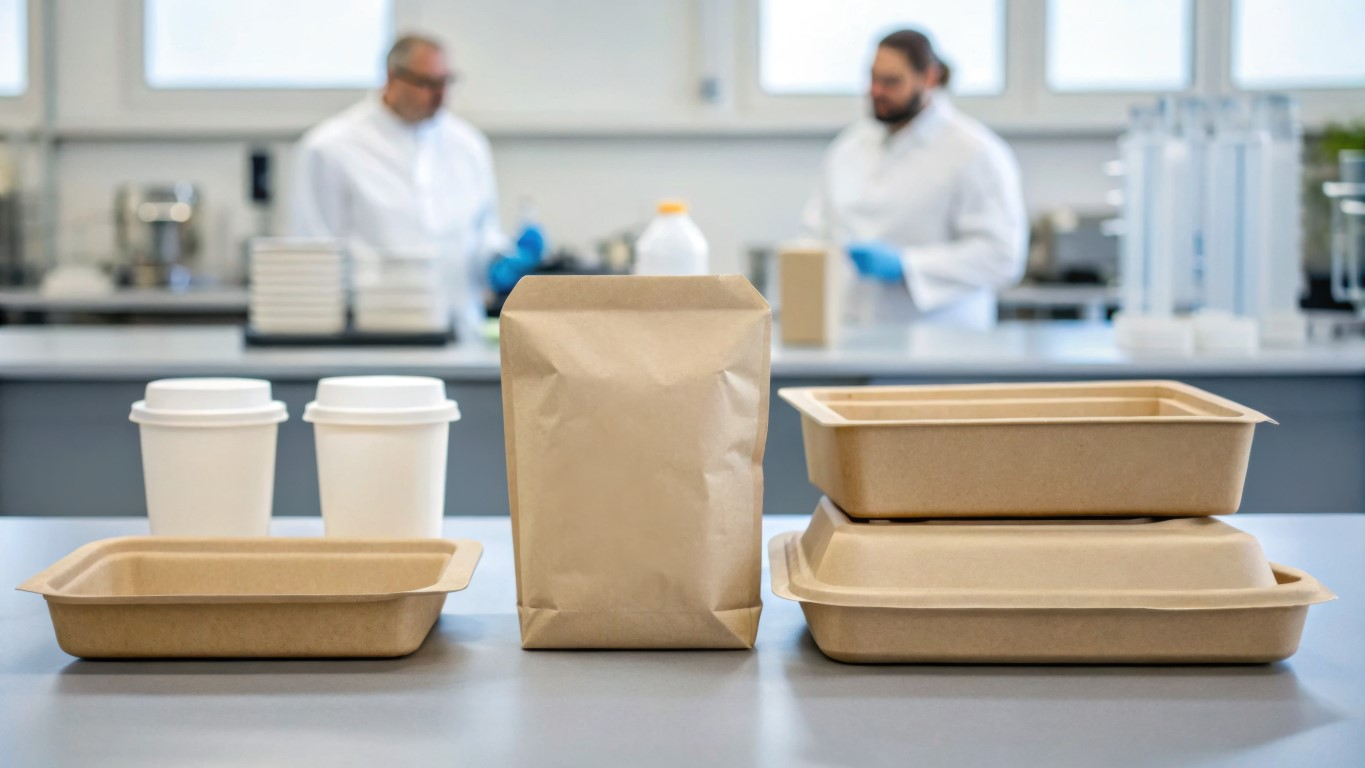
<p>The food packaging industry faces an unprecedented challenge in developing sustainable packaging solutions that minimize environmental impact while maintaining the rigorous food safety standards essential for consumer protection and regulatory compliance. At BW Packaging, we recognize that modern packaging operations must effectively manage the intersection of sustainability goals, food safety requirements, and operational efficiency to remain competitive in today's environmentally conscious marketplace. The key to success lies in understanding how innovative materials, advanced equipment design, and optimized processes can achieve sustainability objectives without compromising the fundamental responsibility to protect food products and consumers.</p><h2>The Sustainability Imperative in Food Packaging</h2><p>Consumer awareness and regulatory pressure have transformed sustainability from an optional consideration to a business imperative that affects market access, customer relationships, and competitive positioning. Companies that fail to address sustainability concerns risk losing market share to more environmentally conscious competitors.</p><h2>Environmental Impact of Traditional Packaging</h2><p>Conventional packaging systems contribute significantly to environmental challenges through resource consumption, waste generation, and carbon emissions. Traditional plastic packaging materials depend heavily on fossil fuel feedstocks while creating persistent waste that accumulates in landfills and natural environments.</p><p>Manufacturing processes for conventional packaging materials require substantial energy inputs and generate significant greenhouse gas emissions. These impacts extend throughout the supply chain from raw material extraction through final disposal or recycling.</p><p>End-of-life challenges for traditional packaging include limited recyclability, contamination issues, and inadequate waste management infrastructure that result in environmental accumulation. These challenges have focused attention on alternative materials and packaging designs that reduce environmental impact.</p><p>Food waste prevention represents a critical consideration in sustainability discussions, as packaging that effectively protects products can significantly reduce the environmental impact of food loss throughout the supply chain.</p><h2>Consumer and Regulatory Pressure for Change</h2><p>Environmental consciousness among consumers has created market demand for sustainable packaging that influences purchasing decisions across demographic groups. A few examples include:</p><ul><li><strong>Growing consumer awareness and purchasing preferences for sustainable products</strong> driving market demand for environmentally responsible packaging</li><li><strong>Corporate sustainability commitments and ESG reporting requirements</strong> creating internal pressure for measurable environmental improvements</li><li><strong>Emerging regulations targeting packaging waste and environmental impact</strong> establishing legal requirements for sustainability performance</li><li><strong>Retailer demands for sustainable packaging solutions</strong> as major retailers implement sustainability requirements for suppliers</li><li><strong>Investor pressure for environmental responsibility</strong> affecting capital availability and corporate valuation based on sustainability performance</li></ul><p>These pressures create compelling business cases for sustainability initiatives while requiring practical solutions that maintain operational effectiveness and regulatory compliance.</p><h2 id="key-sustainability-challenges-in-food-packaging">Key Sustainability Challenges in Food Packaging</h2><p>Implementing sustainable packaging solutions requires addressing fundamental tensions between environmental objectives and food safety requirements. These challenges demand innovative approaches that optimize multiple criteria simultaneously.</p><h3 id="material-selection-and-performance-tradeoffs">Material Selection and Performance Tradeoffs</h3><p>Sustainable materials must maintain essential barrier properties including oxygen, moisture, and light protection while reducing environmental impact through renewable content, recyclability, or biodegradability. This requirement often involves trade-offs between environmental benefits and protective performance.</p><p>Mechanical properties including strength, flexibility, and processability must be maintained to ensure packaging integrity throughout manufacturing, distribution, and consumer use. Sustainable materials often exhibit different processing characteristics that require equipment modifications or operational adjustments.</p><p>Shelf life considerations become critical when evaluating sustainable materials, as reduced barrier performance could lead to food spoilage and waste that negates environmental benefits. Comprehensive testing and validation ensure that sustainable materials provide adequate protection for specific applications.</p><p>Cost implications of sustainable materials often include premium pricing that must be evaluated against long-term benefits including brand value, customer loyalty, and regulatory compliance advantages.</p><h3 id="end-of-life-considerations-and-circularity">End-of-Life Considerations and Circularity</h3><p>Designing for end-of-life requires comprehensive understanding of waste management systems and material recovery infrastructure. Key points to keep in mind include:</p><ol><li><strong>Recyclability and material recovery systems</strong> ensuring that packaging materials can be effectively processed through existing or developing recycling infrastructure</li><li><strong>Compostability and biodegradation requirements</strong> meeting standards for industrial or home composting while maintaining performance during product shelf life</li><li><strong>Reusability and refillable packaging options</strong> creating durable packaging systems that support multiple use cycles</li><li><strong>Source reduction and right-sizing initiatives</strong> minimizing material usage while maintaining protective function and consumer appeal</li><li><strong>Design for disassembly and material separation</strong> enabling efficient separation of different materials for recycling or composting</li></ol><p>These considerations require collaboration throughout the supply chain to ensure that sustainable packaging designs align with available end-of-life infrastructure and capabilities.</p><h2 id="Sustainable Material Innovations">Sustainable Material Innovations</h2><p>The development of sustainable packaging materials continues to advance rapidly, with new solutions that address traditional performance limitations while providing environmental benefits. Understanding these innovations enables informed selection of materials that balance sustainability with functionality.</p><h3 id="Bio-Based and Renewable Materials">Bio-Based and Renewable Materials</h3><p>Plant-based polymers derived from renewable feedstocks including corn, sugarcane, and cellulose provide alternatives to petroleum-based plastics while maintaining essential packaging properties. These materials can be engineered to provide specific barrier and mechanical characteristics required for food packaging applications.</p><p>Renewable barrier coatings developed from natural materials including proteins, polysaccharides, and lipids offer sustainable alternatives to synthetic barrier films. These coatings can be applied to paper or other sustainable substrates to create effective barrier packaging.</p><p>Biodegradable polymers that break down under specific environmental conditions provide end-of-life advantages while maintaining performance during product shelf life. These materials require careful selection based on application requirements and available composting infrastructure.</p><p>Bio-based additives including natural antioxidants, antimicrobials, and UV protectants enhance packaging performance while supporting sustainability objectives through renewable sourcing and reduced synthetic chemical usage.</p><h3 id="Recycled Content and Circular Materials">Recycled Content and Circular Materials</h3><p>Post-consumer recycled content incorporation reduces demand for virgin materials while supporting circular economy principles. Advanced recycling technologies enable higher recycled content levels while maintaining food safety compliance through effective contamination removal.</p><p>Chemical recycling processes break down plastic waste into molecular components that can be reformed into new packaging materials with virgin-equivalent properties. These technologies enable true circularity for packaging materials that were previously difficult to recycle.</p><p>Closed-loop systems within specific supply chains enable packaging materials to be collected, processed, and reused within controlled systems that ensure quality and safety. These systems maximize material utilization while minimizing environmental impact.</p><p>Recycled fiber products including molded pulp and recycled paperboard provide sustainable alternatives for secondary packaging and protective applications while utilizing existing waste streams.</p><h2 id="equipment-considerations-for-sustainable-packaging">Equipment Considerations for Sustainable Packaging</h2><p>Modern packaging equipment must adapt to handle sustainable materials that often exhibit different properties compared to traditional packaging films and substrates. These adaptations enable successful implementation of sustainable solutions without compromising operational efficiency.</p><p>Advanced packaging systems incorporate features that optimize performance with sustainable materials while maintaining the speed and reliability essential for commercial operations. This equipment flexibility enables manufacturers to adopt sustainable solutions without major capital investments.</p><h3 id="material-handling-and-processing-adaptations">Material Handling and Processing Adaptations</h3><p>Sustainable materials often require modified handling procedures due to different mechanical properties, temperature sensitivity, or processing characteristics. Equipment must provide adjustable controls that accommodate these variations while maintaining consistent performance.</p><p>Film tension control systems must adapt to varying material properties including stretch characteristics, tear resistance, and temperature sensitivity. These adaptations ensure optimal package formation while preventing material waste or damage.</p><p>Sealing technology adjustments may be required for sustainable materials that exhibit different melting characteristics, heat sensitivity, or adhesion properties. Advanced sealing systems provide precise control over temperature, pressure, and timing to optimize performance with diverse materials.</p><p>Static control measures become particularly important with certain sustainable materials that may exhibit different electrical properties compared to traditional packaging films. Effective static control ensures smooth material handling and consistent package formation.</p><h3 id="energy-efficiency-and-process-optimization">Energy Efficiency and Process Optimization</h3><p>Energy-efficient equipment design reduces the environmental impact of packaging operations while supporting sustainability objectives. Modern packaging systems incorporate features including variable frequency drives, heat recovery, and optimized heating systems that minimize energy consumption.</p><p>Process optimization through advanced controls and monitoring systems reduces waste while improving efficiency. These systems automatically adjust operating parameters to maintain optimal performance while minimizing material usage and energy consumption.</p><p>Predictive maintenance capabilities reduce equipment downtime while extending equipment life through proactive maintenance scheduling. This approach reduces the environmental impact of equipment replacement while maintaining operational reliability.</p><p>Modular equipment design enables upgrades and improvements without complete equipment replacement, supporting sustainable equipment lifecycle management while enabling adoption of new technologies and capabilities.</p><h2 id="implementation-strategies-and-best-practices">Implementation Strategies and Best Practices</h2><p>Successful implementation of sustainable packaging solutions requires systematic approaches that address technical, operational, and commercial considerations. These strategies ensure that sustainability initiatives achieve intended objectives while maintaining business performance.</p><p>Phased implementation enables gradual transition to sustainable solutions while managing risks and learning from initial experiences. This approach allows optimization of processes and procedures before full-scale implementation.</p><p>Supplier collaboration ensures that sustainable materials meet quality and performance requirements while providing reliable supply and technical support. Strong supplier relationships enable successful implementation and continuous improvement of sustainable solutions.</p><p>Life cycle assessment provides comprehensive evaluation of environmental impacts throughout the packaging lifecycle from raw material production through end-of-life management. This assessment enables informed decision-making and optimization of environmental benefits.</p><h2 id="let-bw-packaging-help-you-maximize-your-sustainability-packaging-solutions">Let BW Packaging Help You Maximize Your Sustainability Packaging Solutions</h2><p>We understand the complexity of balancing sustainability with food safety and operational requirements. Our equipment designs support sustainable packaging initiatives while maintaining the performance and reliability essential for food packaging applications.</p><p>Contact our sustainability packaging specialists to uncover our advanced packaging technology that can support your sustainability objectives while maintaining food safety and operational excellence.</p>
 Cost Analysis: Manual vs. Automated Packaging Operations
November 20, 2025
<p>In today’s competitive manufacturing landscape, the decision between manual and automated packaging operations has become increasingly critical for business success. Many companies continue to rely on manual packaging processes, often underestimating the true costs and limitations of these operations. At BW Packaging, we’ve helped countless businesses transition to automated packaging equipment, and the financial benefits consistently exceed expectations. Understanding the comprehensive cost analysis between manual and automated systems is essential for making informed decisions that impact both immediate profitability and long-term growth potential.</p><h2 id="the-true-cost-of-manual-packaging-operations">The True Cost of Manual Packaging Operations</h2><p>Manual packaging operations carry numerous costs that extend far beyond basic hourly wages. When conducting a thorough analysis, many businesses discover that their manual operations are significantly more expensive than initially apparent. These costs compound over time, creating operational vulnerabilities that can impact business continuity and growth potential.</p><p>Realizing the full scope of manual packaging costs requires examining both direct expenses and hidden costs that may not be immediately obvious but significantly impact overall profitability. These expenses often increase over time due to wage inflation, benefits cost escalation, and growing regulatory requirements.</p><h3>Direct Labor Costs and Productivity Factors</h3><p>Direct labor represents the most visible component of manual packaging costs, but even these obvious expenses are often underestimated. Hourly wages must be supplemented by comprehensive benefits packages that add substantially to base wage costs. These benefits include health insurance, retirement contributions, workers’ compensation, unemployment insurance, and paid time off.</p><p>Overtime costs can significantly impact manual operations, particularly during peak production periods or when attempting to meet tight delivery schedules. Manual packaging operations often require overtime to compensate for productivity limitations, with premium pay rates that can double the effective hourly cost of packaging activities.</p><p>Human productivity factors introduce additional cost considerations that are not present in automated systems. Worker fatigue leads to declining productivity throughout shifts, which hurts the company’s bottom line. Consistency challenges result in packaging quality and speed variations between operators and even within the same operator across different shifts.</p><p>Training costs for new employees represent a significant investment, particularly in industries with high turnover rates. The learning curve for manual packaging operations can extend several weeks, during which productivity remains below optimal levels while training costs accumulate.</p><h3 id="hidden-costs-in-manual-operations">Hidden Costs in Manual Operations</h3><p>The hidden costs of manual packaging operations often exceed direct labor expenses and create ongoing financial drains that impact competitiveness. A few common examples include:</p><ul><li>Workers’ compensation claims and safety incidents that increase insurance premiums and create potential liability exposure</li><li>Quality inconsistencies leading to rework and customer complaints that damage brand reputation and require additional labor to resolve</li><li>Product damage from handling errors that results in waste and reduced margins on affected products</li><li>Time lost to breaks and shift changes that create downtime and reduces overall equipment effectiveness</li><li>Supervision and management overhead required to coordinate manual operations and maintain quality standards</li></ul><p>Additional hidden costs include the space requirements for manual packaging stations, which typically require more floor space per unit of output compared to automated systems. Manual operations also generate higher utility costs due to lighting, heating, and cooling requirements for larger work areas.</p><h2 id="automated-packaging-equipment-investment-analysis">Automated Packaging Equipment Investment Analysis</h2><p>Investing in automated packaging equipment requires a careful analysis of both initial costs and long-term operational benefits. While the upfront investment is substantial, the total cost of ownership calculation typically reveals compelling financial advantages that justify the investment in automation.</p><p>Modern automated packaging systems offer sophisticated capabilities that address the limitations of manual operations while providing scalability for future growth. The key to successful automation investment lies in understanding how these systems deliver value across multiple operational dimensions.</p><h3 id="initial-capital-investment-considerations">Initial Capital Investment Considerations</h3><p>Equipment costs vary significantly based on system complexity, production capacity, and customization requirements. However, these costs must be evaluated against the total operational benefits rather than simply compared to current manual operation expenses. Financing options, including leasing, equipment loans, and technology refresh programs, can help manage initial cash flow requirements while enabling immediate operational benefits.</p><p>Installation expenses include electrical work, compressed air systems, safety installations, and integration with existing production lines. Facility modifications may be required but often result in more efficient space utilization compared to manual operations.</p><p>Training and startup costs should be factored into initial investment calculations, though these represent one-time expenses that quickly pay dividends through improved operational efficiency. Most automated packaging systems achieve full operational capacity within a few weeks of installation.</p><h3 id="operational-cost-advantages">Operational Cost Advantages</h3><p>Automated packaging equipment delivers measurable cost advantages across multiple operational categories. They include:</p><ol><li><strong>Reduced labor costs and dependency</strong> that eliminate wage inflation exposure and reduce vulnerability to labor shortages</li><li><strong>Improved packaging consistency and quality</strong> that reduces customer complaints and supports premium pricing strategies</li><li><strong>Increased production speed and throughput</strong> that enables higher output from existing facility space and infrastructure</li><li><strong>Lower material waste and damage rates</strong> that improve margins and reduce environmental impact</li><li><strong>Reduced supervision requirements</strong> that allow management focus on strategic activities rather than operational oversight</li></ol><p>systems typically consume less energy per packaged unit compared to the combined requirements of manual workstations and associated infrastructure.</p><h2 id="productivity-and-efficiency-comparisons">Productivity and Efficiency Comparisons</h2><p>The productivity advantages of automated packaging equipment become apparent when comparing actual operational performance between manual and automated systems. These comparisons must account for real-world conditions, including peak demand periods, staff availability, and quality requirements.</p><p>Automated systems deliver consistent performance regardless of time of day, shift schedules, or seasonal factors that significantly impact manual operations. This consistency enables better production planning and improved customer service through reliable delivery schedules.</p><h3>Speed and Throughput Analysis</h3><p>Automated packaging systems typically operate many times faster than manual operations while maintaining superior consistency. Peak performance capabilities represent a significant advantage during periods of high demand. Manual operations are limited by physical constraints, which prevent sustained peak performance, whereas automated systems maintain consistent speed regardless of duration or external pressures.</p><p>Changeover efficiency provides additional productivity benefits, as modern automated systems can complete product changeovers in a few minutes, compared to manual line reconfiguration, which can take up to an hour.</p><h3>Quality and Consistency Metrics</h3><p>Package quality consistency represents one of the most significant advantages of automated systems. Manual operations inherently produce variation in seal quality, package appearance, and dimensional accuracy. Automated systems eliminate human variability while providing continuous monitoring and quality control capabilities.</p><p>Error rates in automated systems are also much lower when compared to manual operations. These improvements reduce rework costs, customer complaints, and quality control labor requirements.</p><p>Traceability capabilities built into modern automated systems provide detailed production records that support quality investigations and regulatory compliance requirements.</p><h2 id="long-term-financial-impact-assessment">Long-Term Financial Impact Assessment</h2><p>The long-term financial benefits of automated packaging equipment extend well beyond immediate operational savings. These systems offer strategic advantages that compound over time, supporting business growth objectives.</p><p>Equipment lifecycle costs favor automation when properly maintained. Automated systems deliver years of productive service life with appropriate upgrades and maintenance. Manual operations face ongoing cost escalation due to wage inflation and increases in benefits costs.</p><h3 id="scalability-and-future-growth-considerations">Scalability and Future Growth Considerations</h3><p>Automated packaging systems offer inherent scalability, supporting business growth without proportional increases in labor requirements. Additional capacity can often be achieved through speed optimization or extended operating hours rather than equipment multiplication.</p><p>Technology upgrade paths ensure that automated systems remain current with evolving industry requirements and customer expectations. Modern packaging equipment includes upgrade capabilities that extend useful life and maintain competitive advantages.</p><p>Market adaptability represents a crucial long-term benefit, as automated systems can be reconfigured for new products or packaging formats more efficiently than rebuilding manual operations.</p><h2 id="making-the-right-decision-for-your-operation">Making the Right Decision for Your Operation</h2><p>The decision to implement automated packaging equipment requires careful evaluation of current operations, growth objectives, and competitive pressures. Businesses that delay automation often find themselves at an increasing disadvantage as competitors achieve cost and quality advantages through technology investment.</p><p>Timing considerations should account for current market conditions, capital availability, and strategic objectives. However, the compelling financial benefits of automation mean that delays often cost more than immediate implementation.</p><p>Implementation planning should include phased approaches that minimize operational disruption while enabling immediate benefits. Many businesses successfully implement automation in stages, allowing learning and optimization before full system deployment.</p><h2 id="get-the-most-out-of-your-automated-packaging-equipment">Get the Most Out of Your Automated Packaging Equipment</h2><p>At BW Packaging, we understand that every operation has unique requirements and constraints. Our team of packaging experts can help you develop a comprehensive cost analysis tailored to your specific situation and objectives. We provide implementation and ongoing support to ensure that your automation investment delivers the expected returns.</p><p>Do you want to learn more about how our automated packaging equipment can transform your operations? Contact our packaging specialists today to schedule an exploratory discussion of your needs and discover the potential benefits for your business.</p>
 Modern Animal Food Packaging: How Automatic Bagging Equipment Improves Efficiency
October 20, 2025
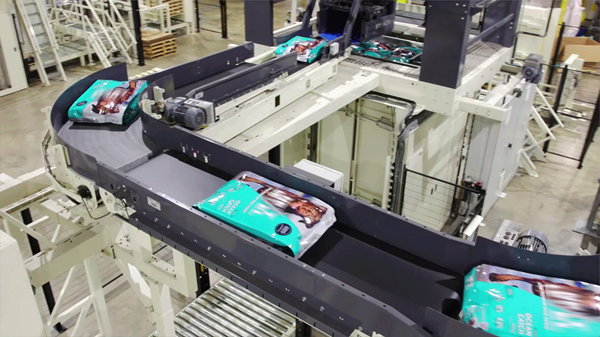
<p>In the animal feed industry, producers must package an expanding range of products efficiently while maintaining accurate weights and meeting strict standards. Even semi-automated bag filling systems that once sufficed are now struggling to keep pace with modern demands.</p><p>As a plant manager, you're feeling the pressure from multiple angles. Labor shortages make it harder to staff manual bagging stations. Inconsistent fill weights lead to giveaway or compliance issues. Frequent changeovers between different feed types and bag sizes eat into production time. And aging equipment requires constant maintenance just to achieve baseline performance. Ultimately, these challenges demonstrate that automated solutions are not merely an upgrade, but a competitive necessity.</p><p>In this post, we'll explore how modern automated bag filling solutions address these specific pain points, what features to prioritize for animal feed applications, and how integrated systems like Thiele bag filling and Symach palletizers can transform your operational efficiency while ensuring consistent quality across diverse feed types.</p><h2 id="who-we-are">Who We Are</h2><p>BW Flexible Systems helps animal feed producers safeguard product integrity while modernizing their operations with flexible bag filling, sealing and palletizing solutions. Our automated Thiele bagging and Symach palletizing solutions are known for their efficiency, versatility, precision, and ease of operability. We offer our clients training, service and a lifetime of support for every solution sold.</p><h3 id="expanding-scope-animal-feed-packaging">The Expanding Scope of Animal Feed Packaging</h3><p>Animal feed has come a long way from basic grains or standard pellets. Today›s formulations might include carefully balanced nutrients, medicated additives, or tailored blends for specific breeds. This growing diversity pushes packaging lines to become more flexible and precise, ensuring each bag meets the exact nutritional requirements promised on the label.</p><h3 id="beyond-traditional-livestock">Beyond Traditional Livestock</h3><p>Historically, the animal feed market revolved around livestock like cattle, poultry, and swine. However, demand for pet food - especially for dogs and cats - has also grown significantly, and other niche markets are on the rise. Each segment has its product characteristics. For instance, a large, pellet-based livestock feed can be more forgiving when filling bags quickly, whereas specialized canine diets might use smaller kibble or require gentle handling to avoid crushing. Additionally, some companion animal feeds including freeze-dried ingredients or high-fat content can complicate the bagging process if the machinery isn›t adapted for those properties.</p><p>Producers serving multiple segments must manage a wide range of raw materials, ranging from powders and ground ingredients to more dense pellets. This diversity can introduce challenges for weighers, sealing machines, and conveyors alike.</p><h3 id="implications-packaging-lines">Implications for Packaging Lines</h3><p>The shift toward specialized formulas and broader range of feed options means that packaging lines must be versatile enough to handle numerous bag sizes, materials, and fill targets. For instance, a line exclusively designed for 50-pound paper sacks may struggle if the company introduces a 20-pound plastic-laminated option for a niche pet feed. An outdated or manual packaging approach can lead to downtime, inconsistent weights, or even product contamination when switching product SKUs.</p><p>At the same time, regulatory scrutiny around labeling and feed safety is increasing. Labels must accurately display ingredients, usage instructions, and batch data for traceability. If these labels are misapplied or missing, producers face potential legal repercussions and consumer distrust. The solution often lies in automated bag-filling equipment with integrated labeling, check weighing, and data logging to guarantee accuracy.</p><h2 id="why-automation-critical-animal-feed-packaging">Why Automation Is Critical in Animal Feed Packaging</h2><p>Many feed manufacturers still rely on labor-intensive processes, with teams manually scooping, weighing, and sealing bags. While this approach might have sufficed decades ago, the sheer volume and variety of modern feed requirements exceed manual capacity.</p><p>Automation addresses these pressures by improving consistency, cutting labor costs, and shortening turnaround times. It also helps control dust, spillage, and potential contamination risks that can arise when employees have to handle open bags repeatedly. Key benefits of automation include:</p><ul><li><strong>Labor Reduction</strong>: Automated systems reduce the need for operators to lift heavy loads and perform repetitive tasks. This can lower workplace injuries and free up staff for higher-value activities, such as quality assurance or machine supervision.</li><li><strong>Precise Weighing</strong>: Modern weighers and bag-filling systems ensure each package meets the target net weight, eliminating both underfills and costly overfills.</li><li><strong>Dust and Spillage Control</strong>: Enclosed filling stations minimize product loss and create a cleaner workspace, which is vital when dealing with fine or potentially allergenic materials.</li><li><strong>Scalability</strong>: Automated lines can be expanded with additional stations or faster palletizing modules as production demands grow without a full system overhauling the entire system.</li><li><strong>Enhanced Traceability</strong>: Digital controls track lot codes, packaging times, and fill weights, aiding in audits or recalls.</li></ul><p>Each of these advantages contributes directly to improved efficiency and profitability, especially for large or multi-line operations handling varied feed types.</p><h2 id="modern-bag-filling-systems">Modern Bag Filling Systems: A Closer Look</h2><p>At the heart of any automated feed line is the bag-filling solution itself. Today›s equipment goes well beyond simple augers or gravity-fed hoppers. Engineers have introduced advanced mechanical, pneumatic, and hybrid fillers tailored for the texture, density, and flow properties of different feeds.</p><h3 id="mechanical-vs-pneumatic-filling-approaches">Mechanical vs. Pneumatic Filling Approaches</h3><p>Mechanical systems typically use gravity or belt conveyors to move product into the bag, coupled with adjustable gates or feeders to control flow rate. These systems are ideal for free-flowing pellets or grains where minimal bridging occurs. In contrast, pneumatic fillers use pressurized air to move lighter or more powdery materials, which can be prone to clumping or dust generation. Pneumatic systems can reduce bridging, but they might be slower for very large bag sizes.</p><p>Choosing between mechanical, pneumatic or hybrid systems or adopting a combined approach hinges on the product›s characteristics. For instance, a producer with mostly high-density pellets might prefer a mechanical filler, while one handling fine powders or light fluffs might lean toward a pneumatic setup. The end goal remains the same: achieve consistent fill weights, minimal product damage, and dust-free operation.</p><h3 id="integrated-scales-quality-checks">Integrated Scales and Quality Checks</h3><p>Modern bag fillers often feature built-in weigh scales, real-time data displays, and alarm systems for quality assurance. Each bag›s weight is measured precisely before sealing, and if it›s outside specified tolerances, the system can divert it to a rework station. This not only preserves brand integrity but also cuts losses from overweight bags.</p><p>Another emerging trend is metal detection or X-ray inspection integrated into bagging lines, ensuring contaminants like metal shards don›t end up sealed inside. Some lines also include vision systems to verify correct labeling and bag closure. By embedding these checks directly into the packaging stage, manufacturers reduce the risk of shipping flawed products, mitigating potential recalls or consumer complaints.</p><h2 id="designing-efficient-animal-feed-packaging-workflow">Designing an Efficient Animal Feed Packaging Workflow</h2><p>For maximum benefit, bag-filling solutions should slot into a well-orchestrated production environment. The steps from raw material intake to final palletizing must flow in a way that supports high throughput, minimal downtime, and consistent product quality. The key steps involved in this process include:</p><ol><li><strong>Pre-Processing Storage</strong>: Designate silos, hoppers, or bins to hold raw ingredients. Organizing these storage points can reduce cross-contamination and simplify product routing.</li><li><strong>Weighing and Blending</strong>: Use dedicated mixing stations or batch scales to ensure uniform ingredient distribution. Maintaining recipe integrity is critical, as even minor deviations can alter feed performance.</li><li><strong>Bag Filling and Sealing</strong>: Position your automated filler in a dust-controlled area, especially if dealing with fine powders. Sealing mechanisms like pinch seal or sewn closure depend on bag material and product density.</li><li><strong>Coding and Labeling</strong>: Integrate date codes, batch numbers, and brand graphics. Any label mismatch can lead to compliance issues, so automated printing or application stations are often used.</li><li><strong>Palletizing and Shipping</strong>: Once bags are sealed, they move to a palletizing zone where they›re stacked for storage or transit. Consistent stacking patterns limit damage during transport.</li></ol><p>Together, these steps create a cohesive packaging line that transforms raw inputs cleanly packaged, accurately labeled feed products.</p><h2 id="overcoming-common-pitfalls">Overcoming Common Pitfalls in Automated Animal Food Packaging</h2><p>While automation streamlines operations, it›s not without challenges. Identifying and mitigating common challenges can spell the difference between a smooth rollout and costly downtime.</p><h3 id="clogging-vs-bridging">Clogging or Bridging</h3><p>Feed products, especially those with higher moisture or fine particulates, can bridge in hoppers, forming clumps that block flow. When product flow stalls, the filler may deliver inconsistent weights or completely stop. Solutions include installing agitators, vibrators, carefully sloped hopper walls, pulsing mechanisms or air knives to prevent material buildup.</p><p>Controlling humidity in the filling area also helps. If the environment is overly damp, certain feeds can stick to metal surfaces, creating partial blockages. A stable, climate-controlled packaging zone significantly reduces bridging incidents and keeps throughput steady.</p><h3 id="bag-integrity-issues">Bag Integrity Issues</h3><p>Different bag materials, woven polypropylene, paper, and laminated plastics, have varying strengths and sealing requirements. If a bag›s structure isn›t sturdy enough to handle the product weight, rips or punctures become more likely. Operators might see small tears near the seams or corners, especially during high-speed filling. Overfilling or uneven product distribution can also stress the bag, leading to lumps or bulges that hamper sealing.</p><p>Before committing to a packaging material, test it under realistic conditions. Consider how it behaves with the filler›s feed rate, the product›s texture, and the chosen sealing mechanism (sewn vs. heat-sealed).</p><h2 id="training-your-team-maintaining-equipment">Training Your Team and Maintaining Equipment</h2><p>Automation technologies deliver full value when operated and maintained by well-trained staff. Employees should understand the fundamentals of bag filling, such as calibrating weighers, recognizing bridging, and performing emergency stops. Frequent training refreshers keep even experienced team members updated on software changes and best practices.</p><p>Maintenance is equally critical. Track each machine›s performance metrics to spot trends like gradual fill-weight drift or increased downtime. Proactive tasks - such as replacing worn belts, lubricating critical parts, and cleaning dust-laden areas can prevent sudden malfunctions. Ideally, these activities should be scheduled around production lulls to minimize downtime.</p><p>An overlooked area is spare parts inventory. Storing frequently replaced components (like sensors or motor belts) on-site allows for quick swaps rather than waiting on emergency shipments. For bigger repairs, forging a strong relationship with your machinery supplier pays dividends in terms of fast support and minimal disruption.</p><h2 id="boost-your-feed-operations">Boost Your Feed Operations with Automated Bagging & Palletizing</h2><p>As the animal feed industry diversifies, efficient and reliable packaging has become a competitive necessity. Systems like Thiele or Symach offer integrated solutions for bag filling and palletizing, combining gentle product handling, high-accuracy weighing, and robust stacking into one streamlined workflow.</p><p>When you work with BW Flexible Systems, you benefit from our decades of experience tailoring technology to match your unique feed formulations and throughput targets. Here are a few of our systems that can help you get started automating your animal food packaging:</p><ul><li>Thiele Swinger Bag Filling System: The Thiele Swinger is a compact, semi- or fully automated bag filling system that helps small feed mills transition from manual to efficient, scalable operations. With intuitive controls, quick changeovers, and a low-profile design, it›s ideal for producers with limited space and growing demand.</li><li>Thiele OmniStar Bag Filling Machine: Built for speed and precision, the Thiele OmniStar fills up to 20 mid-to-large bags per minute while minimizing spillage and downtime. Its smart diagnostics, automatic reject system, and barcode-driven changeovers make it a powerful solution for producers ready to scale.</li><li>Thiele 6128 Gross Weigh Scale: The Thiele 6128 delivers accurate, consistent weighing with a two-stage system and automatic compensation to ensure every bag meets your standards. It›s fast, easy to operate, and integrates seamlessly with BWFS bagging systems for a streamlined workflow.</li><li>Symach Palletizing Solutions: Symach palletizers come in a variety of speeds and footprints, offering feed producers a variety of options for automating their palletizing.</li></ul><p>Contact us today to learn how these modern systems can drive productivity, quality, and profitability across your entire feed operation.</p>
 Quick Changeover Best Practices For Modern Packaging Lines
August 28, 2025
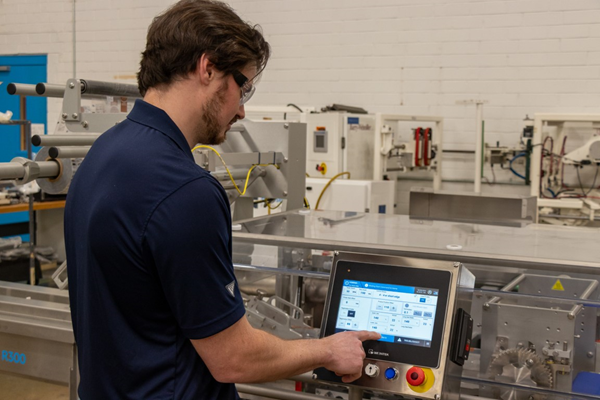
<p>At BW Packaging, we understand that packaging lines must remain agile to meet shifting consumer tastes, seasonal promotions, and fast-paced product launches. In many factories, transitioning from one product SKU to another can take hours or even days, time during which machines sit idle and production stalls. </p><p>Industry leaders must understand the importance of quick changeovers, why they’re essential for modern manufacturing, and specific best practices that maintain product quality without sacrificing production speed. Now, see how a combination of smart planning, staff training, and strategic machinery choices can transform your packaging line into a nimble, profit-driving asset. </p><h2 id="why-quick-changeovers-are-crucial">Why Quick Changeovers Are Crucial </h2><p>In a highly competitive marketplace, the ability to pivot swiftly from one product run to another can separate leading brands from those that lag behind. Quick changeovers reduce downtime, enabling you to produce more SKUs in less time and rapidly respond to <a href="/blog/pet-food-packaging-industry-trends-to-watch">market trends</a>. </p><h3 id="adapting-to-rapid-sku-expansion">Adapting to Rapid SKU Expansion </h3><p>As consumer demand shifts, brands introduce new flavors, seasonal variants, and limited-edition products at a rapid clip. This variety drives the need for changeovers, sometimes multiple times a day. If switching from one bag size or labeling requirement to another is cumbersome, you risk missing prime market windows. Alternatively, you might overproduce certain SKUs to avoid frequent changeovers, which can lead to wasted inventory or stale products. </p><p>A well-orchestrated quick changeover process allows operators to swap packaging films, adjust sealing temperatures, and reprogram weighers without a drawn-out shutdown. This responsiveness is critical for meeting tight retailer deadlines, capturing impulse-buy markets, and ensuring a consistent supply of fresh goods. </p><h3 id="minimizing-downtime">Minimizing Downtime </h3><p><a href="/blog/proactive-strategies-for-packaging-machine-maintenance" title="Proactive Strategies for Packaging Machine Maintenance | Packed with Expertise">Downtime</a> bleeds profitability. When machines aren’t running, labor, overhead, and equipment costs accumulate with no offsetting revenue. While no operation can avoid stoppages entirely, quick changeovers aim to keep them as brief as possible. Ultimately, the leaner the transition, the greater the overall throughput and the healthier the bottom line. </p><p>It’s also worth noting that poor changeover processes can cause stress among operators, leading to mistakes like incorrect sealing parameters or mislabeled packaging. By standardizing and refining each step of the changeover, you create a calmer, more predictable work environment that supports high-quality output. </p><h2 id="common-obstacles-during-line-changeovers">Common Obstacles During Line Changeovers </h2><p>Even straightforward packaging lines contain multiple machines and components, think form-fill-seal equipment, labelers, weighers, and conveyors, all of which must be realigned or reconfigured for a new SKU. Inconsistencies or delays at any one station can cascade into extended downtime. </p><p>Without a standardized approach, operators may improvise each time, resulting in missed steps or overlooked details. It’s easy for screws, tools, and parts to go missing in the shuffle, especially if they aren’t stored properly. A few obstacles during changeovers that must be overcome include: </p><ul><li><strong>Lack of Standardized Procedures</strong>: Without documented steps, staff rely on tribal knowledge that may vary widely.</li><li>Inefficient Machine Adjustments: If equipment settings must be manually dialed in each time, small errors or guesswork can create further delays.</li><li><strong>Equipment Cleaning Delays</strong>: Thorough cleaning between SKUs is often necessary—especially with allergen or hygiene concerns—but can become a bottleneck if not well planned.</li><li><strong>Limited </strong> <a href="/blog/cross-training-strategies-for-packaging-line-efficiency" title="Cross-Training Strategies for Packaging Line Efficiency | Packed with Expertise" class="font-weight-bold">Operator Training</a>: If only one or two technicians know how to do a changeover, any absence can bring the line to a standstill.</li><li><strong>Unclear Communication</strong>: Lack of real-time updates can cause operators to stand by waiting for instructions or searching for needed parts.</li></ul><p>By identifying these pain points, companies can systematically address them through standardized protocols, better training, and the right tooling strategies. </p><h2 id="best-practices-for-faster-transitions">Best Practices for Faster Transitions </h2><p>A thoughtful blend of organizational tactics and mechanical optimizations can shorten changeover times dramatically. A few steps and best practices to follow include: </p><ol><li><strong>Pre-Stage Materials</strong>:<br>Before a run ends, gather the new packaging films, labels, and product components at the line. This way, operators aren’t scrambling to locate items once it’s time to change over.</li><li><strong>Implement Quick-Release Mechanisms</strong>:<br>Minimizing the number of tools required for adjustments cuts down on fumbling or misplacement. Quick-clamp or snap-on parts let operators switch forming tubes, seal jaws, or guides with minimal fuss.</li><li><strong>Use Visual Aids and Checklists</strong>:<br>Detailed checklists eliminate memory reliance and inconsistency. A large, laminated guide near each station helps keep staff on track, ensuring essential tasks aren’t overlooked.</li><li><a href="/blog/cross-training-strategies-for-packaging-line-efficiency" title="Cross-Training Strategies for Packaging Line Efficiency | Packed with Expertise" class="font-weight-bold">Cross-Train Staff</a>:<br>If only one person knows how to adjust the weigher, any absence or backlog at that station stalls the whole line. Cross-training multiple operators fosters team collaboration, making it easier for staff to step in and handle each step of the process.</li><li><strong>Leverage Digital Controls</strong>:<br>Modern packaging machinery can store multiple recipes or parameter sets. By selecting the correct program on the control panel, operators rapidly shift from one product’s sealing temperature, fill weight, or labeling layout to another.</li></ol><p>Each of these tactics, when combined, yields a streamlined transition that not only shortens downtime but also maintains rigorous product standards. </p><h3 id="why-changeover-speed-doesnt-mean-compromised-quality">Why Changeover Speed Doesn’t Mean Compromised Quality </h3><p>A key concern is that speeding up transitions might create errors, like mislabeled packages or incomplete cleaning between SKUs. Yet, following the above best practices systematically actually helps maintain quality. <a href="/blog/quick-changeover-techniques-for-multi-product-bakery-operations" title="Quick Changeover Techniques for Multi-Product Bakery Operations | Packed with Expertise">Standardized processes</a> reduce guesswork, while pre-staging ensures that everything is ready before the line is halted. </p><h2 id="maintaining-quality-through-rapid-changeovers">Maintaining Quality Through Rapid Changeovers </h2><p>While speed is paramount, it’s crucial not to let <a href="/blog/reducing-product-damage--gentle-packaging-solutions-for-delicate-baked-goods" title="Reducing Product Damage: Gentle Packaging Solutions for Delicate Baked Goods | Packed with Expertise">product quality</a> slip. A quick changeover that leads to mislabeled or poorly sealed packages is self-defeating. Instead, quality checks should be integrated into the transition process to confirm that each new run meets specifications. </p><h3 id="checking-seals-and-fill-accuracy">Checking Seals and Fill Accuracy </h3><p>As soon as the new film roll is loaded, run a short test batch. Inspect the seals under real operating conditions. Tug at the seal to ensure it doesn’t split, check for wrinkles or gaps, and verify that the seal jaws align properly. At the same time, random samples will be weighed to confirm fill accuracy. If you notice any discrepancies, address them immediately rather than waiting until you’ve produced a large batch of off-spec product. </p><h3 id="documenting-results">Documenting Results </h3><p>Keep a record of how each changeover proceeds. Note the time taken for each step, any issues encountered, and the solutions. Over subsequent runs, look for patterns, as perhaps the same clamp causes delays or certain cleaning tasks consistently run long. </p><h2 id="scheduling-and-planning-for-frequent-changes">Scheduling and Planning for Frequent Changes </h2><p>Even with excellent systems in place, multiple daily changeovers can still strain staff and resources if not carefully scheduled. Where possible, group similar SKUs back-to-back to reduce the extent of each transition. For instance, if you package snacks in 8-ounce, 12-ounce, and 16-ounce formats, line up the runs so minimal adjustments are needed between them. Consolidate bigger leaps for the end or start of a shift when comprehensive cleaning is more convenient. </p><p>In addition, consider how shift schedules influence changeover success. If operators know a change is coming at the halfway point of a shift, they can proactively gather new materials and label reels. Similarly, a short daily meeting can highlight the upcoming schedule, ensuring everyone is aligned on priorities. This fosters accountability and reduces communication lapses. </p><h2 id="streamline-your-packaging-lines-for-greater-efficiency">Streamline Your Packaging Lines for Greater Efficiency </h2><p>A well-executed quick changeover strategy can do more than <a href="/blog/proactive-strategies-for-packaging-machine-maintenance" title="Proactive Strategies for Packaging Machine Maintenance | Packed with Expertise">cut downtime</a>; it can re-energize an entire production environment. When the staff sees that management values their efficiency and provides the right tools, morale often improves, resulting in fewer mistakes and a more cohesive team dynamic. Whether you produce confections, beverages, pharmaceuticals, or any item with frequent packaging variations, quick changeovers help you stay competitive in a fast-moving market. </p><p>By partnering with BW Packaging, you can explore machinery features, like recipe storage, quick-release assemblies, and modular designs, that inherently facilitate smoother transitions. We also offer consultancy on process optimization, ensuring each station is placed logically to minimize travel time and confusion. <a href="/contact">Contact us today</a> to learn how we can tailor advanced packaging solutions to your needs, transforming slow, error-prone changeovers into a streamlined, efficient routine. </p>
 Cross-Training Strategies for Packaging Line Efficiency
May 22, 2025
<p>At <a href="D85F2E51-76A6-674E-8383-FF0300805640" title="BW Flexible Systems">BW Flexible Systems</a>, we believe building a capable and versatile workforce is key to maximizing your packaging line efficiency. Systemic cross-training can help your team handle multiple stations and responsibilities, ultimately reducing production delays and boosting overall productivity. Through structured programs that identify skill gaps and foster ongoing improvement, companies can empower workers to address challenges quickly and efficiently.</p><p>Learn more about how to maximize your packaging line efficiency below. Then <a href="0DB12E51-76A6-674E-8383-FF0300805640" title="Contact Us | BW Flexible Systems">contact us</a> for <a href="8D282F51-76A6-674E-8383-FF0300805640" title="Training | BW Flexible Systems">customized training solutions</a>.</p><h2 id="defining-cross-training-in-a-packaging-environment">Defining Cross-Training in a Packaging Environment </h2><p>Cross-training involves teaching employees the essential skills needed to perform duties outside of their primary roles, ensuring they can step in when necessary. Unlike standard job rotation, where employees might cycle through various positions mainly for exposure and basic understanding, cross-training focuses on deep functional expertise in each station. This approach emphasizes flexibility and rapid adaptability in changing production environments.</p><p>In a fast-paced packaging line, interruptions or bottlenecks often occur when only one person knows how to run a particular machine. Having multiple team members who can step into any role ensures continuity, even if someone is absent or equipment needs shifting. Over time, this collective agility enhances both morale and the bottom line.</p><h2 id="identifying-roles-and-essential-skill-sets">Identifying Roles and Essential Skill Sets </h2><p>The first step toward effective cross-training is a clear understanding of every role on the packaging floor. Managers should list each station's tasks, technical requirements, and soft skills, such as communication or problem-solving. This comprehensive role map allows teams to see how various stations interact within the broader workflow.</p><p>Once roles are documented, the next step is to assess which team members have already mastered or partially acquired relevant competencies. A structured skill inventory, often collected through questionnaires or simple testing, helps highlight where the greatest gaps lie. This data-driven approach ensures training resources are used efficiently, focusing on bridging the most critical deficits first.</p><h2 id="how-to-structure-a-targeted-training-program">How To Structure a Targeted Training Program</h2><p>Establishing a systematic program is crucial for helping employees develop the right skills in the right order. The top steps to follow to structure an effective cross-training initiative include:</p><ol><li><strong>Define Learning Objectives:</strong> Specify the key takeaways for each skill or station. Clear objectives ensure that trainees understand what is expected and how it relates to broader goals.</li><li><strong>Segment Tasks by Complexity:</strong> Start with basic procedures before moving on to advanced operations or troubleshooting. This gradual progression builds confidence and reduces overwhelm.</li><li><strong>Create a Training Timeline:</strong> Allocate specific time frames for each skill module, balancing the demands of daily production. A well-planned schedule helps prevent training from clashing with critical deliverables.</li><li><strong>Incorporate Hands-On Exercises:</strong> Provide learners with real equipment and scenarios to apply new knowledge. Practical experience cements lessons far more effectively than lectures alone.</li><li><strong>Use Checklists and Documentation:</strong> Standardize procedures in written or digital formats for easy reference. This consistency helps maintain uniform quality and minimizes confusion.</li><li><strong>Assign Mentors:</strong> Pair novices with seasoned operators who can offer tips, reinforce best practices, and correct minor errors in real time. Mentoring accelerates learning and fosters camaraderie.</li><li><strong>Set Milestones and Assessments:</strong> Evaluate progress at regular intervals to confirm trainees have internalized the material. Frequent check-ins encourage steady development and show where extra support might be needed.</li></ol><p>As new equipment or processes emerge, the structure can easily adapt, ensuring ongoing growth and operational resilience.</p><h2 id="effective-teaching-methods-for-maximum-retention">Effective Teaching Methods for Maximum Retention </h2><p>Choosing the right mix of teaching methods is vital for engaging diverse learning styles and reinforcing new information effectively. Several strategies to enhance cross-training outcomes include:</p><ul><li><strong>Hands-On Learning:</strong> Allow trainees to perform tasks under supervision. Practicing real actions builds muscle memory and confidence.</li><li><strong>Digital Resources and Tutorials:</strong> Offer videos, slide decks, or interactive software modules. These materials let employees revisit lessons anytime they need a refresher.</li><li><strong>Practice-Based Testing:</strong> After each training session, use quizzes or mini-assessments to confirm understanding. Immediate feedback helps correct misconceptions before they become ingrained.</li><li><strong>Peer-to-Peer Coaching:</strong> Encourage employees who have mastered a skill to guide newer learners. This promotes knowledge sharing and fosters supportive relationships.</li><li><strong>Scenario Simulations:</strong> Present hypothetical situations or production challenges. Asking teams to work through solutions together boosts problem-solving skills in real-world contexts.</li></ul><p>By combining these methods, you cater to varied learning preferences and maintain consistent knowledge transfer.</p><h2 id="measuring-the-impact-on-packaging-line-efficiency">Measuring the Impact on Packaging Line Efficiency </h2><p>Implementing cross-training without monitoring its effects can lead to missed opportunities for improvement. By focusing on specific metrics, you gain valuable insights into how new skills translate to tangible performance gains. Key KPIs to consider include:</p><ol><li><strong>Error Rates:</strong> Reflects how accurately tasks are performed without mishaps.</li><li><strong>Throughput Speed:</strong> Measures how quickly products move through the packaging line.</li><li><strong>Downtime Frequency:</strong> Indicates how often line stops occur due to operator shortages or technical mishaps.</li><li><strong>Changeover Duration:</strong> Shows how quickly employees switch tasks or reconfigure machinery for different product runs.</li><li><strong>Overall Equipment Effectiveness (OEE):</strong> Encompasses availability, performance, and quality across the line.</li><li><strong>Employee Turnover Rates:</strong> Reveals how staff retention correlates with job satisfaction and skill development opportunities.</li><li><strong>Training Completion Rates:</strong> Tracks how many employees fully master each cross-trained skill.</li></ol><p>Once your team starts tracking these metrics, you can correlate improvements or declines with specific changes in training strategy. For instance, a drop in error rates might align with a newly implemented hands-on workshop, suggesting that the approach is particularly effective. By analyzing these data points regularly, managers can adjust training sequences or expand modules to target weaker areas.</p><h2 id="balancing-workloads-and-preventing-burnout">Balancing Workloads and Preventing Burnout </h2><p>With cross-training in place, multiple employees can perform identical tasks, so managers need to carefully assign duties to avoid overloading certain individuals. A rotating schedule allows each person to alternate between stations, providing variety and preventing fatigue. By maintaining transparency about who handles what tasks, the entire team can see the rationale behind these distributions.</p><p>In high-volume environments, breaking the day into distinct segments or shifts can help prevent mental and physical strain. Strategically assigning people to different roles throughout a shift keeps monotony at bay. Aligning schedules with production peaks and troughs ensures the right number of trained hands are always on deck when needed.</p><h2 id="boost-your-packaging-line-performance-with-bw-flexible-systems">Boost Your Packaging Line Performance with BW Flexible Systems </h2><p>At <a href="5FB52E51-76A6-674E-8383-FF0300805640" title="About Us | BW Flexible Systems">BW Flexible Systems</a>, we can support your cross-training initiatives through integrated machinery solutions and expert guidance. By aligning automated packaging equipment with a skilled, versatile workforce, you can maximize your packaging line efficiency. <a href="0DB12E51-76A6-674E-8383-FF0300805640" title="Contact Us | BW Flexible Systems">Contact us today</a> to discover how our <a href="8D282F51-76A6-674E-8383-FF0300805640" title="Training | BW Flexible Systems">training program</a> can help your packaging operation reach new levels of efficiency and reliability.</p>
 5 Key Benefits of a Conventional Palletizer
August 1, 2024
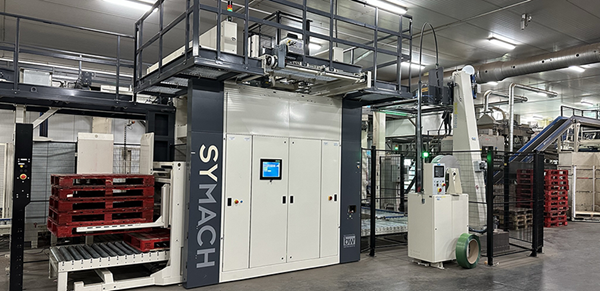
<p>Palletizing is a crucial final step in the packaging process, ensuring that products reach store shelves in optimal condition. Poorly palletized goods can damage both your reputation and customer satisfaction. Manual stacking often compromises employee well-being and operational efficiency, so an increasing number of brands are turning to automatic palletizers.</p><p>For those considering this shift, choosing the right type of palletizer is vital for optimizing your operations. Conventional palletizers, known for their reliability and efficiency, are particularly favored by many plant managers and packaging engineers. In this post, we explore the five key benefits of a conventional palletizer for bags—from operational speed to ease of changeover—highlighting why they remain a top choice for enhancing productivity in bag production.</p><h3>Operational Speed and Efficiency</h3><p>A conventional palletizer machine maintains a consistent speed, synchronizing better with upstream machines, such as a bag sewing station. This consistent speed ensures a smoother workflow and contributes to the machine's longevity and reduced maintenance needs. Conventional palletizers operate at high speeds, typically ranging from 24 to 28 bags per minute for 25kg bags. By operating at an optimal speed, conventional palletizers enhance Overall Equipment Effectiveness (OEE), making them a reliable choice for maximizing production efficiency.</p><h3>Continuous Operation</h3><p>Conventional palletizers utilize sliding doors to seamlessly transition between full and empty pallets without stopping, maintaining a continuous flow that mirrors the upstream packaging line. This consistent operation minimizes downtime and enhances productivity, ensuring that the packaging line operates without interruptions.</p><h3>Precision in Bag Positioning and Pallet Stability</h3><p>Conventional palletizers employ bag turning devices and a formation cage to ensure precise bag positioning. These systems correct positional errors before stacking, significantly reducing the risk of unstable pallets. After stacking, a conventional palletizer for bags compresses each layer against the sliding doors. This process ensures a flat, stable surface for subsequent layers, further decreasing the risk of the pallet falling apart.</p><h3>Ease of Changeover</h3><p>The versatility of conventional palletizers allows them to handle various bag types, shapes, and weights without the need for mechanical adjustments. Recipe-based changeovers enable quick and easy adjustments, reducing downtime and operational costs. Additionally, operators can easily program new stacking patterns via the Human-Machine Interface (HMI). The ability to create new patterns with the HMI enhances flexibility compared to other systems that might require vendor intervention.</p><h3>Compact Design and Space Efficiency</h3><p>Despite its substantial size and functionality, a conventional palletizer typically occupies less floor space than other types of palletizers due to its contained stacking mechanism. This function eliminates the need for safety fencing, which requires extra floor space. The compact design makes it especially suitable for facilities with limited space, optimizing the utilization of the production area.</p><h3>Concluding Thoughts and Innovation with the Symach 3500S</h3><p>Conventional palletizers are celebrated for their reliability, operational efficiency, and precise stacking capabilities, making them the preferred choice for many bag producers. As the industry evolves, BW Flexible Systems is at the forefront of innovation with machines like the <a data-sf-ec-immutable="" title="3500S Palletizer | BW Flexible Systems" href="https://www.bwflexiblesystems.com/machine/bag-palletizing/3500s-palletizer">Symach 3500S</a>.</p><p>The Symach 3500S is a next generation machine combining the original Thiele 3500 Master Palletizer with Symach palletizing innovations. It enhances the beneficial qualities of conventional palletizer machines with advanced features for diverse packaging needs.</p><h4>Symach 3500S Unique Features:</h4><div class="container-fluid"><div class="row" style="margin-bottom: 1em !important"><div class="col-sm-3"><strong>Improved Stacking Cage</strong></div><div class="col-sm-9">Ensures perfectly aligned pallets by minimizing overhang, crucial for maintaining product integrity during transport.</div></div><div class="row" style="margin-bottom: 1em !important"><div class="col-sm-3"><strong>Press Bars in Stacking Cage</strong></div><div class="col-sm-9">Specifically designed to enhance the stacking of foldable plastic crates and boxes, ensuring secure and stable interlocking.</div></div><div class="row" style="margin-bottom: 1.2em !important"><div class="col-sm-3"><strong>Formation Cage</strong></div><div class="col-sm-9">Optimizes stack quality for various bag types, especially non-brick styles, providing flexibility across product lines.</div></div></div><p>These innovations not only improve stacking quality but also simplify operations. The 3500S is engineered for ease of use, featuring a user-friendly interface for smart stacking pattern creation and a clean design that simplifies maintenance.</p><p>The 3500S builds on experience and technological developments to replace the Thiele 3500 Master Palletizer, but BWFS will continue to support owners of the older generation palletizer with parts, maintenance and upgrades.</p><p>Discover how the Symach 3500S can transform your packaging line and explore our full range of palletizing solutions, <a data-sf-ec-immutable="" title="Bag Palletizers | BW Flexible Systems" href="https://www.bwflexiblesystems.com/machine-type/bag-palletizing">click here</a></p>
 South Carolina Manufacturing OpExChange Members Tour BW Flexible Systems
May 2, 2024
<p>Last month marked the first OpExChange plant visit of Q2 2024, hosted by BW Flexible Systems in Duncan, South Carolina. The primary focus of the tour was to offer insights into their people-centric culture and their ongoing implementation of lean manufacturing principles through a tiered reporting system.</p><p>Thirty-two OpExChange representatives from twenty-three peer organizations across the state participated in the three-hour plant visit. While the attendees took away many insights into lean manufacturing practices, it was BW Flexible Systems' unique culture and leadership program that left the most profound impression.</p><p>Jake Huskey, the Operations Director of the Duncan site, extended a warm welcome to each visitor upon their arrival. Providing a succinct overview, he introduced BW Flexible Systems and its affiliation with the parent company, Barry-Wehmiller, led by CEO Bob Chapman.</p><p>BW Flexible Systems operates as one of several companies within the Barry-Wehmiller family, specializing in the construction of custom equipment for flexible packaging, including form, fill, and seal packaging solutions. At the Duncan plant, production includes both vertical, gravity-fed machines and horizontal, in-feed systems, employing approximately 220 dedicated individuals. Globally, Barry-Wehmiller has a workforce exceeding 12,000 team members across more than 120 sites, with an annual revenue surpassing $3 billion.</p><h2>Crisis of Leadership</h2><div><div><p>Jake provided insight into the development of the leadership program within the Barry-Wehmiller corporation. <a data-sf-ec-immutable="" title="Bob Chapman / Barry-Wehmiller" target="_blank" href="https://www.barrywehmiller.com/story/leader/bob-chapman?utm_source=blog&utm_medium=about+link&utm_campaign=BWFS+blog+links&utm_content=OpExChange+Tour+post">Bob Chapman</a> has been the CEO and Chairman of this company for over 45 years, starting when he was only 30 years old. Jake shared a short video with Bob in which he conveyed that there is an urgent situation in our organizations which requires attention, not only to help our companies but also to help our societal situation. Bob explained that nearly 88% of the workforce goes home at the end of the workday believing that they work for a company that does not care about them. He stated that “We have a crisis in this country – a crisis of leadership … And many of the symptoms we are seeing in society – broken families, broken marriages, broken lives – are the result of us sending people home each day with the sense that they work for an organization that doesn't care about them.”<span style="background-color: rgba(0, 0, 0, 0); color: inherit; font-family: inherit; font-size: inherit; text-align: inherit; text-transform: inherit; word-spacing: normal; caret-color: auto; white-space: inherit"></span></p></div><div><a style="margin: 8px 12px; max-width: calc(100% - 24px); height: auto; float: right" data-sf-ec-immutable="" title="Everybody Matters by Bob Chapman and Raj Sisodia" target="_blank" href="https://www.google.com/books/edition/Everybody_Matters/Of3aCwAAQBAJ?hl=en&gbpv=0"><img style="max-width: calc(100% - 24px); height: auto; float: right" width="250" title="Everybody Matters by Bob Chapman and Raj Sisodia" height="310" src="/images/default-source/blog/everybody-matters-(background-splash).png?sfvrsn=f54c495f_0" sf-image-responsive="true" sf-size="100" alt="Everybody Matters by Bob Chapman and Raj Sisodia"></a></div></div><p>In 2015, Bob co-authored a book called, <em><a data-sf-ec-immutable="" target="_blank" href="https://www.barrywehmiller.com/outreach/book?utm_source=blog&utm_medium=about+link&utm_campaign=BWFS+blog+links&utm_content=OpExChange+Tour+post">Everybody Matters: The Extraordinary Power of Caring for Your People like Family</a></em> which became a Wall Street Journal best seller. This book details Bob's own journey and is a call-to-action for leaders and organizations in our country. Jake provided each of the visitors with their own copy to take back with them.</p><h2>BW Leadership</h2><p>Every attendee was also provided a handout of the BW vision statement, which begins, “We measure success by the way we touch the lives of people.” It articulates a vision centered on valuing and empowering their people, in order to achieve business success by positively impacting the lives of all stakeholders.</p><p>They established their very own Barry-Wehmiller University, built upon the concept of “integrated” education, emphasizing activities, breakout groups, practice sessions, and continued learning beyond class time. Jake emphasized that these courses are open to all employees, not just those with “Leader” in their job titles.</p><p>Jake went on to say that their leadership team is also expected to coach and mentor others. He pointed out that he is officially a “Professor” within the University.</p><p>A salient point in their top-level care for their employees is job security. Barry-Wehmiller has never had a layoff. Sarah Beth Settle, Aftermarket Operations Leader, shared that she started her career at BW in 2007, just before the economic downturn. She was very worried about what might happen. BW stayed true to their commitment of no layoffs, easing her concern and building an even stronger sense of family for her.</p><h2>Lean Manufacturing at BW Flexible Systems</h2><p>The Duncan facility has been engaged in lean activities for about fifteen years. This is fitting as one of the foundational elements of the Toyota Production System is “Respect for People.”</p><p>Last year, the Duncan leadership team began reading the book, <em><a data-sf-ec-immutable="" title="Creating a Lean Culture: Tools to Sustain Lean Conversions, Third Edition | Routledge Publishing" target="_blank" href="https://www.routledge.com/Creating-a-Lean-Culture-Tools-to-Sustain-Lean-Conversions-Third-Edition/Mann/p/book/9781482243239?utm_source=blog&utm_medium=about+link&utm_campaign=BWFS+blog+links&utm_content=OpExChange+Tour+post">Creating a Lean Culture</a></em> by David Mann. Over a span of sixteen weeks, they read one chapter per week, gathering for discussions during lunch sessions. They utilized this as a roadmap for establishing a visual tiered reporting system tailored to their operations.</p><p>The foundation of their implementation strategy is the tier one board, located within each work area, focusing on SQDCP (Safety, Quality, Delivery, Cost, People) metrics. Every morning, team leaders meet with their respective teams to assess performance across each category, assign actionable tasks, and escalate any challenges to the tier two boards located in the Mission Control Room (MCR).</p><p>The MCR serves as a dedicated room housing four tier two boards, a tier three board, and a board dedicated to continuous improvement initiatives. During the plant tour, Jake provided insight into the functionality of the tiered reporting system. Daily tier two meetings are facilitated by either the value stream or department leaders, with all information cascading up to the tier three board. As the operations director, Jake oversees the tier three meetings, ensuring alignment and driving strategic decisions.</p><p>Jake recognizes that their lean program, particularly their tiered reporting is developing. “It is far from perfect,” he told the group. “Please help us make it better!”</p><h2>Plant Tour</h2><p>During the tour, the production area stood out for its exceptional cleanliness, with clear demarcation between machine build zones and walkways delineated by yellow tape. Notably, BW has expanded upon the traditional 5S program by incorporating two additional “S's” – Safety and Satisfaction.</p><p>Jake highlighted that their facility is currently engaged in production of machines normally produced by a sister facility. This utilizes some surplus capacity effectively which helps both facilities. This endeavor reflects their commitment to continuous improvement, with intentions to formalize this process as part of a broader continuous improvement initiative between sites.</p><p>In the final assembly area, each machine has its own dedicated whiteboard, providing a visual representation of the build progress. These updates feed into the tier one boards, offering daily insights into production status. Depending on the complexity of the machine, completion ranges from 12 to 15 days.</p><h2>Culture is Everything</h2><div><div><p>As any OpExChange member company can confirm, a strong and engaged culture in an organization is foundational to the sustained success of any initiative or change being implemented. This is true whether it is implementing a lean manufacturing transformation, incorporating automation, changing an ERP system, or anything else that affects employees' lives.</p><p>Dustin Batchler, Global Supply Chain Leader, shared his experience when he first realized that this truly caring attitude was more than just talk. On his second week on the job in 2021, he found himself in a meeting with Bob Chapman and several other operational leaders. They were discussing a situation where they were approaching the end of the fiscal quarter and were behind on shipments. They were discussing options on how to resolve this. One of the suggestions was to run overtime on Saturdays. Bob sat back, listened, and the put this question to the group, “What is that going to do to our people?”</p></div><div style="float: right; margin: 12px; max-width: 300px !important"><img width="250" title="Dustin shares his experience" height="349" src="/images/default-source/blog/bw-dustin-1.jpg?sfvrsn=ed4c495f_0" sf-image-responsive="true" sf-size="100" alt="Dustin shares his experience"><figcaption>Dustin Batchler presents in the MCR during an OpExChange tour.<br><em>Photo Credit: SCMFG Staff, 2024.</em></figcaption></div></div><p>They discussed and realized that if they worked their people for a month of Saturdays, that there would indeed be a short-term benefit to profit, but it really wasn't that much in the scheme of things. On the flip side, it could have a large detrimental impact on the lives of their workforce. In the past, Dustin reflected on his previous experiences with other companies known for their manufacturing expertise and lean practices. He had never encountered such genuine care for employees.</p><p>He added that it is hard for him to put it into words when describing this to others but “When you are here, you can feel it. The intentionality of developing people and the concept of people and performance in harmony. That perspective is everyday discussion. It is a very real thing.” This young man expressed that the notion of retiring from a company had never crossed his mind before. “Maybe it's a generational thing, but I absolutely can see myself retiring from here. That is how passionate I am. That is how much I love this company.”</p><p>During the collaboration session at the end of the tour, Gary Tompkins, President of The Kidder Group and Chairman of the OpExChange Board shared a key observation. He commented that that BW has hit on a valuable component of true employee engagement. By demonstrating to employees that they genuinely care for them, and value them as extended family, they widely open the doors to communication and their inherent desire to contribute. After all, if an employee loves their company, they will want to go to great lengths to make it successful.</p><h2>Does Truly Caring for Employees Pay Off?</h2><p>Many managers believe that it is great to have employees be happy and feel fulfilled, but they are concerned that this “touchy-feely” sentiment does not necessarily contribute to the bottom line. They are running a business, and their business needs to make money to survive. Why should they invest valuable time and resources into making people feel good about themselves? These same managers, when asked what their number one issue is, will often answer that it is finding and keeping good people.</p><p>Employee turnover rates at manufacturing companies are frequently very high. It is not uncommon for a plant to have an annual attrition rate of 30%. Some are reporting this as high as 100%. According to <a data-sf-ec-immutable="" title="Welcome to SHRM | The Voice of All Things Work" target="_blank" href="https://www.shrm.org/?utm_source=blog&utm_medium=about+link&utm_campaign=BWFS+blog+links&utm_content=OpExChange+Tour+post">SHRM</a> (Society of Human Resource Management), the cost of replacing an employee can be up to double that of their salary. This includes finding and recruiting the employee, on-boarding and training, and lost productivity while getting them up to speed.</p><p>Let's compare the costs associated to a company comprising 200 individuals experiencing an attrition rate of 5.5% and that of 30%. At a 5.5% attrition rate, approximately 11 employees would be replaced annually, while at 30%, it would be 60. Assuming a conservative cost estimate of 55% of their salary and an average salary of $60,000, the difference in turnover expenses amounts to roughly $1.67 million per year! This calculation doesn't even encompass the added value of having committed employees, who “love” their company, working with them.</p><h2>We can Make a Difference</h2><p>An attrition rate of less than 10% is generally considered to be “world-class.” In the past four years, the OpExChange has toured a handful of sites that can tout that. One of the common denominators seen at all these sites is a servant leadership model that genuinely demonstrates care for their employees.</p><p>In Simon Sinek's book, <em><a data-sf-ec-immutable="" target="_blank" title="Leaders Eat Last - Simon Sinek" href="https://simonsinek.com/books/leaders-eat-last/?utm_source=blog&utm_medium=about+link&utm_campaign=BWFS+blog+links&utm_content=OpExChange+Tour+post">Leaders Eat Last</a></em>, he explains how great leaders of successful organizations create “Circles of Safety” in which people work together to do remarkable things. He uses Barry-Wehmiller as an example of one of those organizations on how it can be done.</p><p>One of the things that Bob pointed out in his video is that this leadership shift is not complex. We can make a difference tomorrow. All we need to do is to use our hearts and our heads to move from a “Me-Centric” to a “We-Centric” culture. We will not only be improving our organizations, but we will also be changing this world for the better – if we understand both the great joy and the grave responsibility of leadership, beyond just the workplace.</p><hr><h3>About BW Flexible Systems</h3><p>BW Flexible Systems is a global manufacturer of packaging systems that fill and bag thousands of food and non-food products. Our range of machinery options includes form-fill-seal, feeding, bag filling and sealing, pouch-making equipment, flow wrap, re-closable packaging solutions, palletizing, stretch-wrapping, paper & mailer insertion, collating, and more. The flexible packaging solutions we provide serve a wide range of food industries – bakery, confectionery snack foods, frozen foods, fresh produce, cheese, and many more. We also serve non-food industries, including pet food, personal care, pharmaceutical, agricultural, paper and mail sorting and collating, and industrial products.</p><p>As a member of the <a data-sf-ec-immutable="" target="_blank" href="https://www.barrywehmiller.com/?utm_source=blog&utm_medium=about+link&utm_campaign=BWFS+blog+links&utm_content=OpExChange+Tour+post">Barry-Wehmiller family of companies</a>, BW Flexible Systems strives to be the kind of company that enables its associates to return home each day with a true sense of fulfillment—the kind of company that people enjoy working for, doing business with, investing in and having as part of their families and communities.</p><h3>About OpExChange</h3><p>The OpExChange, sponsored by the South Carolina Manufacturing Extension Partnership, is a peer-to-peer network of manufacturers and distributors in South Carolina known for generating success for members through benchmarking and best practice sharing. Member companies host events and share practical examples of industrial automation, lean manufacturing improvements, and leadership development. It is an invaluable resource to South Carolina companies that provides access to others who are on similar improvement journeys. More information and upcoming plant visits are available on the OpExChange website, <a data-sf-ec-immutable="" target="_blank" href="https://www.scmep-online.org/opexchange?utm_source=blog&utm_medium=about+link&utm_campaign=BWFS+blog+links&utm_content=OpExChange+Tour+post">www.OpExChange.com</a>.</p>
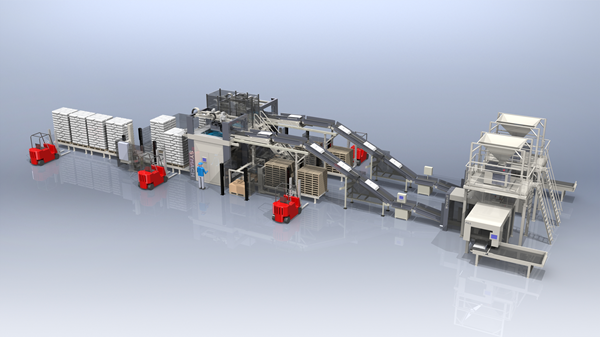 Packaging in Bags - How Symach's Solutions Redefine the Palletizing Industry
November 3, 2023
<p>Depending on the product, the market and the transport distance, there is an infinite variety and complexity of bags in terms of size, material, shape and closing system. Bag packaging line manufacturers have adapted to their customers' demands by responding to this variety with flexibility.</p><p>Today the packaging machines, for most manufacturers, have reached a high level of maturity. By maturity we mean reliability, low maintenance, productivity without stoppages, optimal ergonomics for operators, precision of the dosing machines, quality of the bag closures, pallets and filming, with minimal changeover times for recipes and formats, all at speeds close to those of the product flow. In addition, data can be exported and integrated into company systems for production control and traceability purposes.</p><p>Symach BV, based in the Netherlands, has been manufacturing palletizers for some 30 years. After the acquisition of the Dutch company by the Barry Wehmiller Group in 2015 Symach manufactures complete packaging lines, including fillers, baggers, weight control and metal detection systems, palletizers and filmers.</p><p><strong>Symach's weighers are all about accuracy and speed</strong></p><p>When the product has an easy flow, such as seeds, pet food, sugar, rice, the feeder can be fed by gravity. The continuity of the flow is such that no error will be detected during weighing. On the other hand, when the product has a difficult flow, such as horse feed, products that agglomerate, where the continuity of the flow is not obvious, it will be necessary to equalize the product. Product levelling is generally carried out by a belt that collects the product in a constrained manner under the hopper and sends it to the dosing machine after levelling it under a blade. The product flow is then constant without agglomeration or clumps. The weighing is then made precise.</p><p>Symach manufactures these two types of gravity and belt dosing machines with display of the rates (about twenty doses per minute) with an average of 0g compared to the set point and a standard deviation of 15g on doses of 25 kg. Symach dosing machines can be certified by the legal metrology services. The weighing data can be exported to an ERP system or printed on labels at the palletizer outlet, by batch.</p><p><strong>Bagging and diversity</strong></p><p>Bagging is certainly the most complex part of the packaging process as it has to take into account the diversity of the bags and their closing and identification system.</p><p>The size of the bags is one of the first criteria of flexibility that we can attribute to the Symach bagging machine. The bagging mouth is designed to handle both small and large bags; in fact, with a density of 0.5kg/l, the Fillstar bagger can bag contents from 2.5kg to 50kg. The format changeover is done via the control screen in a matter of seconds and without having to change the mouth.</p><p>The Symach bagging machines can work with preformed open mouth bags and from rolls of tubes.</p><p>Before closing, the bag will go through different stages, it can be printed flat before being filled or it can receive one or more labels.</p><p>Symach integrates its own labelling machines or those of the customer. As the bags move flat on a belt, an X axis, the printers or label applicators move on a Y axis, the labels are stuck on in a very precise way. The identification systems placed in this module can be an inkjet printing solution, a laser marking, a lick printing or a straight applicator.</p><p>The bag received under the mouth will be checked for horizontality. This is important in order to achieve a perfectly horizontal closure, whether it is sealing or sewing, or even more so when a fold has to be made. If a bag is not considered horizontal, it will be ejected before being filled.</p><p>The bags, especially plastic, PE and PE/PET bags, can be equipped with slider, zipper, Velcro, depending on the marketing and market trends. These bags will also be checked before filling. If a bag is not correctly opened after a few attempts it will also be ejected;</p><p>During filling and in order to optimize speed, the bagging mouth includes an internal mouth at mid-height which allows product to be retained if the bag is not ready, or allows product to be sent from a limited height to avoid tearing a bag when it is made of paper. This fore-mouth also increases the level of nitrogen and expels oxygen from the core when the bags need to be inerted.</p><p>Symach bagging machines are designed in modules. After filling, the bag will go through different stages in the bagger depending on its characteristics or those required by the customer, such as de-aeration of the bag to give it a better shape or fine nitrogen adjustment, a sealing module which can be single or double, a handle cutting module, a folding module before sewing, a sewing module, a pinch top closing module, and often a bag turner or pusher depending on the line layout. The modular design allows the bagging machine to be upgraded with a later module if the customer wishes to add a sealing or inerting function not initially planned.</p><p>The Symach bagging machines are controlled from two different locations to limit the need for operators to travel and can be remotely controlled via a tablet. The maintenance manager is assisted in his duties by the display of maintenance alarms.</p><p> <strong>Symach </strong><strong>palletizers</strong></p><p>Symach palletizers are all Cartesian in operation. The bags are placed on the pallet on a plane established by the operator in X and Y. This solution allows the bags to overlap and therefore improve the load. Overlapping also allows the space taken up on the pallet to be optimized and therefore the overflow of bags to be controlled.</p><p>In addition to this classic operating solution, Symach forces the bags, during palletization, to remain within a template throughout the stacking process. The result is perfect, the bags are stacked flush with the pallet. The pallets leave the palletizer perfectly rectangular.</p><p>In terms of output, the solution is applied in different motorizations, ranging from 15 bags per minute to 46 bags per minute.</p><p>The palletizers can be supplemented with options such as film or cardboard protective film dispensers, layer pads, pallet bottom trays, the possibility of palletizing bundles, pallet weighing, etc.</p><p> <strong>Wrapping, the guarantee of load stability.</strong></p><p>The complete line ends with a pallet wrapping solution to guarantee load stability.</p><p>On leaving the palletizer, the pallet can be fitted with a protective cover or a real rainproof solution. Once the cover is removed, the pallet is wrapped in stretch film or net depending on the product. Symach stretch wrapping machines are either rotary table or rotary arm machines. The programs are flexible, it is possible to set different numbers of turns, at the top of the pallet, but also at the bottom, with an overlapping of film also customizable. The choice will be made according to the layout, speed and stability to be achieved.</p><p> <strong>Intelligent packing lines, preventive maintenance, traceability, ERP</strong></p><p>Maintenance, traceability, statistics, all Symach equipment is connected and can communicate intelligently with other equipment or servers.</p><p>In terms of maintenance, all the machines are equipped with movement counters and can therefore offer preventive maintenance by sending alarms, such as changing a cylinder, belt, etc. These alarms can only be acknowledged by the maintenance manager. They allow intervention before any breakdown and therefore blockage of the packaging.</p><p>In addition to the screens, the machines can be remotely controlled via tablet or computer, provided that safety conditions are met. The screen of the bagging machine or palletizer is displayed on a remote screen.</p><p>In this way, Symach can take control of the equipment remotely on request of the personnel, 24 hours a day, and carry out the first diagnostics and solve breakdowns.</p><p>In the context of a constant demand for traceability, from the labelling, filling, sealing and weight control stages to the metal detector, the bags can be tracked and identified with the information received at each stage and transmitted to the ERP, pallet printer or other traceability server.</p>
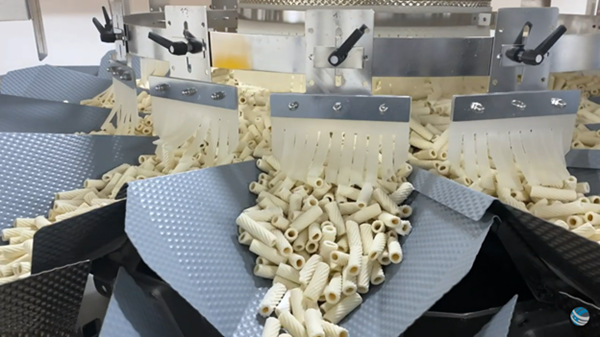 Surgital's IQF Pasta Packaging Success Story
June 26, 2023
<p>When Covid-19 shut down the restaurant industry globally, Surgital, an artisanal fresh pasta manufacturer from Emilia-Romagna – a land of great gastronomic culture and tradition in making fresh pasta by hand – was facing a tremendous challenge for its business: over 90% of their production was delivered directly to restaurants.</p><p>Knowing the company couldn’t survive this shutdown for very long, Edoardo Bacchini, managing director at Surgital, knew he and his family-operated business needed to act fast.</p><p>Today Surgital produces IQF fresh pasta on a large scale, bringing fresh pasta to the world, thanks to the support of BW Simionato, a BW Flexible Systems brand.</p><p>To overcome the shutdown, Surgital needed to invest in the appropriate technology to make this transition, and BW Simionato helped every step along the way.</p><p>“We explained our needs, defined our project: fragility of the product, need to increase productivity, and high sanitation requirements. And they said, ‘let’s do this!’” said Bacchini.</p><p>Besides time being of the essence, the highest priority of the project was the gentle handling and preservation of the delicate and fragile pasta. BW Simionato needed to incorporate a way to weigh the pasta with a scale designed specifically for the handling of fragile products, concurrently weighing the IQF sauce as well as any other ingredients that were mixed on the scale. This was accomplished by splitting the scale into several parts and, in addition to protecting the pasta, ensured high productivity and met the stringent hygiene requirements.</p><p>With the solution that BW Simionato found, when the recipe is changed, the customer can use a different part of the scale immediately to continue production without needing to clean the used parts of the scale first.</p><p>“I am happy I chose BW Simionato for the cooperation and support, in such a short time they helped transform our business,” said Bacchini. “In fact, there are 2 stir-fry packaging lines running now, which has become a huge success for us.”</p><p>This transition has opened a lot of doors for Surgital.</p><p>“One container full of stir-fry product leaves our factory every single day in the United States,” said Bacchini. In total, Surgital now ships product to over 60 countries.</p><p>BW Simionato’s company culture played a key role in this relationship, both from a technical as well as a negotiation perspective. Surgital, as an Italian company that puts the safety of its employees, sustainable production, and investment in the local area and charitable initiatives first, working with BW Simionato seemed like a natural choice. By exporting their fresh pasta to the world, they are spreading their culture and values of a healthy business with certified quality products, plants and procedures. </p><p>“We made the customer’s problem ours, and the solution was found thanks to great cooperation between our teams,” said Filippo Zatti, IQF Business Development Manager at BW Flexible Systems.</p><p>The success of this challenging project with Surgital underlines the technical expertise of the BW Team and shows that BW Simionato can solve any integrated packaging challenge.</p><p>With the addition of two full BW lines with a 16-heads RCW scale and a 10-heads RCW scale with 2 inclined Logic 35 VFFS underneath, Surgital now operates a total of 34 production lines in its headquarters in Lavezzola, located in the province of Ravenna.</p><p>“Any time we call BW Simionato and ask for support, they are there for us and they respond quickly,” said Bacchini. “Our machines run 24 hours a day and this success is thanks to our cooperation with BW Simionato.<strong></strong></p><p><strong>LEARN MORE</strong></p><p>Learn more about Surgital: <a target="_blank" data-sf-ec-immutable="" href="http://www.surgital.it/">www.surgital.it/</a><br>Learn more about BW Flexible Systems: <a data-sf-ec-immutable="" sfref="[e74c2e51-76a6-674e-8383-ff0300805640]5FB52E51-76A6-674E-8383-FF0300805640">www.bwflexiblesystems.com/our-company</a></p>
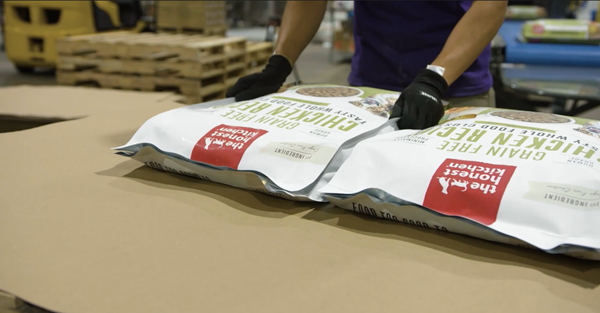 Customer Testimonial: Pet Food Success Through Speed and Reliability with The Honest Kitchen
September 1, 2022
<p>A loyal following and a surge in production demand is <a href="https://www.thehonestkitchen.com/" data-sf-ec-immutable="">The Honest Kitchen</a> story. Their high standards in quality for pet food have set them up for rapid growth and long-term success.<br><br>We partnered with THK to deliver an end-to-end solution that met their growing production needs and helped alleviate the workload of optimizing a new facility.</p><p>Since 2002, The Honest Kitchen evolved into a team of incredibly passionate animal-loving foodies that never stops striving for better, more creative, and tastier solutions. THK operates under a strict set of standards that Lucy Postins, THK Founder and Chief Integrity Officer, created on day one. THK works hard to keep raising the bar on quality and integrity with their human-grade pet food products that continue to cause a stir across the pet food industry.</p><p>High Demand in Product Required One-Stop Solution</p><p>Almost immediately after opening the factory in Los Angeles, THK realized quickly that the company had outgrown its facility and needed to expand to meet its customers’ demands, creating a project scope with stringent deadlines, high expectations, and the need for a vendor who could supply an end-to-end solution.</p><p>“The product that we make here in Topeka is called Whole Food Clusters. We can’t make enough of it. It is flying off the shelves,” said Stuart Harness, Director of Product at THK. “The timelines to open this plant were extremely aggressive. I also had twenty- to thirty-year-old equipment before, and that was a very manual changeover process.” </p><p>Finding the Ideal Packaging Machine Vendor</p><p>According to the American Pet Products Association, U.S. consumers<a href="https://www.americanpetproducts.org/press_industrytrends.asp" data-sf-ec-immutable=""> spent $123.6 billion on their pets</a> in 2021 — up nearly 15 percent over pre-pandemic pet spending in 2019. This noticeable surge in demand is explained by pet owners having become increasingly aware of their pets’ health: Chronic health conditions like itchy skin, digestive upset, and ear problems have been tangibly linked to poor pet food quality.</p><p>In early 2020, THK started a brownfield project with BSM Partners to open a dry pet food manufacturing facility in Topeka, KS. BSM Partners – an engineering firm that traditionally works with pet food companies to invent ingredients and specifications for pet food products – was seeking a packaging equipment partner with knowledge and a lot of experience in the pet food industry. Having worked with every major pet food manufacturer globally, BW Flexible Systems was a natural<a href="https://www.bwflexiblesystems.com/market/pet-animal-food-care" data-sf-ec-immutable=""> fit for the job</a>.</p><p>“Any time you start up a factory, there’s always challenges. The one thing I’ve never worried about is that packaging machinery line,” said Harness. “From day one BW Flexible Systems’ employees were very responsive to our concerns. They listened to exactly what we were trying to accomplish, what we needed in a large packaging line.”</p><p><a href="https://www.bwflexiblesystems.com/products" data-sf-ec-immutable="">Packaging lines,</a> especially in the pet food industry, are not a one size fits all and THK required a highly efficient solution that kept its operators safe. “All the recommendations were spot on,” said Harness.</p><p>Modular Solutions and Peace of Mind</p><p>BW Flexible Systems’ innovation was broad-based, with options for automatic changeover and a highly interactive HMI operator control system to establish ideal settings. The modularity of the equipment, ranging from the scales to the baggers, the conveyers, palletizing, and even stretch wrapping, helped optimize the application for THK.</p><p>“BWFS even got simple things like the interior lighting correct,” said Harness. “The bucket scales that came with the line, they hit the set point target almost perfectly every time.”</p><p>Best weight accuracy and best production rates were two of the top needs that THK requested, which BW Flexible Systems was able to offer by integrating quad scales instead of duplex scales above the UltraStar bagger.</p><p>The UltraStar bagger solution also included:</p><p>-A servo bag picker in place of the standard air cylinder driven bag picker for smoother operation and easier adjustment</p><p>-A servo driven actuator to raise and lower the spouts in place of the standard air cylinder. (smoother operation and easier adjustment)</p><p>-Air deflation in the bag fill area which removes excess air from the bags, thus preventing the hermetically sealed bags from becoming balloon-like and difficult to palletize</p><p>-Ports in the hopper between scales and bagger to allow the future addition of coupons into the bags</p><p>-An integral sealer to seal their plastic bags. The seal bars have a Teflon cloth over them which reduces maintenance and the need to clean the bars</p><p>-LED interior lighting that is white (normal operation), yellow (minor issue), or red (show-stopper issue). This helps operators identify and correct any faults more efficiently</p><p>-Centralized lubrication that allows the bearings in the bagger to be greased from the outside of the machine without stopping production</p><p>Additionally, BW Flexible Systems supplied an X-Ray machine to check filled bags for a wider range of contaminants than a metal detector, which would only detect metal contaminants.</p><p>Thinking of Future Generations</p><p>THK had a vision for the direction in which they wanted to develop: what their needs were from a technical standpoint but also from a future-oriented growth perspective.</p><p>“Barry-Wehmiller has been around for a very long time, and we know for at least twenty or thirty years, we’re going to be able to rely on BW Flexible Systems. Having an end-to-end solution from one vendor is a huge advantage. From an engineering perspective, from an integration perspective - everything just flows.”</p><p>Currently, the bag palletizing is manual and the system is designed to easily enable the integration of an automatic palletizer with minimum redundancy of existing equipment. </p><p>Looking for support in updating and optimizing your old or new facility? Our engineering expertise and customization capabilities position BW Flexible Systems as an ideal partner to deliver solutions suited for pet food and other manufacturers who value reliability, high operational efficiency, as well as sustainable and sanitary solutions. Explore our <a href="https://www.bwflexiblesystems.com/brands" data-sf-ec-immutable="">synergy of brands</a> with a huge portfolio offering or <a href="https://www.bwflexiblesystems.com/contact-us" data-sf-ec-immutable="">reach out to us </a>directly to discuss your needs and how we can help!</p>
 Italian Facilities Reduced Our Carbon Emissions by 92%
July 28, 2022
<p>Earlier this year, we reduced carbon emissions at our <a title="Our Locations | BW Flexible Systems" href="https://www.bwflexiblesystems.com/contact-us#Mestrino-IT" data-sf-ec-immutable="">Italian</a> facilities by 92% via a partnership with E.ON, one of Europe's largest operators of energy networks. As of January 1, 2022, our two Italian manufacturing plants—located in Mestrino and Monte di Malo—are now powered by 100% renewable energy, as certified by E.ON.</p><p>“Our partnership with E.ON is one of many sustainability improvements we will be making to support a greener manufacturing industry moving forward," said Michele Allamprese, Vice President, Europe, for BW Flexible Systems. “In addition to reducing our own CO2 footprint, these sustainability improvements will allow our customers to reduce the environmental impact of their supply chains throughout 2022 and beyond."</p><p>Previously, our Italian facilities were powered by a mix of brown and green energy sources. Based on data certified by the Italian Ministry of Ecological Transition and the Italian National Institute for Environmental Protection and Research, we estimate that changing our energy in Italy to 100% renewable sources will reduce carbon emissions by 252.61 tons in the first year.</p><p>“We are extremely pleased with the leadership demonstrated by our team members and supply chain partners in Italy," said Michelle Bryson, Global Sustainable Packaging Leader for all BW Packaging Systems companies. “This is precisely the kind of initiative we will look to emulate across the broader BW Packaging Systems organization as we continue to develop our sustainability programs."</p><p>In addition to this carbon footprint reduction effort, we also recently announced a <a href="https://www.barrywehmiller.com/news/company-news/release/michelle-bryson-named-global-sustainable-packaging-leader-for-bw-packaging-systems" title="Michelle Bryson Named Global Sustainable Packaging Leader for BW Packaging Systems" data-sf-ec-immutable="">broader sustainability roadmap</a>, which includes better usage of responsible materials, recyclability, efficient packaging design, waste reduction and more. Developing the path to execute some of these plans could take place at BW Flexible Systems' <a href="https://www.barrywehmiller.com/news/company-news/release/bw-flexible-systems-to-open-technical-centre-of-excellence-to-better-serve-emea" title="BW Flexible Systems to Open Technical Centre of Excellence to Better Serve EMEA" data-sf-ec-immutable="">Technical Centre of Excellence</a> in the U.K., among other BW Packaging Systems locations that have the space to collaborate with customers and suppliers on more sustainable solutions.</p>
 Paper or Plastic - You Can Run Both
November 24, 2021
<div><div><p>As food manufacturers and brand owners double down on their 2025 sustainability commitments, BW Flexible Systems has received an influx of inquiries about the versatility of our flexible bagger machines. In particular, these companies are seeking to upgrade and purchase <a data-sf-ec-immutable="" title="Vertical Form Fill Seal (VFFS)" target="_blank" href="https://www.bwflexiblesystems.com/machine-type/vertical-form-fill-seal">vertical-form-fill-seal (VFFS) baggers</a> that can run paper and other eco-friendly materials. Our engineers have modified baggers for several clients to allow them to change from plastic to paper packaging for their products.</p><p>One of the greatest challenges that we’ve encountered while modifying these VFFS machines is ensuring that the paper material can run as quickly as the plastic material. By comparison, paper requires gentler handling than plastic. To address this, we’ve studied, tested and answered a handful of underlying technical challenges.</p><p>First, how can we align the sealing force requirements with the customer’s paper material? With continuous VFFS, it is much more difficult to create a sound seal while the film is running continuously. To solve this, we partner with innovative sealant manufacturers and make modifications to the forming tube assembly (FTA), specifically accounting for the time and temperature required to properly seal bags using the customer’s chosen material.</p><p>Similarly, configuring the “jaws” to punch peg holes in paper, rather than plastic, requires a re-imagining of the tool. For plastic, it’s common to punch holes by melting them into the plastic. For obvious reasons, this does not work for paper. Instead, we have adopted a cold punch system that is used across other packaging systems that handle paper.</p><p>Through modifications like this, we’ve witnessed food manufacturers and brand owners create sustainable change quickly and cost-effectively. We’re also seeing huge strides in sustainable packaging solutions for <a data-sf-ec-immutable="" title="Horizontal Flow Wrappers" target="_blank" href="https://www.bwflexiblesystems.com/machine-type/horizontal-flow-wrappers">horizontal flow wrappers</a> and, at our sister company BW Integrated Systems, automating <a data-sf-ec-immutable="" title="Placers and Denesters" target="_blank" href="https://www.bwintegratedsystems.com/sub-group/streamfeeder/placer-and-denester-systems">placer and denester systems</a> to quickly integrate fiber material bowls into food production plants.</p><div><br></div></div></div>
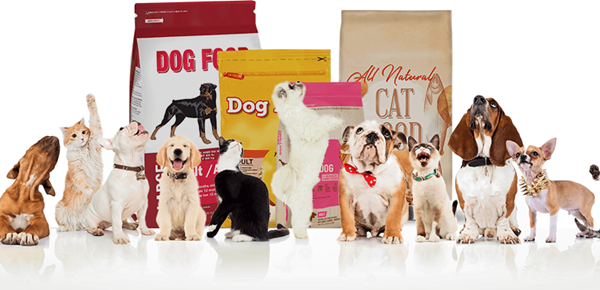 Customer Testimonial: Goal Achieved for Need for Improved Accuracy in Bag Filling of Pet Food
November 10, 2021
<h2 id="headline"><span style="background-color: rgba(0, 0, 0, 0); color: var(--color-h2); font-family: inherit; font-size: var(--font-size-h2); text-align: inherit; text-transform: inherit; word-spacing: normal; caret-color: auto; white-space: inherit">Equipment Upgrades Improve Production Efficiency</span></h2><div><p>One of America's top pet food companies needed to improve the accuracy of the amount of freeze-dried meat additions included in their primary kibble products on two production lines. BW Flexible Systems (BWFS) – the pet food company's provider of bag filling equipment – helped them reach this goal by providing upgrades to several components of their <a href="https://www.bwflexiblesystems.com/machine/bag-filling-equipment/omnistar-bag-filling-system" target="_blank" title="Thiele OmniStar | Bag Filling" data-sf-ec-immutable="">OmniStar baggers</a> including the ingredient inclusion scales, hoppers, PLCs and HMIs. As a result, they were able to increase production rates, optimize product-mix accuracy, shorten changeover times, and improve product distribution.</p><h3 id="Challenge">The Challenge</h3><p>In 2019, the pet food company discovered that there was an improper mix of freeze-dried meat within their 10-20 lb. dry pet food bags. While the freeze-dried inclusion product was aimed at 4%, the actual average inclusion ended up being between 3-7%. They needed this range to be narrowed down with a 4% target amount.</p><p>The bottleneck resided in the company's inclusion delivery system, which timed product inclusion rather than weighing the product to be included. This hindered their ability to properly control and distribute the bag filling process because the bulk density of the kibble product (27 lbs/ft³) was vastly different from the density of the freeze-dried meat product (9 lbs/ft³).</p><p>During a visit to the pet food packaging facilities, BW Flexible Systems observed the underlying issue with the existing inclusion system and suggested an alternate solution that would improve inclusion accuracy and production efficiency. Given that the company's specialty freeze-dried product was very expensive, the company accepted BW Flexible Systems' proposal.</p><h3 id="Solution">The Solution</h3><p>The BW Flexible Systems solution was to create custom-designed inclusion delivery scales, to be positioned above existing OmniStar baggers. Unlike the original inclusion systems, the BW Flexible Systems inclusion scale weighed product before adding it to the bag. The BWFS design did not match the existing configuration, so they customized the delivery system to avoid having to modify the main feed hopper. This resulted in a faster and more cost-effective installation.</p><p>The inclusion system upgrade included:</p><div><ul><li>A new Compact Logix processor with CIP motion</li><li>All necessary I/O modules</li><li>New hoppers for the Inclusion system</li><li>All required hardware</li><li>PLC and HMI program changes, including new buttons placed on the HMI screens to set up and operate the inclusion system</li></ul></div><h3 id="Results">The Results</h3><p>The success of this project was measured against four predetermined goals to increase production, improve weight accuracies, reduce maintenance downtime, and improve product distribution in the bag. The project succeeded in all four categories:</p><div><ul><li>Increased production by 70% when combining the inclusion product to the primary kibbles.</li><li>Weight accuracies improved by 300%. The pet food company calculates that average giveaway improved from 2.5% to .5% after the installation of the BW Flexible Systems solution.</li><li>Changeover times and downtime improved. The company said there were clear improvements to changeover times and downtime in general.</li><li>Product distribution improved. Following this project, the company said they have been getting better product distribution in the bag itself.</li></ul></div><p>Do you need to add or improve upon your product offering, or have a challenging packaging application? <a data-sf-ec-immutable="" href="https://www.bwflexiblesystems.com/contact-us">Connect with our sales team today</a>.</p><p> </p></div>
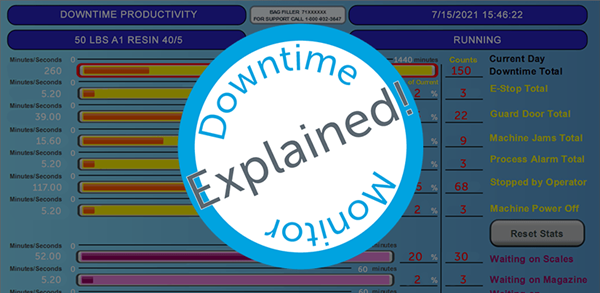 Thiele's Downtime Monitor Makes Diagnosing Downtime EASY
July 20, 2021
<p><img src="/images/default-source/blog/downtime_monitor_img_8eafaaa3-9d4d-48ea-8fb1-e20bb0ffb03c-tmb-esize-350-.png?sfvrsn=1e5b495f_0" style="float: right" alt="" class="-align-right"></p><p>Imagine that you are at a doctor's office. Something has been bothering you, preventing you from going about your daily life normally. The doctor needs some information in order to know how best to treat you, <em>BUT</em> you are unable to tell them what is going on. Instead your doctor must attempt to parse out your issue from tests, observation, and some complicated data. It'll take time to get the diagnosis, and thus the cure, right.</p><p>Wouldn't it be easier if you could simply <em>tell</em> the doctor what is wrong?</p><p>This is why Thiele has implemented their Downtime Monitor—to give your machine a voice.</p><p>Thiele's Downtime Monitor provides an overview of all the conditions that have prevented the system from running in Automatic mode throughout the day, as well as the amount of time each condition accumulated.</p><p>What sets the downtime monitor apart, is that Thiele has taken the time to finetune its presentation. The downtime monitor provides you detailed information about your system in both graphical and numerical form - giving you <em>at a glance</em> ability to quickly parse the data and determine what, if anything, needs to be addressed.</p><p>Let's take a closer look at the Downtime Monitor's screen to see what is going on in this example.</p><h2>Reading the Downtime Monitor</h2><p>As you'll see (and you might have already noticed), reading the downtime monitor is quick and easy, but let's dive in to understand it. Below, we examine one row of data being provided.</p><h3>Top Row: Current Day Downtime Total</h3><p><img src="/images/default-source/blog/total_downtime_rowslice.png?sfvrsn=265b495f_0" style="display: block; margin-left: auto; margin-right: auto" alt="" width="800" class="-align-center"></p><div style="margin: 0 1.5em"><table class="w3-table w3-striped k-table"><tbody><tr><th><strong>Section</strong></th><th><strong> Explanation</strong></th></tr><tr><td> A</td><td>Total event time accumulated (minutes/seconds)</td></tr><tr><td> B</td><td>A bar graph of total time, scaled to 180 minutes. (short term) or 1440 minutes (long term)</td></tr><tr><td> C</td><td>Counts - the number of times that this event has occurred.</td></tr><tr><td> D</td><td>Event name - a human-readable name for each event</td></tr></tbody></table><p> </p><div><p>The top bar on the Downtime Monitor displays the <strong>Current Day's Total Downtime</strong> for this machine. Unlike the rows below it, which will break out the individual events that make up this total, there is on percentage listed, since it's the daily total (hence, always 100%).</p><p>Like all rows, the graph has two scales:</p><ol><li> <strong>0-180 minutes</strong> - For shorter time totals.</li><li> <strong>0-1140 minutes</strong> - For downtime totals exceeding 180 minutes.</li></ol><p>At a glance, we can see that there have been <strong>150 Events</strong> accounting for <strong>260 Minutes </strong>of total downtime. Because the total downtime has exceeded 180 minutes, the scale of the graph has increased to 1440 minutes.</p><p>Now, let's dig in to the real power of the Downtime Monitor - it's easy <em>at a glance</em> downtime breakdown!</p></div><h3>Downtime Event Rows</h3><img src="/images/default-source/blog/component_downtime_rowslice.png?sfvrsn=4e5b495f_0" width="800" alt=""><p> </p><p>As you can see, each row contains the following information for each entry:</p><div style="margin: 0 1.5em"><table class="w3-table w3-striped k-table"><tbody><tr><th><strong>Section</strong></th><th><strong> Explanation</strong></th></tr><tr><td> A</td><td>Total event time accumulated (minutes/seconds)</td></tr><tr><td> B</td><td>A bar graph of total time, scaled to 180 minutes. (short term) or 1440 minutes (long term)</td></tr><tr><td> C</td><td>Percentage of current <em>total machine downtime</em> that this event represents</td></tr><tr><td> D</td><td>Counts - the number of times that this event has occurred.</td></tr><tr><td> E</td><td>Event name - a human-readable name for each event</td></tr></tbody></table></div><p> </p><p>Digging in to the above example, we quickly see that the machine's <strong>Guard Door</strong> has stopped the machine <strong>22 times</strong> and accounts for <strong>39 minutes</strong> of downtime.</p><p>Interesting, yes? BUT, we can also see that this event is responsible for <strong>15% of current downtime</strong> on the machine. So we are now getting an idea of how serious a problem this event is.</p><p>But what about that bar graph? To understand how powerful this feature can be, let's pull back out to the full screen example.</p><img src="/images/default-source/blog/downtime_monitor_img.png?sfvrsn=565b495f_0" width="800" alt=""><p> </p><p>Look again at that graph. Now we know, at a glance, how this issue compares to other stoppages that have occurred. The bar graph can quickly draw your attention to the events that are impacting normal machine operation the most.</p><p>So in our example image, we can see that the the guard door is being opened pretty frequently, but that it's only the third highest factor to downtime on our theoretical machine. We see that the operator has been frequently stopping the machine, accounting for 45% of this machine's total downtime that day.</p><p>Then there's the <strong>Waiting on Scales</strong> row. And now it's time to talk about why some of these rows are Purple 1.</p><p><strong>Purple rows</strong> indicate downtime that <em>is not</em> the fault of the machine. These events have occurred up or down stream from the machine, causing it to wait.</p><p>In our example above, we see that 20% (52 minutes) of our total downtime can be attributed to the machine "Waiting on Scales" and that this has happened 30 times throughout the course of the day.</p><h4>Putting It All Together</h4><p>Thiele's downtime monitor makes parsing collected machine downtime information easier by presenting that data in one quickly digestible screen. In our example, we know that our major factors of downtime for the day breakdown like this:</p><blockquote><blockquote>The operator is stopping the machine frequently and opening the guard doors often. There also appears to be a slow-down affecting the scales, which is trickling down to the bagger.<br></blockquote></blockquote><p> </p><p>And there you have it. Your three biggest issues identified in three seconds flat. No parsing through complicated data looking for patterns, Thiele's Downtime Monitor takes the guesswork out of downtime analysis to show you what is happening and help you be more productive by quickly sorting out issues.</p><hr><h4>Footnotes</h4><p><strong>1</strong>: Screen color implementations can vary from machine to machine. Downtime event reporting for events that are <em>not</em> the fault of the machine will be offset and in a different color from other machine-related downtime events.</p><p> </p></div>
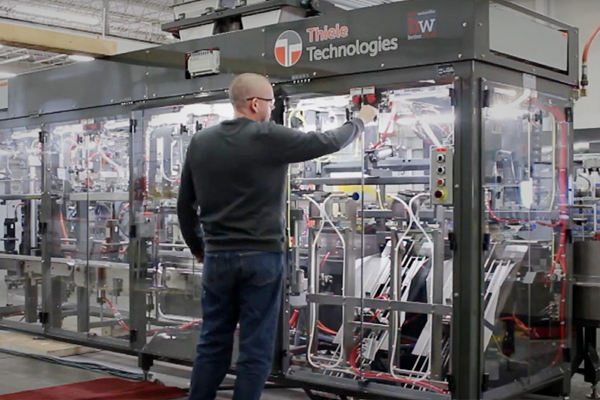 Maintenance Costs in Pet Food Packaging
April 30, 2021
<p>As Benjamin Franklin said, “By failing to prepare, you are preparing to fail.” This is true of packaging machine maintenance. When a motor fails or a machine breaks down, it results in unplanned downtime and, usually, the high cost of emergency maintenance support. If you’ve ever experienced this, you might have asked yourself “could I have prevented this from happening?” Often, the answer is yes. </p><p>Taking a proactive approach to maintenance can reduce unplanned downtime and the long-term expense of maintaining your packaging equipment. In today’s post, six packaging experts will explore several tactics that <span style="text-decoration: underline">co-packers<sup>A co-packer (or contract packager) is a company that packages and/or labels goods for another company or brand owner.</sup></span> can employ to better manage their machine maintenance costs including parts and service agreements, purposeful equipment design, and remote troubleshooting capabilities.</p><p>Today’s roundtable includes:</p><ul><li>William Graf, Managing Partner for Design Group</li><li>Jan-Pieter Grootendorst, Sales & Marketing Expert for BW Flexible Systems</li><li>Daniel LoRusso, Director of System Sales in North America for BW Integrated Systems</li><li>Robert Redman, Managing Partner of Food and Beverage for Design Group</li><li>Todd Sandell, Sales Executive for BW Flexible Systems</li><li>Jeremy Stith, Partner for Design Group</li></ul><p class="is-hidden">Additional credentials for each of these experts are provided at the end of this post.<br><br><a href="https://go.bwpackagingsystems.com/pet-food-packaging-machine-cost" data-sf-ec-immutable="" target="_blank"><strong>Calculating pet food packaging machine costs? Download our FREE whitepaper.</strong></a></p><h2>How can co-packers keep machine maintenance costs low?</h2><p><strong>Grootendorst:</strong> Be proactive. Maintenance should be approached like a planned event unlike downtime, which often occurs without warning. For example, when we sell a machine to a customer, we provide a manual that defines the optimal process and schedule for maintenance tasks like cleaning, lubricating, and making other adjustments to the machine. Customers who complete these tasks within the recommended time frame experience less downtime and lower maintenance costs.</p><p><strong>Graf: </strong>Some of the manufacturers we work with are looking more into predictable maintenance and artificial intelligence tools. For example, your machine would be able to anticipate and warn you when a motor is going to fail. Or they might invest in tablets and <span style="text-decoration: underline">HMIs<sup>A human-machine interface (HMI) is the dashboard through which an operator interacts with packaging systems or equipment. Modern HMIs can offer operator training resources, provide preventative maintenance reminders, assist in troubleshooting machine malfunctions, and much more.</sup></span> that allow the operator to troubleshoot with the <span style="text-decoration: underline">OEM<sup>In the packaging industry, an original equipment manufacturer (OEM) is the company which manufactures the machinery used to facilitate the packaging process.</sup></span> remotely. It’s innovative, but is it worth the investment for a co-packer? Maybe or maybe not; if they can’t afford to hire people to do the maintenance, maybe it’s worth it. </p><p><strong>LoRusso:</strong> Preventative maintenance is all about selecting the right machine, comprised of the right components and finding a partner that understands the lifecycle of the machines. Each maintenance package should be specific to each co-packers’ needs.</p><h2>What should co-packers look for in parts and service agreements?</h2><p><strong>Sandell: </strong>It’s important to determine how available and accessible parts will be to a co-packer. Part of this is preventative; you want to keep enough wear parts on hand so you can replace parts quickly and continue operating with limited downtime. The other part is how quickly can you get technical support and parts from the OEM? Having the right agreement in place helps you resolve these situations faster.</p><p><strong>LoRusso:</strong> The customers we work with are often interested in lifecycle support. This essentially means we will provide them with the parts and services they’ll need throughout the life of the equipment. This includes maintaining spare parts lists, maintenance procedures, pre-scheduled audits, and so on. Co-packers should work with their supplier to come up with a package that supports their long-term maintenance needs, investment strategy and overall production needs.</p><h2>How does equipment design impact packaging machine maintenance costs?</h2><p><strong>LoRusso: </strong>Packaging line design is not just about the flow and placement of equipment, but the selection of the right equipment with the right design. Individual equipment designs should account for the frequency of specific maintenance tasks and provide efficient access for maintenance personnel. This will limit the time and duration required to perform frequent maintenance tasks. For example, we want to make lubrication or frequent wear part exchange easy to access. If you’re required to remove guards or major machine components for frequent maintenance, you may be lowering your entire line’s efficiency due to bad machine design.</p><p><strong>Sandell: </strong>The trend today is to reduce machinery components that need to be maintained and add features that operators can maintain without getting maintenance people involved. An example of this would be quick change and automation of equipment that does not require tools so that it can be done by an operator or a <span style="text-decoration: underline">changeover<sup>A changeover is the transition time from running one item (or SKU) in a manufacturing process to another. Some machines change over using the “recipe” system, where the parameters for different products are stored and then drawn into the machine parameter database. This allows a packaging machine to run different weights, sizes, and volumes with precision.</sup></span> person rather than bringing in a maintenance person who is usually more skilled than is necessary to change a machine over.</p><h2>How does remote support affect the costs associated with unplanned downtime?</h2><p><strong>Redman: </strong>When we consider unplanned downtime, we have to think about the skillsets of the available maintenance personnel. As equipment gets more technologically advanced, the required maintenance skillsets change and many facilities are located in rural areas where it may be difficult to draw these new skillsets into that geography.</p><p><strong>Stith:</strong> In addition to the predictive maintenance tools that were mentioned, another feature that is on the rise is OEM remote troubleshooting. By granting your OEM remote access to your facility and equipment, co-packers can have standby technical support to resolve downtime faster. Especially with COVID-19, more manufacturers are considering remote troubleshooting. It’s a cost that co-packers should consider – is there enough value in this service?</p><p><strong>Grootendorst: </strong>Troubleshooting with a support technician remotely via your machine’s HMI is something that has great value. It eliminates the downtime and costs associated with having to fly a technician out to your site. With remote support, you can have a technician dial in and solve the issue right away. Almost 90% of the issues we see from our customers can be solved this way.</p><p><strong>Did you find this content useful? Check out our first post on </strong><a href="/blog/post/pet-food-packaging-capital-costs" data-sf-ec-immutable=""><strong>planning & capital costs</strong></a><strong> or our second post on </strong> <a href="/blog/post/pet-food-packaging-operational-costs" data-sf-ec-immutable=""><strong>operational & production costs</strong></a>. </p><h2>About the Experts</h2><p>The BW Packaging Systems Pet Food Blog is built upon cooperation and sharing of information between experts across the pet food industry including equipment manufacturers, packaging line integrators, engineering consultants, private label brands, co-packers and more. This post includes insights from:</p><h3>Design Group</h3><p><a href="https://www.bwdesigngroup.com/our-solutions/packaging-systems" data-sf-ec-immutable="">Design Group</a> is a premier system integrator for a wide range of filling and packaging line solutions with extensive experience in material handling, printing, labeling, inspection systems, <span style="text-decoration: underline">secondary packaging<sup>Secondary packaging serves to hold together units of primary packaging, usually to ease the transportation of goods. For example, whereas the box that individual beer cans come in acts as secondary packaging, the cans themselves act as primary packaging.</sup></span> requirements and management information systems. They provide complete production systems, line upgrades and experienced professionals ready to complement their client’s project team. In this post, you heard from:</p><p><strong>Robert Redman<br></strong>Robert Redman is the Managing Partner of Food and Beverage market sector for Barry-Wehmiller Design Group. He brings 28 years of food and beverage experience to his company and its clients and is well-versed in packaging, process, controls and facility integration projects. Rob has provided oversight of multiple projects in the pet food industry including wet pet food, dry pet food, and treats production.</p><p><strong>William Graf<br></strong>William Graf is a Managing Partner for the Northeast Region at Barry-Wehmiller Design Group. He brings 20+ years of relevant experience and has in several capacities including project manager, engineering manager, director, partner and managing partner. </p><p><strong>Jeremy Stith<br></strong>Jeremy Stith is a Partner at Barry-Wehmiller Design Group. He brings 17 years of food and beverage experience to his company and its clients and is well-versed in packaging, process, controls and facility integration projects. Jeremy is especially familiar with pet food packaging solutions, as he has completed multiple projects in the pet food industry including wet pet food, dry pet food, and treats production.</p><h3>BW Flexible Systems</h3><p><a href="/markets/pet-food-and-pet-care" data-sf-ec-immutable="">BW Flexible Systems</a> is a leading producer of weighing and bag filling systems, SYMACH palletizers, conveying systems and wrapping machines for pet food and animal feed. They also have a wide range of vertical baggers and <span style="text-decoration: underline">horizontal flow wrappers<sup>Flow wrapping, also known as horizontal form fill sealing, is the process by which a consumer packaged good is placed on a conveyer belt, transported to the forming area, and wrapped in flexible packaging with a sealing material.</sup></span> to package treats, bones and other pet accessories, customized to meet each customer’s production, package style and economic requirements. In this post, you heard from:</p><p><strong>Jan-Pieter Grootendorst, M.Sc.<br></strong>Jan-Pieter Grootendorst is the Global Strategic Marketing and Innovation Leader of Bag Filling and Palletizing at BW Flexible Systems. Since 2018, he has been the EMEA APAC sales leader for BW Flexible Systems, SYMACH bag filling and palletizing. He brings multiple years of pet food packaging and palletizing experience to the global team.</p><p><strong>Todd Sandell<br></strong>Todd Sandell is a Sales Executive at BW Flexible Systems. He has nearly 40 years of experience in the petfood industry and packaging/palletizing systems through product development, product management, marketing, applications, business unit management and consultative sales.</p><h3>BW Integrated Systems</h3><p>Our <a href="/products/integrated-packaging-solutions" data-sf-ec-immutable="">Integrated Packaging Solutions</a> deliver industry-leading design and manufacture of end-of-line packaging equipment and robotic automation solutions, as well as the execution of integrated packaging systems. They provide several solutions to the pet food industry including material handling and palletizing, depalletizing, bliss and tray forming/erecting, cartoning and case packing, and systems integration services.</p>
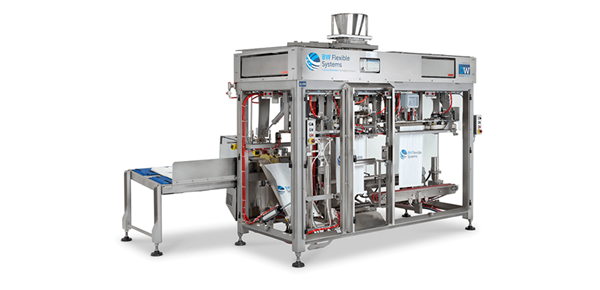 Get to Know: Thiele's Adjustable Spout Feature
April 15, 2021
<p>One of the best ways to maximize throughput and optimize packaging efficiencies with a bag filling machine is to ensure that the spout's <code>OPEN</code> position is maximized relative to the bag size.</p><p>The spout assembly has two basic positions which are <code>OPEN</code> and <code>CLOSED</code>. Various bag sizes being run in a production environment means that the <code>OPEN</code> position must be carefully determined such that the spout opens to the maximum position for each specific bag size.</p><p>The servo motor registers a value of "<code>O</code>" in the closed position and is incrementally adjustable for bag face width values larger than 11 inches. This allows the spout <code>OPEN</code> to adjust to virtually any size and fit perfectly.</p><p>If the bag filling spout opens to much, the bag will potentially tear. Not open enough, and the spout will restrict product flow and therefore increase the dump time slowing packaging rate unnecessarily.</p><p>Having the spout open to the ideal position also helps to reduce dust as the fitment forces the dust towards the dust evacuation system.</p><p>Having the spout <em>open position</em> adjustable via servo motor from the HMI is a vast improvement from the traditional mechanical <em>threaded rod with knob</em> style adjustment. The more bag sizes are changed, the more the servo adjustable spout makes sense.</p><p>Each SKU recipe includes the value for the spout open position. During a run, the spout open position can be adjusted if needed.</p><p>Thiele's Adjustable Spout feature allows for fast, accurate changeovers.</p><p>Ready to learn more? Contact your Thiele representative.</p>
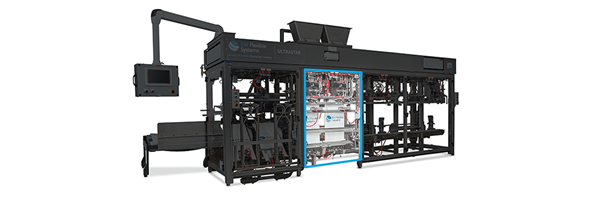 Get to Know: Bag Air Deflation System for Thiele Star Series Baggers
March 31, 2021
<p><a data-sf-ec-immutable="" title="Thiele | BW Flexible Systems" href="/brand/thiele-technologies">Thiele</a> introduces a breakthrough in bag filling quality with the innovative <strong>bag deflation system</strong>. Because bag palletizing is critical to overall packaging quality, Thiele's engineers developed the bag deflation system to reliably remove air from the bag top prior to sealing. </p><p>This new system operates by pneumatically squeezing the top of the bag above the product level by using opposing guided cylinders directly below the top carrier belts (see images below). The position of the deflation system can be adjusted vertically through the Star Series HMI and will be stored in the recipe for fast future changeovers. Should the bulk density of the material change during a run, the deflation position can be adjusted manually for best quality and throughput. </p><p>If you run various bag sizes, there's no need to worry; the deflation paddles are customizable to the bag size, and the squeezing motion is extremely effective in reducing unwanted air in <em>all</em> types of bags. </p><p>Since the Star Bag Filling System reforms the bag after filling and deflation, the automatic presentation quality to the downstream internal sealing system is maximized, giving you a handsome, well-sealed bag that stacks well and keeps your product fresh.</p><p> </p>
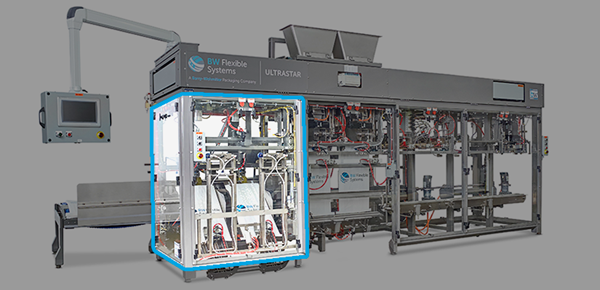 Get to Know Thiele's Bag Top Registration System
March 1, 2021
<p>The Bag Top Registration system, a feature of our Thiele Star bag filling system, maximizes bag quality and quantity by adjusting each bag’s position prior to placement in the transfer mechanism.</p><p>The target area for filled bag sealing is small and seal applications need to be neat and square. The bag top registration system ensures sealing in the <em>correct</em> place, time after time.</p><p>Our Bag top registration system <em>corrects</em> the position of the staged empty bags, making for very consistent filling, deflation and sealing. Once the empty bag is loaded into the first station, an integrated camera and backlight sense the bags' position and then a linear actuator compensates the position up or down, as needed. Empty bags that are out of tolerance will be rejected at the second station.</p>
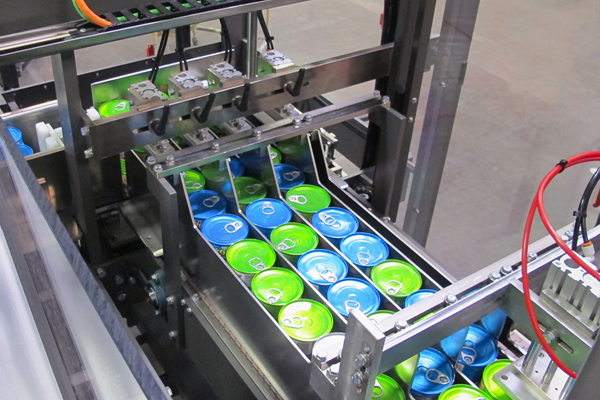 Operational Costs in Pet Food Packaging
February 25, 2021
<p>Packaging formats. Utility usage. Changeover efficiency. Labor requirements. For years, co-packers have considered these factors carefully to minimize their downtime and maximize their <span style="text-decoration: underline">return on investment<sup>Return on investment (ROI) is the ratio of the profit of an investment to the cost of that investment.</sup></span>. As we discussed in our <a href="/blog/post/pet-food-packaging-capital-costs" data-sf-ec-immutable="">planning and capital cost factors</a> post, addressing these factors upfront can help <span style="text-decoration: underline">co-packers<sup>A co-packer (or contract packager) is a company that packages and/or labels goods for another company or brand owner.</sup></span> manage their costs more efficiently, not just during project planning, but throughout the life of the equipment.</p><p>While some of these factors were already discussed in part one of this series, today, we’ll be sharing tips on how to manage operational cost factors including line flexibility, <span style="text-decoration: underline">changeover<sup>A changeover is the transition time from running one item (or SKU) in a manufacturing process to another. Some machines change over using the “recipe” system, where the parameters for different products are stored and then drawn into the machine parameter database. This allows a packaging machine to run different weights, sizes, and volumes with precision.</sup></span> efficiency, raw material movement, and balancing staff and automation requirements. Today’s roundtable includes:</p><ul><li>William Graf, Managing Partner for Design Group</li><li>Jan-Pieter Grootendorst, Sales & Marketing Expert for BW Flexible Systems</li><li>Daniel LoRusso, Director of System Sales in North America for BW Integrated Systems</li><li>Robert Redman, Managing Partner of Food and Beverage for Design Group</li><li>Todd Sandell, Sales Executive for BW Flexible Systems</li><li>Steve Shellenbaum, Product Manager for BW Flexible Systems</li></ul><p>Additional credentials for each of these experts are provided at the end of this post.</p><h3><a href="https://go.bwpackagingsystems.com/pet-food-packaging-machine-cost" target="_blank" data-sf-ec-immutable="">Calculating pet food packaging machine costs? Download our FREE whitepaper.</a></h3><h2>What are the primary operational cost factors co-packers should be aware of when purchasing new equipment?</h2><p><strong>LoRusso: </strong>When BW Integrated Systems designs a packaging line for a customer, we take into specific consideration raw material movement, the customer’s staffing and automation requirements, and their requirements for line flexibility.</p><h2>How can co-packers plan for optimal line flexibility during the sales processes?</h2><p><strong>LoRusso: </strong>Maximizing the number of SKUs they can run is the most important thing. One of the ways we help co-packers do this is by selecting machine-specific options that create quick and effective changeovers that are repeatable every single time. It’s also critical to think of changeover as part of the conveyance design. Quick, accurate, and repeatable changeover of the conveyance system can ensure an efficient start-up of the next SKU – this is what drives successful co-packing. </p><p><strong>Sandell: </strong>Often, the process for selecting the right options happens very early on as we begin looking at the family of products the customer wants to run. What are the different sizes of bags they want to run? What are the operational factors that would slow down changeovers? We try to identify those factors in our applications and sales process to ensure that these issues are mitigated early on.</p><p><strong>Grootendorst:</strong> Ensuring that your equipment is capable of quick changeovers is key. Every packaging equipment manufacturer says they have quick changeovers, but we can safely say that our changeovers are quick because they are all recipe-based and there’s little-to-no mechanical changeovers.</p><p><strong>Shellenbaum: </strong>This is true. Our machines changeover brilliantly. They’re automated and don’t require a maintenance guy to come in and adjust anything. Once you program in the recipe, there isn’t much more to the changeover besides selecting the right recipe – the automated system does the rest of the changeover for you.</p><h2>What do co-packers need to consider when automating their operations?</h2><p><strong>Redman: </strong>Obviously, automation drives out some labor costs, but it also changes the type of skillset you need in your facility to regularly maintain and troubleshoot your equipment. As we consider the environment that we’re in today with COVID-19, fewer operators are working shoulder-to-shoulder to case pack or to palletize or to do other manual operations. That’s better in the long view, but there are costs associated with implementing that automation.</p><p><strong>Graf: </strong>For example, if we’re working with a co-packer that has been around a while and we install a new machine that has the latest and greatest software, there may be a software cost and an integration cost that the plant will need to pay to upgrade the rest of their plant in order for the machine to talk to it.</p><p><strong>Grootendorst: </strong>At BW Flexible Systems, we have a tool we use to calculate return on investment and payback time for customers who are upgrading from a manual operation to an automated operation. It’s just one of the ways we aim to help our customers find the right balance between staffing and automation requirements.</p><h2>What role does raw packaging material play in driving operational costs?</h2><p><strong>LoRusso: </strong>With raw material movement, your goal should be to lower operational costs by mitigating complex distribution from the warehouse to point of use on the line. For example, one of our favorite strategies for aiding in operational efficiency is to centralize raw material supply locations. This helps optimize fork and hand truck movement and minimize empty trips – that is to say, trips where the fork truck has nothing on it. We also utilize visual, audible, and other cues to suggest when a machine center may be running low on a necessary material. The combination of these efforts creates an efficient supply of materials to keep the line running.</p><p><strong>Sandell: </strong>I think one thing that you’ll notice throughout this process is that there is a lot of overlap between each of these factors. <span style="text-decoration: underline">Upstream<sup>Upstream refers to all the parts of a manufacturing process that come before another specific manufacturing process further down the production line (e.g. raw material extraction is upstream from labeling).</sup></span> and <span style="text-decoration: underline">downstream<sup>Downstream refers to all the parts of a manufacturing process that come after another specific manufacturing process further up the production line (e.g. distribution is downstream from labeling).</sup></span> machinery affect your operational packaging costs as do the bags, packaging materials (for <span style="text-decoration: underline">FFS machines<sup>A form fill seal (FFS) machine commits three actions: it physically forms the packaging, it fills the packaging with product, and it seals the product inside the packaging.</sup></span>), product flow and availability of products.</p><p><strong>LoRusso: </strong>That’s a great point. For example, if you are switching to a more recyclable material to appeal to today’s sustainability initiatives, you’ll want to make sure that your packaging equipment is capable of running that new material without issue. At BW Packaging Systems, one of the things we really pride ourselves on is our ability to work cohesively and collaboratively with suppliers of all packaging materials – whether it’s cans, labels, cases, films, or another material.<br><br><strong>Did you find this content useful? Check out the second post in this series, which covers <a href="/blog/post/pet-food-packaging-capital-costs" data-sf-ec-immutable="">planning and capital cost factors</a>.</strong></p><h2>About the Experts</h2><p>The BW Packaging Systems Pet Food Blog is built upon cooperation and sharing of information between experts across the pet food industry including equipment manufacturers, packaging line integrators, engineering consultants, private label brands, co-packers and more. This post includes insights from:</p><h3>Design Group</h3><p><a href="https://www.bwdesigngroup.com/our-solutions/packaging-systems" target="_blank" data-sf-ec-immutable="">Design Group</a> is a premier system integrator for a wide range of filling and packaging line solutions with extensive experience in material handling, printing, labeling, inspection systems, <span style="text-decoration: underline">secondary packaging<sup>Secondary packaging serves to hold together units of primary packaging, usually to ease the transportation of goods. For example, whereas the box that individual beer cans come in acts as secondary packaging, the cans themselves act as primary packaging.</sup></span> requirements and management information systems. They provide complete production systems, line upgrades and experienced professionals ready to complement their client’s project team. In this post, you heard from:</p><p><strong>Robert Redman<br></strong>Robert Redman is the Managing Partner of Food and Beverage for Barry-Wehmiller Design Group. He brings 28 years of food and beverage experience to his company and its clients and is well-versed in packaging, process, controls and facility integration projects. Rob has provided oversight of multiple projects in the pet food industry including wet pet food, dry pet food, and treats production.</p><p><strong>William Graf<br></strong>William Graf is a Managing Partner for the Northeast Region at Barry-Wehmiller Design Group. He brings 20+ years of relevant experience and has been in several capacities including project manager, engineering manager, director, partner and managing partner.</p><h3>BW Flexible Systems</h3><p><a href="https://www.bwflexiblesystems.com/market/pet-animal-food-care" target="_blank" data-sf-ec-immutable="">BW Flexible Systems</a> is a leading producer of weighing and bag filling systems, SYMACH palletizers, conveying systems and wrapping machines for pet food and animal feed. They also have a wide range of vertical baggers and <span style="text-decoration: underline">horizontal flow wrappers<sup>Flow wrapping, also known as horizontal form fill sealing, is the process by which a consumer packaged good is placed on a conveyer belt, transported to the forming area, and wrapped in flexible packaging with a sealing material.</sup></span> to package treats, bones and other pet accessories, customized to meet each customer’s production, package style and economic requirements. In this post, you heard from:</p><p><strong>Stephen Shellenbaum</strong><br>Stephen Shellenbaum is a Product Manager at BW Flexible Systems. His keen knowledge of the pet food industry comes from decades of experience and dozens of relationships with pet food industry professionals. </p><p><strong>Jan-Pieter Grootendorst, M.Sc.<br></strong>Jan-Pieter Grootendorst is the Global Strategic Marketing and Innovation Leader of Bag Filling and Palletizing at BW Flexible Systems. Since 2018, he has been the EMEA APAC sales leader for BW Flexible Systems, SYMACH bag filling and palletizing. He brings multiple years of pet food packaging and palletizing experience to the global team.</p><p><strong>Todd Sandell<br></strong>Todd Sandell is a Sales Executive at BW Flexible Systems. He has nearly 40 years of experience in the petfood industry and packaging/palletizing systems through product development, product management, marketing, applications, business unit management and consultative sales.</p><h3>BW Integrated Systems</h3><p><a href="https://www.bwintegratedsystems.com/integrated-packaging-systems" target="_blank" data-sf-ec-immutable="">BW Integrated Systems</a> is an industry leader in the design and manufacture of end-of-line packaging equipment and robotic automation solutions, as well as the execution of integrated packaging systems. They provide several solutions to the pet food industry including material handling and palletizing, depalletizing, bliss and tray forming/erecting, cartoning and case packing, and systems integration services. In this post, you heard from:</p><p><strong>Daniel LoRusso</strong><br>Daniel LoRusso is the Director of System Sales, North America at BW Integrated Systems. He has over 15 years of industry experience and has led project management in both the US and EMEA. Previously, he was Director of Operations for our Loveland CO manufacturing facility for 7 years. His Primary role is to bring cohesion to commercial teams, alignment between sales executives, and aid in the collection and understanding of clients’ needs.</p>
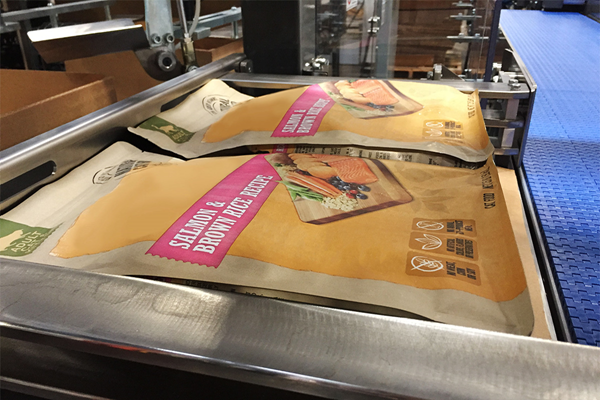 Planning & Capital Costs in Pet Food Packaging
January 28, 2021
<p>For co-packers, having flexible packaging equipment with quick, efficient changeovers is critical to running a successful business. It is the key to maximizing the production of multiple SKUs for a variety of clients. Today's top pet food co-packers know this. However, some co-packers underestimate the project planning and capital cost factors that lead to the successful purchase and installation of that equipment. </p><p><span style="text-decoration: underline">Co-packers<sup>A co-packer (or contract packager) is a company that packages and/or labels goods for another company or brand owner.</sup></span> who have the foresight to anticipate and address these factors up front will benefit by managing their costs more efficiently, not just during project planning, but throughout the life of their equipment. Those who fail to address these factors up front will likely experience unplanned downtime and incur additional costs as they try to achieve this after the fact.</p><p>In response to this issue, we’ve organized a virtual roundtable with a few experts from today's top pet food packaging equipment manufacturers. In this post, you’ll hear from six industry experts who are familiar with commonly overlooked cost factors, pitfalls to avoid, and how pet food co-packers can maximize production efficiency.</p><ul><li><strong>Jan-Pieter Grootendorst</strong>, Sales & Marketing Expert for BW Flexible Systems</li><li><strong>Daniel LoRusso</strong>, Director of System Sales in North America for BW Integrated Systems</li><li><strong>Robert Redman</strong>, Managing Partner of Food and Beverage for Design Group</li><li><strong>Todd Sandell</strong>, Sales Executive for BW Flexible Systems</li><li><strong>Steve Shellenbaum</strong>, Product Manager for BW Flexible Systems</li><li><strong>Jeremy Stith</strong>, Partner for Design Group</li></ul><p>Additional credentials for each of these experts are provided at the end of this post.</p><h2>What are some cost factors that co-packers commonly overlook when planning a project?</h2><p><strong>Sandell:</strong> Something that is often overlooked are the costs associated with the whole process of going out and looking at machinery before you ever submit an RFQ. It takes time and money to evaluate machine capabilities and compare them against production needs. This sometimes gets overlooked because the co-packer will have someone internal on their staff do this, but there is a cost associated with those tasks, whether you are handling them in-house or consulting with an engineering firm. Identifying the most effective way to manage the project planning costs will set the tone for how you manage all your subsequent costs.</p><p><strong>Stith:</strong> One of the first things that comes to mind is utilities. Traditionally, packaging equipment doesn’t have a significant utility demand. However, depending on the process equipment that goes along with it, you could be looking at significant utility usage., especially as co-packers start to specialize and create some of these custom packaging applications. They may not initially consider the complexity of what they’re adding.</p><h2>What utility requirements should co-packers consider when exploring new pet food contracts?</h2><p><strong>Stith:</strong> We always say that you have to look at the power, air, steam, and any pet food requirements for other utilities that go along with the equipment. In the treats market, we’re seeing increased interest in nitrogen flush to increase shelf life instead of putting oxygen absorbers in the packaging. It’s important for co-packers to make sure that they’re considering all of the utility requirements of whatever new process they implement. And in their existing systems, determining ‘do we [the co-packer] have the capacity for that or not? Is this an additional system that we have to add into the mix?’ They should consider what is the most cost-effective way to do that or is there an equipment option from our manufacturer that has a better utility set up for our process? How is the heat generated? Is it a natural gas operation? Electrical? As the equipment gets more sophisticated, these are things that the [co-packer] has to consider.</p><h2>What are some factors that influence the packaging equipment capabilities a pet food co-packer should look for to satisfy their contracts?</h2><p><strong>Grootendorst:</strong> For dry pet food, a lot of this will depend on the style of bag that they’re running for the customer and the type of seal they want on it. For example, in Europe, you have greater demand for different features including a handle cut, stitching, cosmetic seals, gas flushing (to accommodate for ingredients with fewer additives and stabilizers), and different types and quantities of labels. Each of these characteristics must be considered when choosing the packaging machinery and they each impact the capital costs differently.</p><p><strong>Shellenbaum:</strong> It also depends on how much automation they want. Typically, contract manufacturers and CPGs want as much automation as they can get, especially in the pet food markets. For example, our machines that include toolless <span style="text-decoration: underline">changeovers<sup>A changeover is the transition time from running one item (or SKU) in a manufacturing process to another. Some machines change over using the “recipe” system, where the parameters for different products are stored and then drawn into the machine parameter database. This allows a packaging machine to run different weights, sizes, and volumes with precision.</sup></span> are very popular because they’re easy and cost-efficient. Once you program in the recipe, there isn’t much more to the changeover besides selecting the right recipe – the automated system does the rest of the changeover for you.</p><p><strong>LoRusso:</strong> Initially, the cost of a new packaging line is largely dependent on the customer’s required production rate, product sizes and packaging formats. As a co-packer, it’s important to evaluate your need to interchange between each of these factors because what you are really selling is production time, not just product out the door. Co-packers want to changeover as much as possible, as quickly as possible, with as many different SKUs as possible. Maximizing their amount of production time is critical.</p><h2>What is a common pitfall that co-packers can avoid when designing a facility?</h2><p><strong>LoRusso:</strong> One of the pitfalls we commonly see in a wet food co-packing facility is not segregating wet and dry sides of the lines. There is a lot of liquid processing in a wet food plant, starting with the rinsing and filling of the cans. There’s also a lot of heat steam in the air, creating a very humid area. Proper line design and equipment ensure this wet and humid environment doesn’t wreak havoc on the labeling and packing sides of the line. So, when we talk about wet and dry, we need to distinguish between the parts of the process that utilize water and heat and those that don’t. The materials on the dry side of the line, whether it be labeling, or case packing or cartoning, tend to be paper, paper board, corrugate, or other materials that are susceptible to humid and wet environments. When we design lines, we take special care to create demarcations between these environments. We also take the time for specific equipment selection that helps dry and prepare cans for <span style="text-decoration: underline">secondary packing<sup>Secondary packaging serves to hold together units of primary packaging, usually to ease the transportation of goods. For example, whereas the box that individual beer cans come in acts as secondary packaging, the cans themselves act as primary packaging.</sup></span>. If there is too much overlap in these environments, you may be causing lower efficiencies in the dry side equipment.</p><h2>What are some factors that co-packers can consider to help them maximize production efficiency?</h2><p><strong>LoRusso:</strong> To maximize production, co-packers can have an integrator look at the task the line needs to perform (ex: can sizes, pack formats, labels, etc.). Most of an integrators’ up-front sales process (and the first part of this investment savings) is the time they spend to understand the customer’s business. This will give the integrator an understanding of the machine standards required as well as the speed and capability of those machines. But it’s not just enough for the integrator to understand speed and capability, they need to dive deeper with the co-packer to understand their intended operational philosophy. Everything from staffing, to changeover, to automation, to manual operations, product types and more.</p><p><strong>Redman:</strong> When a co-packer expands production, there is typically a process component to consider in addition to the packaging line. We try to look at the holistic view of this new operation, including the <span style="text-decoration: underline">upstream<sup>Upstream refers to all the parts of a manufacturing process that come before another specific manufacturing process further down the production line (e.g. raw material extraction is upstream from labeling).</sup></span> considerations. For example, you are going to add a new packaging line, but then you’ve got to add new process equipment to support the manufacture of the product. To put a new packaging line in and to put new process equipment, you’ll likely need more utilities and more space. When you start taking on more physical space inside the building, you impact the number of operators, which then impacts the number of employees in the facility, which impacts parking and so on. It just goes on and on as you keep pulling the thread. We like to look at all of those elements because they all have to work in harmony to provide an efficient operation for the co-packer.</p><h2>Did you find this content useful?</h2><p>Check out the second post in this series, which covers <a href="/blog/post/blog/2021/09/10/operational-costs-in-pet-food-packaging" data-sf-ec-immutable="">operational and production cost factors</a>.</p><h2>About the Experts</h2><p>The BW Packaging Systems Pet Food Blog is built upon cooperation and sharing of information between experts across the pet food industry including equipment manufacturers, packaging line integrators, engineering consultants, private label brands, co-packers and more. This post includes insights from:</p><h3>Design Group</h3><p><a href="https://www.bwdesigngroup.com/our-solutions/packaging-systems" target="_blank" data-sf-ec-immutable="">Design Group</a> is a premier system integrator for a wide range of filling and packaging line solutions with extensive experience in material handling, printing, labeling, inspection systems, secondary packaging requirements and management information systems. They provide complete production systems, line upgrades and experienced professionals ready to complement their client’s project team. In this post, you heard from:</p><p><strong>Robert Redman</strong> is the Managing Partner of Food and Beverage for Barry-Wehmiller Design Group. He brings 28 years of food and beverage experience to his company and its clients and is well-versed in packaging, process, controls and facility integration projects. Rob has provided oversight of multiple projects in the pet food industry including wet pet food, dry pet food, and treats production.</p><p><strong>Jeremy Stith</strong> is a Partner at Barry-Wehmiller Design Group. He brings 17 years of food and beverage experience to his company and its clients and is well-versed in packaging, process, controls and facility integration projects. Jeremy is especially familiar with pet food packaging solutions, as he has completed multiple projects in the pet food industry including wet pet food, dry pet food, and treats production.</p><h3>BW Flexible Systems</h3><p><a href="https://www.bwflexiblesystems.com/market/pet-animal-food-care" target="_blank" data-sf-ec-immutable="">BW Flexible Systems</a> is a leading producer of weighing and bag filling systems, SYMACH palletizers, conveying systems and wrapping machines for pet food and animal feed. They also have a wide range of vertical baggers and <span style="text-decoration: underline">horizontal flow wrappers<sup>Flow wrapping, also known as horizontal form fill sealing, is the process by which a consumer packaged good is placed on a conveyer belt, transported to the forming area, and wrapped in flexible packaging with a sealing material.</sup></span> to package treats, bones and other pet accessories, customized to meet each customer’s production, package style and economic requirements. In this post, you heard from:</p><p><strong>Stephen Shellenbaum</strong> is a Product Manager at BW Flexible Systems. His keen knowledge of the pet food industry comes from decades of experience and dozens of relationships with pet food industry professionals.</p><p><strong>Jan-Pieter Grootendorst</strong> is the Global Strategic Marketing and Innovation Leader of Bag Filling and Palletizing at BW Flexible Systems. Since 2018, he has been the EMEA APAC sales leader for BW Flexible Systems, SYMACH bag filling and palletizing. He brings multiple years of pet food packaging and palletizing experience to the global team.</p><p><strong>Todd Sandell</strong> is a Sales Executive at BW Flexible Systems. He has nearly 40 years of experience in the pet food industry and packaging/palletizing systems through product development, product management, marketing, applications, business unit management and consultative sales.</p><h3>BW Integrated Systems</h3><p><a href="https://www.bwintegratedsystems.com/integrated-packaging-systems" target="_blank" data-sf-ec-immutable="">BW Integrated Systems</a> is an industry leader in the design and manufacture of end-of-line packaging equipment and robotic automation solutions, as well as the execution of integrated packaging systems. They provide several solutions to the pet food industry including material handling and palletizing, depalletizing, bliss and tray forming/erecting, cartoning and case packing, and systems integration services. In this post, you heard from:</p><p><strong>Daniel LoRusso</strong> is the Director of System Sales, North America at BW Integrated Systems. He has over 15 years of industry experience and has led project management in both the US and EMEA. Previously, he was Director of Operations for our Loveland CO manufacturing facility for 7 years. His primary role is to bring cohesion to commercial teams, alignment between sales executives, and aids in the collection and understanding of client’s needs. </p><div> </div>
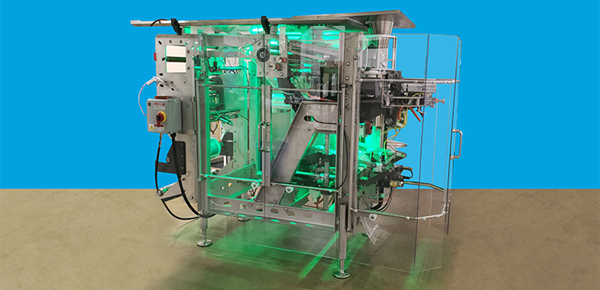 Hayssen ISB in the News
December 8, 2020
<div><p>Earlier this Fall, BWFS launched the new <a href="https://www.bwflexiblesystems.com/machine/vertical-form-fill-seal/hayssen-isb" data-sf-ec-immutable=""><span style="">Hayssen ISB vertical bagger</span></a>. The interest and excitement from the packaging industry has been strong! We've highlighted a few recent articles talking about the Hayssen ISB below, so grab a cup of coffee or tea and click through to learn more about our exciting new vertical bagger.</p><h3 id="news-round-up">News Round-up: Hayssen ISB</h3><p><strong>VF/F/S Machine Delivers Intelligent Sanitary Bagging</strong><br><em>Next-generation design developed from customer interviews and deep company expertise.</em><br><a href="https://www.packworld.com/machinery/bagging-wrapping/article/21201196/vertical-formfillseal-machine-delivers-intelligent-sanitary-bagging" data-sf-ec-immutable="">PACKAGING WORLD</a></p><blockquote>"BW Flexible Systems’ new Hayssen ISB (intelligent sanitary bagger) aims to provide best-in-class sanitary design, modern industrial machine intelligence and intuitive operation for vertical form-fill-seal packaging."</blockquote><p><a href="https://www.packworld.com/machinery/bagging-wrapping/article/21201196/vertical-formfillseal-machine-delivers-intelligent-sanitary-bagging" data-sf-ec-immutable="">Read the article</a></p><hr><p><strong>New Plant Products: Hayssen ISB vertical form fill seal machine</strong><br><a href="https://www.foodengineeringmag.com/articles/99229-vertical-fill-form-seal-machine" data-sf-ec-immutable="">FOOD ENGINEERING</a></p><blockquote>"Hayssen ISB is high-pressure washdown capable, including its human-machine interface (HMI), which would typically require protection due to its sensitive components."</blockquote><p><a href="https://www.foodengineeringmag.com/articles/99229-vertical-fill-form-seal-machine" data-sf-ec-immutable="">Read the article</a></p><hr><p><strong>BW Packaging Systems to Unveil Various Solutions</strong><br><a href="https://www.packagingstrategies.com/articles/95711-new-products-at-pack-expo-connects" data-sf-ec-immutable="">PACKAGING STRATEGIES</a></p><blockquote>"The ISB’s new innovative sanitary design is suitable for the most demanding applications and challenging environments. Discover the benefits of this vertical form fill seal bagger and explore the machine’s outstanding HMI and UX features."</blockquote><p><a href="https://www.packagingstrategies.com/articles/95711-new-products-at-pack-expo-connects" data-sf-ec-immutable="">Read the article</a></p><hr><p><strong>BW Flexible Systems’ new Hayssen ISB vertical form-fill-seal machine delivers intelligent sanitary bagging</strong><br><a href="https://www.provisioneronline.com/articles/110141-bw-flexible-systems-new-hayssen-isb-vertical-form-fill-seal-machine-delivers-intelligent-sanitary-bagging" data-sf-ec-immutable="">National Provisioner Online</a></p><blockquote>"The Hayssen ISB’s HMI can be equipped with cellular network capabilities to communicate with tablets for training opportunities without affecting production needs."</blockquote><p><a href="https://www.provisioneronline.com/articles/110141-bw-flexible-systems-new-hayssen-isb-vertical-form-fill-seal-machine-delivers-intelligent-sanitary-bagging" data-sf-ec-immutable="">Read the article</a></p></div><h3 id="teaser-trailer">View the Hayssen ISB Teaser Trailer</h3>
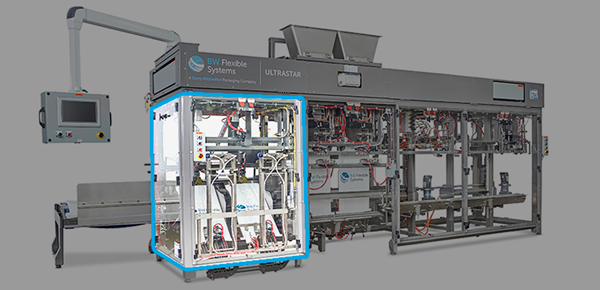 Get to Know Thiele's High Capacity Bag Magazine
December 2, 2020
<div><p>The Bag Top Registration system, a feature of our Thiele Star bag filling system, maximizes bag quality and quantity by adjusting each bag’s position prior to placement in the transfer mechanism.</p><p>The target area for filled bag sealing is small and seal applications need to be neat and square. The bag top registration system ensures sealing in the <em>correct</em> place, time after time.</p><p>Our Bag top registration system <em>corrects</em> the position of the staged empty bags, making for very consistent filling, deflation and sealing. Once the empty bag is loaded into the first station, an integrated camera and backlight sense the bags' position and then a linear actuator compensates the position up or down, as needed. Empty bags that are out of tolerance will be rejected at the second station.</p></div>