 Planning for Early Success: How Sustainable Brand Owners Choose Their OEM Partners
May 7, 2024
<div><div><p><span style="background-color: rgba(0, 0, 0, 0); color: inherit; font-family: inherit; font-size: inherit; text-align: inherit; text-transform: inherit; word-spacing: normal; caret-color: auto; white-space: inherit">Welcome back to our sustainable packaging machinery series! The purpose of this series is to connect the dots between brand-driven sustainable packaging initiatives and the value brand owners can receive by involving their OEMs in sustainability conversations early and often. </span></p></div><div><p>In <a href="https://www.bwpackaging.com/blog/post/blog/2023/04/19/5-misconceptions-about-sustainable-packaging-machinery-debunked" target="_blank" rel="noreferrer noopener" data-sf-ec-immutable="">Chapter 1</a>, Global Sustainable Packaging Leader Michelle Bryson debunked the top 5 misconceptions about sustainable packaging and machinery. If you're just joining us and haven't read the first post (or listened to the accompanying <a href="https://youtu.be/R8CudMJoWgE?si=Zw-ojBcRxNpjf1Zi" target="_blank" rel="noreferrer noopener" data-sf-ec-immutable="">podcast episode</a>) we recommend starting there, as it highlights many of the ways OEMs can add value to the sustainability conversation, which you might not have known. </p></div><div><p>Today’s chapter includes a broad range of perspectives from the OEM to the brand owner and even a primary packaging voice. By the time you’ve finished reading this post, you will have confidence in your answers to each of the following questions: </p></div><div><ul><li data-leveltext="" data-font="Symbol" data-listid="10" data-list-defn-props="{" data-aria-posinset="1" data-aria-level="1"><p>When is the best time to involve an OEM in my sustainable packaging project? </p></li><li data-leveltext="" data-font="Symbol" data-listid="10" data-list-defn-props="{" data-aria-posinset="2" data-aria-level="1"><p>What should I discuss with my OEM (or prospective OEM) during our first meeting? </p></li><li data-leveltext="" data-font="Symbol" data-listid="10" data-list-defn-props="{" data-aria-posinset="3" data-aria-level="1"><p>Which questions will help me determine if the OEM I’m interviewing is right for my initiative? </p></li></ul></div><div><p>In addition to Michelle, this chapter includes insights from Scott Yurjevich, VP of Commercial Excellence at BW Packaging. Prior to joining BW Packaging, Scott spent 20 years working with a primary packaging material company, where he assisted customers in achieving their sustainability targets. His transition from materials to machinery has granted him a dual perspective for how packaging suppliers and OEMs can collaborate most effectively for the benefit of their shared customer, the brand owner. Let’s dive in! </p></div><div><p>Not a reader? Click the video below to listen to the information on our Packed With Expertise Podcast! </p></div><div><h2>The Right Time to Involve Your OEM (Good, Better & Best) </h2></div><div><p>In <a href="https://youtu.be/R8CudMJoWgE?si=Zw-ojBcRxNpjf1Zi" target="_blank" rel="noreferrer noopener" data-sf-ec-immutable="">Episode 1</a>, Michelle explained that the best way for brand owners to increase their likelihood of early success for their sustainable packaging product launches is to invite their OEM and packaging supplier to collaborate with them early and often. </p></div><div><p>“Our advice to brand owners is that early collaboration starts to create the synergy that's needed between the product, the package and the equipment to bring the whole innovation to life,” Michelle said. “The earlier you start that collaboration, the more likely the brand owner is to have an opportunity to see early success in their startup.” </p></div><div><p>But what does “early” actually mean? Every case is different. At BW Packaging, we've seen lead times be anywhere from same-day heat adjustments, to six months for coming up with new forming collars, to two years to come up with a special design for <a href="https://www.synerlink.com/about-us/blog/blog/2023/11/16/sustainability-awards-winning-project-ps-cup-project-was-recognized-for-its-impact-on-recyclability" target="_blank" rel="noreferrer noopener" data-sf-ec-immutable="">cutting through PET on thermoforming machines</a>. For this reason, we like to frame early collaboration in terms of what’s good, better and best for each customer. </p></div><div><h3>Good </h3></div><div><p>At a minimum, Scott and Michelle recommend that brand owners engage their OEMs to support new material trials at the brand owners’ manufacturing facility. If machine adjustments are needed, OEM service technicians should be present to recommend what changes can be made, such as change parts, to enable you to run the new materials. If the OEM has done their due diligence, they will have reviewed several of the material types you are considering prior to you running it. At minimum, contact your service coordinator 6-8 weeks in advance to secure the right service technician for your test. </p></div><div><h3>Better </h3></div><div><p>Better yet, brand owners can engage their OEMs to test materials at the OEM’s facilities, with a similar machine type to what the brand owner has in their plant. This will help you avoid having to halt production at your facility and will guide your team to learn if the chosen new material requires different machine settings, change parts, or a new solution entirely. Ideally this is done several months before testing in your own facility, so you have time to make the necessary adjustments for a successful first-time startup. </p></div></div><div><div><h3>Best </h3></div><div><p>The best time to call your OEM is when you hear that sustainable innovation might be on the horizon. Even if you're not exactly sure what that material might be yet, by reaching out to your OEM at the beginning of the discovery process, you can facilitate a multi-party collaboration between your internal teams, OEM and your ideal material suppliers to begin co-developing a solution that meets your environmental and broader business objectives. </p></div><div><p>“From my perspective, it's also part of our responsibility as the OEM to be in there early with our customers before there's even a project so that we better understand their overall sustainability strategy,” Scott said. “We're proactively developing relationships and working on potential solutions that could impact us when that project comes up.” </p></div><div><h2>How to Structure Your First Conversation with an OEM </h2></div><div><p>Today, nearly every OEM recognizes the importance of being able to support their customers’ sustainable packaging projects. It’s the reason why you see so many exhibitors promoting (usually vague, homogenous) sustainability claims at every booth you visit at <a href="https://www.packexpointernational.com/" target="_blank" rel="noreferrer noopener" data-sf-ec-immutable="">PACK EXPO</a>. As you compare prospective machinery suppliers, we recommend basing your initial evaluation around these three criteria. </p></div><div><h3>Experience Supporting Sustainability Projects Like Yours </h3></div><div><p>Start by sharing your overarching sustainability strategy and current project(s) with the OEM you’re evaluating. By sharing this information in advance, the OEM can offer relevant case studies and evidence of past successes with similar initiatives. This proactive approach ensures that the conversation is grounded in how their experience aligns with your priorities. </p></div><div><h3>Ability to Support Your Broader Business Objectives </h3></div><div><p>A transparent discussion about your financial objectives is essential. It’s more than just numbers; it’s about understanding the broader business impact of your sustainability investments. This may reveal additional areas where the OEM can provide value. If you're still developing your financial projections, we encourage you to read our post on <a href="https://www.bwpackaging.com/blog/post/blog/2022/01/21/tco-packaging-lines--machinery" target="_blank" rel="noreferrer noopener" data-sf-ec-immutable="">How to Calculate Total Cost of Ownership (TCO) for Packaging Lines and Machinery</a> to get a clearer picture. </p></div><div><h3>OEM Differentiation and Value Creation </h3></div><div><p>Only once the OEM has a thorough grasp of your sustainability and business ambitions can they accurately demonstrate their unique value to your project. Each OEM will bring its strengths to the table, but here are key differentiators that you should expect from a credible partner: </p></div><div><ul><li data-leveltext="" data-font="Symbol" data-listid="6" data-list-defn-props="{" data-aria-posinset="1" data-aria-level="1"><p>Guidance & Lessons Learned: A valuable OEM will share insights from their experiences, offering guidance that can help you avoid common pitfalls and capitalize on proven strategies. </p></li><li data-leveltext="" data-font="Symbol" data-listid="6" data-list-defn-props="{" data-aria-posinset="2" data-aria-level="1"><p>Testing & Technical Support: Look for an OEM that can provide robust testing capabilities and technical support to validate your sustainable packaging concepts and ensure they are production ready. </p></li><li data-leveltext="" data-font="Symbol" data-listid="6" data-list-defn-props="{" data-aria-posinset="3" data-aria-level="1"><p>Supply Chain Transparency: Choose an OEM that offers clear visibility into their supply chain practices, ensuring that their operations meet your sustainability criteria. </p></li><li data-leveltext="" data-font="Symbol" data-listid="6" data-list-defn-props="{" data-aria-posinset="4" data-aria-level="1"><p>Carbon Emissions Reporting (Scope 3): Partner with an OEM that understands the importance of carbon accounting and can provide data on Scope 3 emissions, which is an increasingly crucial aspect of sustainability reporting. </p></li></ul></div><div><p>During your next discovery meeting, try including these topics in your agenda. Ask each member of your team to give a simple 1-5 score on each category, and once the meeting is over, compare your scores with the other members of your internal team to get each stakeholder’s perspective on the pros and cons of each prospective OEM partner. </p><p>Need a template? Download our OEM evaluation scorecard to come to a consensus more easily. </p><p><a href="https://hubs.ly/Q02xBZZ80" target="_blank" class="button green" data-sf-ec-immutable="" data-sf-marked="">Download the Scorecard</a></p></div><div><h2>12 Questions to Ask Prospective OEM Partners (and 5 to ask yourself) </h2></div><div><p>Now that you have a framework for your initial discussions, consider the questions you need answered to confirm whether you’d like to move forward with a prospective OEM partner. While each scenario is different, Scott (formerly a packaging material supplier) and Michelle (formerly a food and beverage brand owner) have created a list of 12 of the most productive questions you can ask your OEM to gather the information you need to make a well-informed decision. </p></div><div><h3>Questions to Ask Your OEM </h3></div></div><div><div><ol><li data-leveltext="%1." data-font="Calibri" data-listid="7" data-list-defn-props="{" data-aria-posinset="1" data-aria-level="1"><p>What insights and advice can you provide based on our project details and your experience? </p></li></ol></div><div><ol start="2"><li data-leveltext="%1." data-font="Calibri" data-listid="7" data-list-defn-props="{" data-aria-posinset="2" data-aria-level="1"><p>Can you offer offsite testing and technical support for validating our sustainable packaging materials on your machinery? </p></li></ol></div><div><ol start="3"><li data-leveltext="%1." data-font="Calibri" data-listid="7" data-list-defn-props="{" data-aria-posinset="3" data-aria-level="1"><p>How do you describe your collaborative process and how will you work with us and our other partners to co-develop the optimal solution? </p></li></ol></div><div><ol start="4"><li data-leveltext="%1." data-font="Calibri" data-listid="7" data-list-defn-props="{" data-aria-posinset="4" data-aria-level="1"><p>Do you provide scope 3 carbon emissions data and transparency within your supply chain? What frameworks do you follow? </p></li></ol></div><div><ol start="5"><li data-leveltext="%1." data-font="Calibri" data-listid="7" data-list-defn-props="{" data-aria-posinset="5" data-aria-level="1"><p>For previous equipment we've purchased, are there retrofit or upgrade options available to accommodate sustainable materials? </p></li></ol></div><div><ol start="6"><li data-leveltext="%1." data-font="Calibri" data-listid="7" data-list-defn-props="{" data-aria-posinset="6" data-aria-level="1"><p>What experience do you have with sustainable packaging solutions that align with our goals? </p></li></ol></div><div><ol start="7"><li data-leveltext="%1." data-font="Calibri" data-listid="7" data-list-defn-props="{" data-aria-posinset="7" data-aria-level="1"><p>How have you supported other customers throughout their innovation journeys? </p></li></ol></div><div><ol start="8"><li data-leveltext="%1." data-font="Calibri" data-listid="7" data-list-defn-props="{" data-aria-posinset="8" data-aria-level="1"><p>Can your equipment be adapted flexibly to our specific sustainability and production needs? </p></li></ol></div><div><ol start="9"><li data-leveltext="%1." data-font="Calibri" data-listid="7" data-list-defn-props="{" data-aria-posinset="9" data-aria-level="1"><p>What commitment do you have to ongoing support, maintenance, and training for your sustainable packaging equipment? </p></li></ol></div><div><ol start="10"><li data-leveltext="%1." data-font="Calibri" data-listid="7" data-list-defn-props="{" data-aria-posinset="10" data-aria-level="1"><p>What is the total cost of ownership for your sustainable packaging equipment over its lifespan? </p></li></ol></div><div><ol start="11"><li data-leveltext="%1." data-font="Calibri" data-listid="7" data-list-defn-props="{" data-aria-posinset="11" data-aria-level="1"><p>How do you approach sustainability reporting and transparency, and how can you assist us in communicating our efforts to our customers? </p></li></ol></div><div><ol start="12"><li data-leveltext="%1." data-font="Calibri" data-listid="7" data-list-defn-props="{" data-aria-posinset="12" data-aria-level="1"><p>What is your vision for the future of sustainable packaging equipment and staying ahead of industry trends and technologies? </p></li></ol></div><div><h2>Questions to Ask of Your Own Organization </h2></div><div><p>Before you get too far into your OEM discussions, it's also important to ensure that your team is aligned on the key objectives and considerations for your project so that you can provide that information to your OEM with confidence from the beginning. From an OEM perspective, if we’re talking with an engineer whose responsibility is to spec out a piece of equipment, they may share valuable information on their speed requirements or footprint, but considerations on how the machine might fit into their facility, but they might not be focused on the materials that will be used or identifying how we can utilize this new machine to help drive the sustainability goals of an organization. </p></div><div><p>“Silos are real – one of the things that our sales organization focuses on is identifying all of those individuals on a project who are influencing the decision to purchase a piece of equipment so that we have the ability to talk to them, to understand what their needs are and what goals they're driving toward,” Scott said. “This way, we can work together to create a solution that can come as close as possible to meeting all those needs.” </p></div><div><p>Before you schedule your next OEM meeting, be sure you have clarity on at least the following three questions from your organization: </p></div><div><ol><li data-leveltext="%1." data-font="Calibri" data-listid="8" data-list-defn-props="{" data-aria-posinset="1" data-aria-level="1"><p>What are our expected operational run speeds, and do we understand the specific metrics relevant to our operation? </p></li></ol></div><div><ol start="2"><li data-leveltext="%1." data-font="Calibri" data-listid="8" data-list-defn-props="{" data-aria-posinset="2" data-aria-level="1"><p>Are there any limitations upstream that could impact the packaging operation's line speed? </p></li></ol></div><div><ol start="3"><li data-leveltext="%1." data-font="Calibri" data-listid="8" data-list-defn-props="{" data-aria-posinset="3" data-aria-level="1"><p>Have procurement, engineering, sustainability leaders, and innovation teams collaborated effectively to set clear expectations? </p></li></ol></div><div><ol start="4"><li data-leveltext="%1." data-font="Calibri" data-listid="8" data-list-defn-props="{" data-aria-posinset="4" data-aria-level="1"><p>What sustainability levers are we prepared to pull? Is our film going to be fully recyclable, or are we considering paper to meet our goals? </p></li></ol></div></div><div><div><ol start="5"><li data-leveltext="%1." data-font="Calibri" data-listid="8" data-list-defn-props="{" data-aria-posinset="5" data-aria-level="1"><p>Will our sustainability practices be standardized across the company, or will they vary by region due to material availability and legislative differences? </p></li></ol></div><div><p>Engaging in these dialogues with both your potential OEM and your internal team ensures that you're stepping into a partnership with clarity and preparedness. For a detailed checklist to guide your vetting process, <a href="https://hubs.ly/Q02xBZZ80" target="_blank" data-sf-ec-immutable="" data-sf-marked="">download the OEM Checklist: Questions for Vetting Sustainable Machinery Partners</a>.</p><p><a href="https://hubs.ly/Q02xBZZ80" target="_blank" class="button green" data-sf-ec-immutable="" data-sf-marked="">Download the Checklist</a></p></div><div><h2>Subscribe For More Content Like This </h2></div><div><p>Did you find this post helpful? Subscribe to the Packed With Expertise blog to receive the next chapter of this series and other content like it. </p></div></div>
 Sustainability in the Packaging Industry
October 28, 2021
<p><strong>Carol O'Neill, Group President of Packaging for Barry-Wehmiller, leads efforts to enhance the alignment and capabilities of the five divisions that make up the BW Packaging Systems platform. This content contains excerpts from her interview with Jennifer Mackey, guest host of the </strong><a href="https://www.slu.edu/business/centers/boeing-institute/podcast/index.php" data-sf-ec-immutable=""><strong>SLU International Business Now podcast</strong></a><strong> on October 4, 2021.</strong></p><p>As you may know, sustainability is a topic that is very near and dear to my heart. So, when I was asked to speak about sustainability efforts in global business on the SLU International Business Now podcast, I welcomed the opportunity to share some learnings and perspectives I’ve gained over the years.</p><p>I can remember 20 years ago working in the packaging industry and even then, saying “we need to have an eco-friendly packaging strategy.” People said “eh, you know this is a fad. Environmental consciousness comes and goes.” I remember saying, “Maybe it’s a fad, but wouldn’t we want to be part of coming up with a solution so that it didn’t have to be a fad?”</p><p>Today, sustainability is here to stay. It is not a fad. The world has become much more aware of humans’ impact on our environment. As we look ahead, I think we will be – and frankly should be – challenged to use our creativity and our innovation capabilities to work in a way that conserves our precious resources and that minimizes our impact on the world.</p><h2>BW Packaging Systems’ Role in Sustainability</h2><p>BW Packaging Systems plays a critical role in the supply chain for our customers, which include large and small brand owners that package anything found in a grocery store. These customers are trying to run their businesses more sustainably and to provide more sustainable packagings for consumers. They rely upon us to provide the equipment that will enable them to do that.</p><p>This means we need to provide equipment that is efficient to operate, minimizes waste, and provides them with the ability to package products in more sustainable packaging. Because as materials and packaging companies come up with new solutions that are more sustainable, our customers need to be able to run those materials on our equipment even if our equipment was installed before those materials were invented.</p><p>Our role and responsibility in this whole process is to partner with the materials companies to know what’s coming and to really understand our customers’ needs. This way, we can design equipment that’s not just energy-efficient, but really that’s adaptable, flexible, and can be easily modified to meet new sustainable packaging solutions as the world comes up with them.</p><h2>Guiding Customers Through Their Sustainability Journeys</h2><p>When you’re trying to provide customers with a solution, not just equipment, what’s helpful to them is if you’ve already figured out how to navigate this landscape. Larger companies like Nestlé or Unilever have armies of people who understand the legislation. But smaller companies really value a supplier that understands the complexity of the space that they operate in. Our ability to understand our customers’ journey to finding the right solution is why they trust us.</p><p>For example, we certainly see in Europe a much greater level of attention, focus, and frankly cost benefit with sustainable packaging solutions. The cost of having a non-sustainable packaging solution for a European company tends to be much higher than it is for a U.S. based company due to legislative differences. But since U.S. companies are selling into Europe, they need to understand the local legislation. As an international packaging solution provider, we can help with that.</p><p>This extends to infrastructure too. For example, most yogurt cups are made from polystyrene (PS) – and while PS is recyclable – it’s a material that isn’t generally recycled. When customers want to move from polystyrene, they come to us and ask for alternatives. If you’re operating in Denmark or another country where there’s a very robust industrial composting network, we might say let’s look at PLA because, as a compostable corn-derived bioplastic, PLA might have all those attributes we’re looking for. If you’re operating elsewhere, we might recommend PET because, like PS, it’s a petroleum-derived plastics, except it is highly recycled.</p><p>So, what is the right evolution when you’re coming from a non-sustainable packaging solution? It really depends on your region’s infrastructure, legislation, and several other factors. How do our customers navigate that? That’s part of what we do as a solution provider. We bring that expertise to help them make the right decision about what their packaging solution should be.</p><h2>Systemic Organizational Change</h2><p>As leaders in global business, we need to find new ways to build the organizational competency that will truly drive innovation in this area of sustainability. To me, that’s a multi-faceted challenge. It requires broad expertise and cooperation because sustainability is so complex.</p><p>For BW Packaging Systems, this means having people on our team who bring expertise and knowledge in a wide array of different packaging solutions. It also requires strong industry relations and alignment with materials and packaging suppliers because we don’t want to sell our customers a piece of equipment that is going to be obsolete in two years.</p><p>As my team is spread across the world in all our 28 manufacturing facilities, process becomes essential. We are constantly collecting customer feedback, testing new materials, and sharing our findings across the organization to create the sustainable change our customers and the planet. As the leaders and organizations of the future, this is the systemic change that we need to embed in our organizations.<span style="font-size: small"><strong><span style="font-family: Arial, sans-serif"></span></strong></span></p>
 How Downgauging is Changing Shrink Sleeve Technology
October 14, 2021
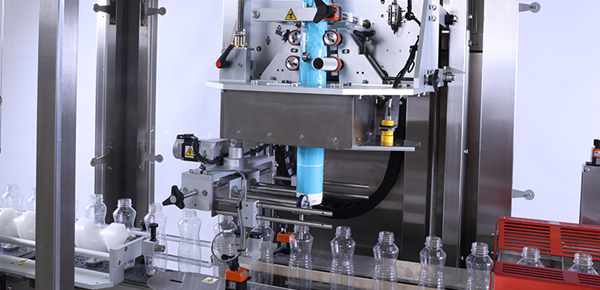
<p>Spurred by the sustainability movement and the rise of SMART technology, downgauging has become a popular trend in shrink sleeve films. This has created a significant impact on shrink sleeve equipment and technology, as equipment providers have been challenged to modify their shrink-sleeve cutting machines to cut thinner films and upgrade their software to increase end user accessibility. Companies like Accraply are making advancements to stay ahead of customer demands while maintaining OEE.</p><p>Richard Howlett, Accraply’s Global Product Line Leader, was recently <a href="https://www.packagingdigest.com/labeling/shrink-label-applicators-whats-new-and-whats-next" data-sf-ec-immutable="">interviewed by Packaging Digest</a>, to share his insights on how shrink sleeve applicators are evolving to meet these challenges. The following is an excerpt from his interview.</p><p><strong>What recent advancements have you seen in shrink-label applicators?</strong></p><p>The shrink-sleeve film market is very dynamic with new and more advanced shrink films being developed continuously. These advancements are certainly having an impact on shrink-label application machines. The most significant trend that we see is the downgauging of shrink films. This has an impact on the design of shrink-sleeve application machine cutting system. The cutting systems are now required to cut thinner, softer films at higher speeds.</p><p><strong>How do these advanced systems compare to the existing standard equipment?</strong></p><p>With the trend to cut thinner, softer films at higher speeds, control of the shrink-sleeve during the cutting cycle is critical. These systems generally use the most advanced controls to allow maximum control of the sleeve during the cutting process. With the need for control being paramount, we see the need to monitor OEE in the form of advanced data-gathering and diagnostics. To achieve this, SMART human-machine interface (HMI) technology is used in many shrink-sleeve application machines, giving the end user full transparency and understanding of how their shrink-sleeve system is performing.</p><p><strong>What are the benefits of these advancements for packaging machinery buyers/users?</strong></p><p>The benefit for the buyers/users is that if the correct sleeve-application machinery is selected, then the machinery will be advanced enough to cope with the trend of cutting thinner, softer films at higher speeds, thus opening up the market for the user to use a wider range of shrink films and offering more options to brand owners, with thinner films reducing weight and volume for logistics, and reducing CO2 emissions.</p><p><strong>What areas in shrink-label applicators still need work and why?</strong></p><p>The areas of a shrink-label system that are being worked on are that part of the system that can be deemed the most challenging, which are the shrink tunnels. With the continued advancement in shrink film, shrink tunnels are equally important parts of the process and are being advanced in technology in the pursuit of providing the perfectly finished shrink-sleeve labels. Selecting the correct tunnel is critical to produce the best possible final appearance of the product.</p><p><strong>What’s next and when might we see further improvements in shrink-label applicator machinery?</strong></p><p>As the industry continues to keep a watchful eye on sustainability and the carbon footprint, the industry may make improvements in ways to shrink the sleeves using less energy and with more use of renewable energy.</p><p>For more information, contact Accraply to learn more about their shrink sleeve solutions. <strong></strong></p>