 Case Packers 101: Case Styles, Packaging Machinery & Value Adds
July 25, 2025
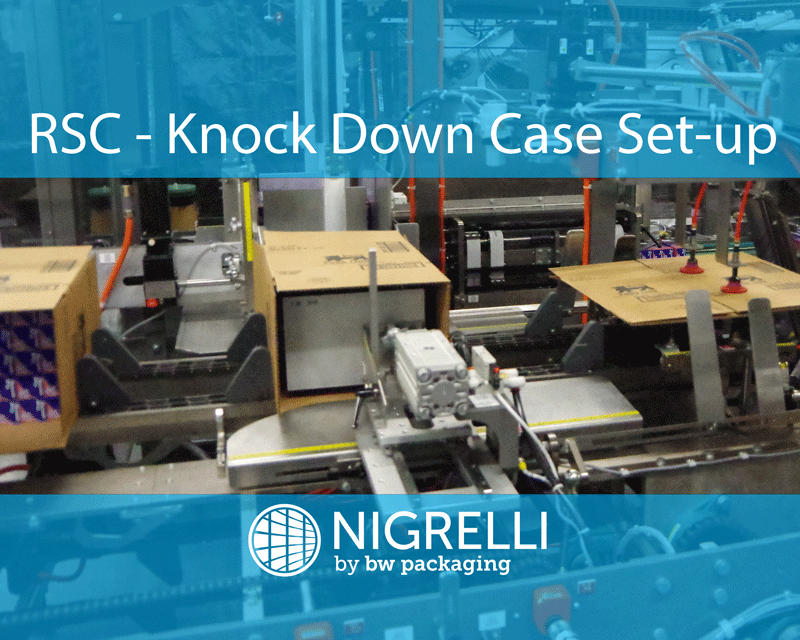
<h2>Introduction</h2><p>In the world of packaging automation, understanding case styles is crucial for selecting the right case packing solution to meet your production needs. As experts in integrated packaging solutions, we are frequently asked about various case types and how they impact automation choices. This comprehensive guide will walk you through everything you need to know about common case styles and the packing technologies designed to handle them, including:</p><ul><li><a data-sf-ec-immutable="" href="#CaseTypes">Common Case Types in Packaging</a></li><li><a data-sf-ec-immutable="" href="#CasePacking">Automated Case Packing Technologies</a></li><li><a data-sf-ec-immutable="" href="#value">Value-Add Solution for Case Packing Equipment</a></li></ul><h2 id="CaseTypes">Common Case Types in Packaging</h2><p>Understanding the various case styles available is the first step in optimizing your packaging process. Let's examine the most common case types employed across various industries and their distinctive characteristics that make them suitable for different products and applications.</p><h3>RSC/Knock-Down Cases</h3><p>The Regular Slotted Container (RSC), also known as a knock-down case, is the most widely used case style across global supply chains. These versatile containers feature:</p><ul><li>Four side panels with flaps on both top and bottom</li><li>A manufacturer's flap that's pre-glued during production</li><li>Minimal material usage while fully protecting contents</li><li>Easy manual erection from a folded state</li></ul><p>RSCs are popular for their cost-effectiveness and versatility across nearly all product categories, from food and beverage to consumer goods.</p><h3>Tray-Style Cases</h3><p>Tray cases resemble RSCs but lack one side panel and two flaps. Their distinctive features include:</p><ul><li>Open top design that allows product visibility</li><li>Typically uniform flap length from score to edge</li><li>Often overwrapped after loading to create retail-ready packaging</li><li>Reduced corrugate usage compared to full RSCs</li></ul><p>Trays are increasingly popular for retail environments where easy shelf stocking and product visibility are priorities.</p><h3>HSC (Half-Slotted Container)</h3><p>The Half-Slotted Container includes:</p><ul><li>Similar construction to RSCs, but with only one set of flaps</li><li>Pre-secured manufacturer's flap</li><li>Often requires additional overwrapping or a lid</li><li>Ideal for co-packers and repackaging operations</li></ul><h3>Wrap Around Cases</h3><p>Wraparound cases are the second most common case style and offer several advantages:</p><ul><li>Similar final appearance to RSCs but without a pre-sealed manufacturer's flap</li><li>Cost savings in manufacturing (no flap sealing process required)</li><li>Space efficiency in transport and magazine loading (shipped as flat blanks)</li><li>Better ability to conform tightly around products</li><li>Reduced catch points compared to RSCs</li></ul><h2 id="CasePacking">Automated Case Packing Technologies</h2><p>Once you've selected the appropriate case style, the next consideration is which automation technology will best suit your production needs. These advanced packing systems offer various approaches to case loading, each with specific advantages that depend on your product characteristics and production requirements.</p><h3>Side Load Case Packers</h3><p>Side load (or horizontal load) case packers insert products horizontally into the case. These systems:</p><ul><li>Can handle all common case styles mentioned above</li><li>May require tilting some case types before loading</li><li>Excel at efficiently packing products that can be pushed or swept into cases</li><li>Work well with products that can withstand side pressure</li><li>Offer some of the most advanced, flexible options for end-of-line packaging</li></ul><p>Nigrelli's side load case packers are designed for quiet, low-maintenance operation while maximizing efficiency.</p><h3>Top Load Case Packers</h3><p>Top load case packers typically utilize a gantry system with specialized end-of-arm tooling to:</p><ul><li>Pick products from a conveyor or staging area</li><li>Place items into cases from above</li><li>Handle products that cannot be loaded from the side</li><li>Accommodate RSC, tray, and HSC case styles</li><li>Provide gentle handling for fragile items</li></ul><p>Our top load case packers feature customizable load patterns and versatile designs for both flexible and rigid products.</p><h3>Robotic Case Packing</h3><p>A specialized form of top loading, robotic case packing employs:</p><ul><li>Six-axis robotic arms, delta robots, or SCARA robots</li><li>Vision systems for increased flexibility</li><li>Advanced product manipulation capabilities</li><li>Adaptability for various case styles and product types</li><li>Greater flexibility in pack patterns and product arrangements</li></ul><p>With over 900 robotic systems installed across 13+ countries, BW Integrated Systems is a global leader in robotic case packing solutions.</p><h3>Wrap Around Case Packers</h3><p>These specialized machines:</p><ul><li>Form cases around products rather than inserting products into cases</li><li>Reduce material costs</li><li>Allow for tighter case fits</li><li>Handle a variety of products including cans, cartons, and bottles</li><li>Provide superior performance with low operational costs</li></ul><p>Our wraparound packers deliver consistent performance with simple maintenance requirements.</p><h3>Selecting the Right Case Packing Solution</h3><p>When choosing a case packing system, consider these key factors:</p><ul><li>Product characteristics - fragility, shape, weight, and orientation requirements</li><li>Production speeds needed to meet output targets</li><li>Available floor space and line configuration</li><li>Initial budget, expected OEE, and lifetime cost</li><li>Cost of raw material – cases (KD vs wrap around), glue, cartons, film, etc.</li><li>Case style preferences based on downstream handling</li><li>Changeover frequency between products or case sizes</li><li>Labor availability for machine operation and maintenance</li></ul><p>View <a href="https://www.bwintegratedsystems.com/products/case-packing-and-tray-packing">Nigrelli's case packer portfolio</a> for examples of various styles of case packing machinery. </p><h2 id="value">Value-Add Solutions for Case Packing Equipment</h2><p>Beyond the machinery itself, comprehensive support and integration capabilities are crucial factors in maximizing the long-term success of your packaging line. BW Integrated Systems provides value-added solutions that enhance equipment performance, reduce downtime, and ensure your packaging operation remains efficient throughout its entire lifecycle.</p><h3>Integrated Packaging Solutions</h3><p>While understanding individual case packers is important, the greatest efficiency gains often come from properly integrated packaging lines. As both machine manufacturers and systems integrators, BW Integrated Systems uniquely understands how to:</p><ul><li>Design optimal case packing lines for your specific facility layout</li><li>Get you a true turnkey solution for your packaging needs</li><li>Ensure proper spacing and product flow between equipment</li><li>Coordinate controls for seamless operation across the entire packaging line</li><li>Maximize throughput while minimizing footprint</li><li>Collect and share your production data and metrics to allow fine-tuning of your production line</li><li>Create solutions that accommodate future production needs</li></ul><p>Our comprehensive approach ensures that your case packing equipment operates as part of a cohesive system rather than an isolated component. View our <a href="https://www.bwintegratedsystems.com/products/integrated-packaging-solutions" data-sf-ec-immutable="">Integrated Packaging Solutions</a> webpage to learn more!</p><h3>Lifetime After-Sales Support</h3><p>In today's manufacturing environment, equipment reliability and consistent operation are critical to maintaining production schedules and meeting market demands. Comprehensive after-sales support provides manufacturers with ongoing technical expertise, rapid response to maintenance needs, and solutions for skill gaps caused by workforce turnover. </p><p>The most effective packaging partners offer long-term support that includes technical troubleshooting, drawings, and manuals, rapid replacement parts availability, automation upgrades to extend equipment life, and training resources for new operators. This sustained partnership approach ensures that initial equipment investments continue to deliver value throughout their operational lifespan, even as production requirements and personnel change over time. We are always here.</p>
 How Ion Labs Boosted Gummy Production with BW Integrated Systems
November 15, 2024
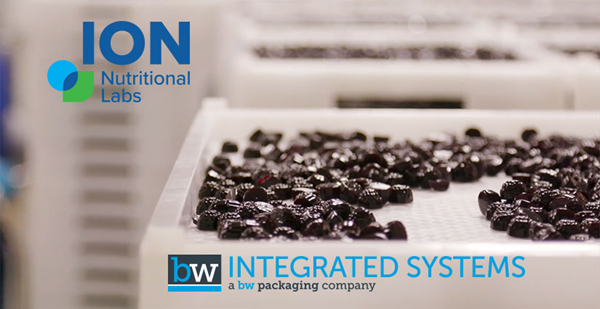
<p>Faced with the rising demand for gummy supplements, Ion Nutrition Labs knew they needed to scale up quickly to stay competitive. With 350 employees across two facilities, they already produced a range of nutraceutical products but required a high-speed gummy production line to meet growth targets. That’s when they turned to BW Integrated Systems for help. </p><p>In this blog post, we share how Ion Nutrition Labs approached the production line expansion, how BW Integrated Systems and their Integrated Packaging Solutions (IPS) team provided them with a custom-fit solution, and the successful results of the new, completely integrated gummy packaging line. If you want to see the story in a video format, watch the Ion Labs Customer Testimonial video above. </p><p><strong>The Search for the Right Partner </strong></p><p>Ion Labs knew they couldn’t take on the expansion alone—they needed a partner they could trust. That's when they turned to BW Integrated Systems (BWIS). Matthew Keib, Ion Nutrition Labs Chief Operating Officer (COO) was impressed with BWIS’ expertise, their ability to act as a single point of contact throughout the project, and their US-based support.</p><p>“I wanted one company that I was working with, building that relationship with, and having that communication,” Keib explained. “Customer service in the US was very important to us.” </p><p>From the start, Ion Labs felt confident in BWIS’ approach. Not only did BWIS come in early to understand Ion’s goals, but they also provided reassurance that they could deliver the ideal solution to meet their high expectations. BWIS’ IPS team played a key role in this collaboration by managing the entire packaging line integration, coordinating with multiple OEMs to ensure seamless functionality, and streamlining the process for Ion Labs. </p><p>“They expressed to us that they really wanted to improve the level of automation and efficiency on this line,” said David Duff, Sales Executive at BW Integrated Systems. “We brought them in and provided a lot of confidence that we could integrate the equipment from OEMs they selected and have it run efficiently.” </p><p><strong>A Collaborative Journey </strong></p><p>Despite facing a major challenge – the new gummy line had to fit into a very tight footprint within the existing facility – BWIS rose to the occasion. The IPS team worked through a collaborative process to design a layout that not only fit the space but delivered incredible efficiency. </p><p>“They developed a line that not only could maintain the speed, offer full integration, and squeeze it all in,” said Jamie Mireles, Maintenance Manager at Ion Labs. “They were able to pull it off and do it well. They did amazing.” </p><p>Beyond adding new machines, the expansion project focused on building trust between the two teams. The IPS team ensured that Ion Labs had full visibility into the project by offering clear communication at every step, acting as the primary liaison with OEMs, and providing a dedicated project manager to handle any concerns. Their streamlined approach minimized complexity and allowed Ion Labs to stay focused on their production goals. </p><p><strong>The Results: Confidence and Growth </strong></p><p>With the new line in place, Ion Labs is now prepared for the next five to 10 years of growth. Their gummy production is faster, more automated, and ready for the future. The new system also provides their team with renewed confidence in their ability to meet growing demand. </p><p>“The line is state of the art,” said Jean Ramirez, Gummy Manager at Ion Labs. “It helped me as a manager to have better control of the process and make sure I’m packing a good, quality product and hitting my performance goal.” </p><p>The collaboration with the BW Integrated Systems IPS team helped Ion Labs achieve their vision, no matter the challenges they faced along the way. With the seamless integration of equipment and full support from the IPS team, Ion Labs is ready to tackle the future and continue their journey of growth. </p><p><strong>Learn More about Ion Labs’ Story and BW Integrated Systems</strong></p><p>Ion Labs’ new gummy line helped them stay competitive and keep up with demand while maintaining cost-effectiveness. Want to learn more about their success story? <a target="_blank" href="/docs/default-source/brochures/ion-nutritional-labs---integrated-packaging-solutions-(ips)_case-study.pdf?sfvrsn=e701535f_0">Click here</a> to read the full case study. </p><p>If you’re ready to transform your own packaging line with a custom solution, reach out to BW Integrated Systems today!</p>
 Pressure Sensitive vs. Shrink Sleeve Label Application
January 11, 2024
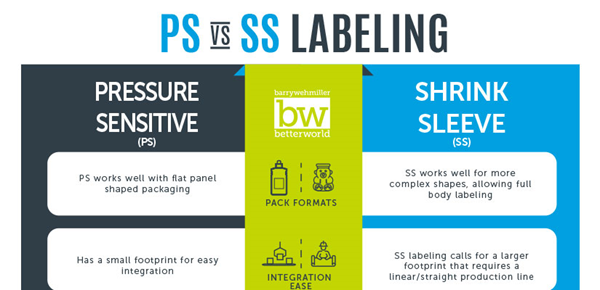
<p>There is an ongoing and rigorous debate about which label technology is best. Both Pressure Sensitive and Shrink Sleeve label applications have their place. The choice between the two really depends on your needs and how each piece of machinery aligns with your company’s brand and brand packaging strategy. This article highlights some of the main differences between the two label applications. You can also download the <a href="https://bwpackaging.showpad.com/share/75MfrRJZEaMqerTT5fgTJ" data-sf-ec-immutable="">infographic</a> for quick reference. </p><h2>Pack Formats</h2><p>Packaging formats play a big role in determining which label technology will work best for your needs. Pressure Sensitive Labeling works only with flat panel shaped packaging, while Shrink Sleeves work well for more complex shapes, allowing for full body decoration on curved items.</p><h2>Integration Ease</h2><p>Floor space and ease of integration are also key considerations in labeling application decisions. Pressure Sensitive labeling machines utilize a smaller footprint-- they take up less space-- and are easy to integrate into existing packaging lines. Shrink Sleeve labeling machines require a larger operating space, to accommodate the shrink tunnel requirements.</p><h2>Shelf Appeal</h2><p>Both shrink sleeve and pressure sensitive labels provide strong shelf appeal for your products. Shrink sleeve application enables full-body decoration, giving brand owners the best opportunity to utilize color and shape to make their products stand out from any angle on shelf. Pressure Sensitive labels utilize embossing, high resolution printing, and 3D graphics to help products stand out in unique ways.</p><h2>Capital Expenses</h2><p>While there are different ranges of expense for each application based on quality, speed, and durability, on average Pressure Sensitive labeling machines cost less than their shrink sleeve counterparts. This is due to the two-stage process required to apply and shrink a shrink sleeve label. In general pressure sensitive labels cost less per label than shrink sleeves. It is important to evaluate the Total Cost of Ownership (TCO) to help determine which labeling option works best for your organization.</p><h2>Tamper Evident/Security </h2><p>If your packaging requires tamper evident or security labeling, both Pressure Sensitive and Shrink Sleeve label applications can create a tamper evident seal. The Shrink Sleeve label application is the easier method to integrate tamper evident labeling. You can have a small machine dedicated to tamper evident labeling added to a production line. While for Pressure Sensitive applications, it needs to be integrated within the PS labeler and would need to be planned from the initial purchase of the labeler.</p><h2>Operational Requirements</h2><p>Another consideration when choosing between Pressure Sensitive and Shrink Sleeve label applications is the type of production line you are running. Shrink Sleeve applicators require accumulation handling for intermittent (start/stop) production lines. This requirement is driven specifically by the need for a steady state of product flow into and out of the shrink tunnel to maintain a high-quality product presentation.</p><h2>Temperature Sensitivity</h2><p>Depending on your manufacturing environment, Pressure Sensitive labeling may be the most effective labeling solution for you. Pressure Sensitive labeling applicators can perform in a variety of different temperature states. An environment where condensation occurs may require some additional equipment to dry the container prior to Shrink Sleeve product decoration.</p><h2>Sustainability</h2><p>Your company’s sustainability strategy may also impact your choice of label and labeler. Pressure Sensitive Machines can accommodate all preformed materials (PP, PET, glass, cardboard, etc.) offering numerous labeling options that impact sustainability in various ways. Shrink Sleeve labels, on the other hand, can be easily removed by the consumer and discarded to allow for container recycling without concern for label recyclability.</p><h2>In Conclusion</h2><p>In the end, there are numerous considerations to keep in mind when choosing between Shrink Sleeve and Pressure Sensitive Labels/labelers. The choice often comes down to your company’s specific needs. BW Integrated Systems has put together a quick reference infographic for you. If you need assistance in choosing what application works best for you, contact us. </p>
 4 Trends that are Challenging the Shrink Sleeve Label Format
January 8, 2024
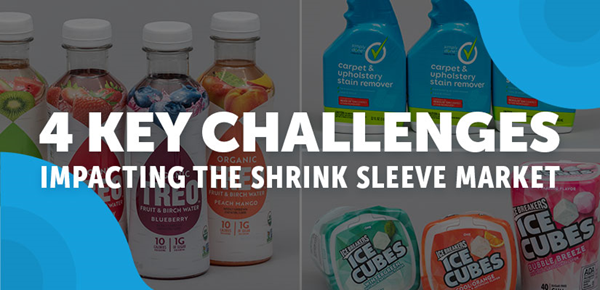
<p>The global shrink sleeve label market has witnessed significant growth over the years and gone from a fringe label format to the mainstream. In order to continue its growth trajectory, it is crucial for the shrink sleeve segment to adapt and innovate. In this updated blog post, we will explore four key challenges that are currently impacting the global shrink sleeve market.</p><ol><li><strong>Growing Sustainability & Environmental Concerns:<br></strong><p>In recent years, there has been an increasing focus on sustainability and environmental impact. The shrink sleeve industry is actively addressing sustainability and environmental concerns by developing advanced functional coatings, inks, and materials. The right combination of technologies allows for the bottle and sleeve to be recycled together, increasing the potential for 100% recyclability. Manufacturers are also focusing on PET and HDPE clear plastic bottles to enhance recyclability and minimize the use of colored bottles, which are harder to recycle.</p><p>The entire shrink sleeve value chain will need to be committed to sustainability and to embracing all technologies and approaches that are compatible with the recycling process, including the use of perforations designed to encourage the consumer to remove the sleeve from the container prior to putting in the recycling bin.</p></li><li><strong>Competitive Technologies are On the Rise:</strong><br><p>Two emerging technologies pose a challenge to the traditional shrink sleeve label format. First, direct-to-container printing eliminates the need for labels entirely, offering sustainability advantages and personalized packaging options. Second, stand-up pouches have gained popularity due to their reduced plastic usage compared to rigid containers. However, the recyclability of stand-up pouches remains a point of contention. The industry is grappling with the choice between fully recyclable rigid containers and film combinations or stand-up pouches that use less plastic but are not recyclable.</p></li><li><strong>Impact of e-Commerce:</strong><br><p>The rise of e-commerce has transformed the retail landscape and presents new considerations for shrink sleeve labels. While the effectiveness of shrink sleeves in grabbing shoppers' attention in physical stores is well-established, their role in the world of virtual shopping is less clear. In general, packaging now plays a critical role in the ‘unboxing experience’ as products are delivered directly to consumers' homes. Package designers and brand owners may need to adapt their strategies to consider the impact at the point of unboxing on your kitchen table – a new frontier for the shrink sleeve label to make its mark!</p></li><li><strong>Addressing Quality Issues:</strong><br><p>Despite decades of advancement, the shrink sleeve label format still faces quality issues. Challenges such as seaming problems, pre-press and distortion issues, fold lines, and application and shrinking problems persist. Though six decades in existence, the shrink sleeve label is still evolving, developing, and challenging us. Each new film, new ink, and new coating requires us to refine and recalibrate our processes to ensure that we reach and maintain the level of excellence this impressive and versatile label format demands.</p></li></ol><p>Sustainability, competitive technologies, the impact of e-commerce, and quality challenges are among the key factors influencing the future of shrink sleeves. By embracing innovation, addressing environmental concerns, adapting to changing consumer behaviors, and maintaining a focus on quality, the shrink sleeve industry can continue to thrive in the dynamic landscape of packaging solutions. </p><p>The response of the value chain in innovating for sustainability, and the continuing pursuit of excellence – be it on the supermarket shelf, or on your kitchen table – leads us to believe that the growth curve for shrink sleeve labels has not yet peaked!</p>
 New Standard in 6-Lane Aluminum Can End Manufacturing
November 7, 2022
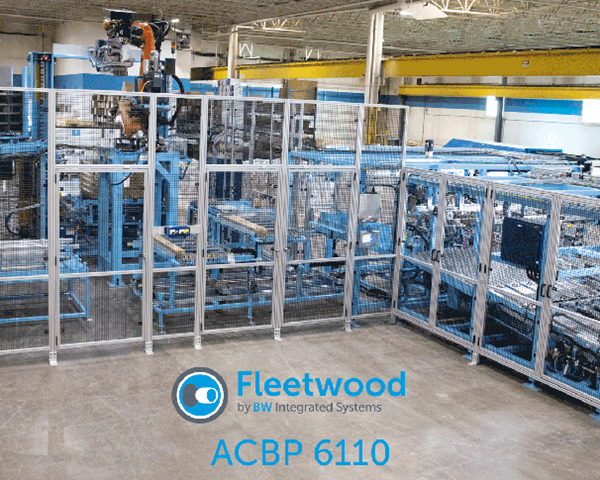
<p>For years, aluminum can manufacturers have considered 4-lane can end systems to be the most effective solution for high-volume aluminum can manufacturing. However, with the advent of the Stolle E06 Conversion System and the Fleetwood Automatic Counter Bagger Palletizer 6110, today’s can manufacturers have several performance and efficiency-driven upgrades at their fingertips. In this post, I’ll offer an abridged history of can end manufacturing systems, an introduction to the new 6-lane format, and highlight the latest can end innovations available to can making machine suppliers today.</p><h2>A Brief History of Can End Handling Systems</h2><p>In 1997, Stolle Machinery – known throughout the beverage industry for their Easy-Open End Conversion Systems – introduced its first Tetrad (4-lane) can end conversion system. At the time, 3-lane systems were standard, and this innovation allowed can manufacturers to increase their throughput from 2,100 can ends per minute (EPM) to 3,000 EPM. With most new lines running three Tetrad systems together, this allowed can manufacturers to increase their total throughput to 9,000 EPM.</p><p>Over the past 25 years, Stolle’s Tetrad systems have become the backbone of can-making operations due to their proven productivity, reduced energy, and metal consumption savings. In fact, in 2022 Stolle sold its 200<sup>th</sup> Tetrad system. Then, in 2020, Stolle made history again when it introduced the <a href="https://www.stollemachinery.com/sites/default/files/uploads/sales-sheets/Stolle_EO6.pdf" target="_blank" data-sf-ec-immutable="" data-sf-marked="">E06 Conversion System</a>. With six lanes of conversion and tab tooling, this beverage end converting innovation provided early adopters with several productivity and efficiency advantages. For example, the high-speed E06 system can produce 5,100 EPM, which is a 70% increase in volume over the industry-leading 4-lane Tetrad System.</p><p>One of the first solutions of its kind, the Stolle E06 Conversion System offers can manufacturers significant improvements over industry-standard 4-lane systems including:</p><h3>Increased Throughput</h3><p>In an end module with a 24-out shell system and 6 liners, increased throughput will allow three Tetrads to be replaced with two EO6 machines while increasing end production from 9,000 EPM up to 10,200 EPM. Featuring a completely new Minster ECH-140 press that’s specifically designed for high-speed EOE production, the E06 system can achieve speeds up to an unprecedented 850 strokes-per-minute (SPM).</p><h3>Metal Savings</h3><p>The 6-out tab die has several improved design features and can produce the latest generation X3 metal-saving tab design. Specifically, it offers a 3.4% better metal efficiency ($.04/1,000 metal savings). The additional lift springs provide better lift and control of tab the strip and the mechanical push feeder, with re-designed tab feed linkage, offers improved life and precision operation.</p><h2>Fleetwood Responds with 6-Lane Automatic Counter Bagger Palletizer</h2><p>In 2021, amidst <a href="https://youtu.be/QFH1UUQx0WE" target="_blank" data-sf-ec-immutable="" data-sf-marked="">Fleetwood’s 65<sup>th</sup> anniversary</a>, BW Integrated Systems introduced the first ever 6-lane automatic counter bagger and palletizer for can ends. The <a href="https://youtu.be/Fyw7s0Aucm4" target="_blank" data-sf-ec-immutable="" data-sf-marked="">Fleetwood ACBP 6110 Automatic Counter Bagger Palletizer</a> is a single machine solution for high-speed 6-lane conversion presses. It is easily integrated with the Stolle E06 press. Because Fleetwood’s solution was designed specifically for the 6-lane format, it includes greater efficiency and compatibility benefits than any other solution.</p><h3>6-Lane Compatibility</h3><p>Though other can end bagger palletizer and suppliers can cobble together two 3-lane solutions, Fleetwood’s ACBP 6110 is the <em>only </em>single machine solution available on the market today. The result is a smoother integration from the press to the bagger and palletizer. A single machine also means reduced risk for the can manufacturer because there are few machines to operate, maintain and troubleshoot.</p><h3>Performance Efficiency</h3><p>The Fleetwood ACBP 6110 also features inherent performance improvements. For example, the 6-lane infeed with 12 accumulation lanes provides higher performance and efficiency. These features enable the solution to meet speeds up to 10 bags-per-minute (bpm).</p><h2>How to Get Started</h2><p>Interested in learning more about 6-lane can end manufacturing systems? <a target="_blank" sfref="[e09a3251-76a6-674e-8383-ff0300805640]40E33251-76A6-674E-8383-FF0300805640" data-sf-ec-immutable="">Contact our sales team</a> to learn more about Fleetwood ACBP 6110 Automatic Counter Bagger Palletizer and other solutions for can making machine suppliers.</p>
 Topics for Selecting a Packaging Line Integrator
January 15, 2021
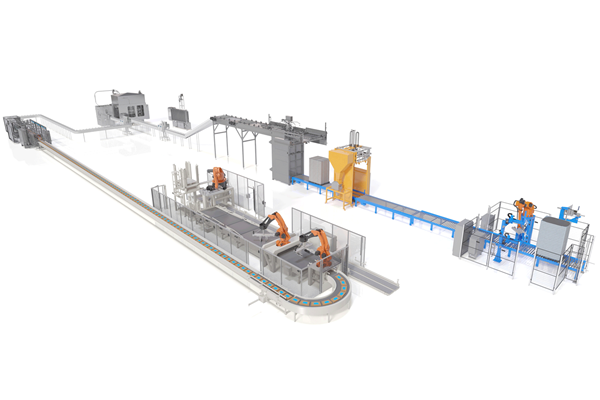
<h2>Introduction</h2><p>For many of today's top Consumer Packaged Goods companies (CPGs), packaging line integrations have become routine investments; necessary for meeting changing market demands and improving the overall efficiency of production lines. The relative success of a packaging line integration can be determined by answering "yes" to three questions:</p>1. Was the project completed on budget?2. Did the line start up on time?3. Does the line run at its committed efficiency? <p>To check all three of these boxes requires diligent project planning and total transparency between you and your integrator. In this post, we'll recommend five key topics you should discuss with your prospective packaging line integrator to ensure your integration gets completed on time and on budget.</p><p>Why is Transparency Important to Packaging Line Integrations?</p><p>Before we jump into the topics, let's address transparency. Transparency is an important component of any supplier/buyer relationship, regardless of the project's scale. It's important because when you spend company money with a supplier, you're not just purchasing equipment and services from that supplier; you're telling them "I trust you to deliver what you promised, to make me look good in front of my boss, and to make my job easier."</p><p>When you're responsible for overseeing a packaging line integration, which are often multimillion-dollar investments, the importance of that transparency is amplified with every dollar. The impact of the integrator you choose - good or bad - will be felt within your organization (and likely your career) for years to come. Having a candid, transparent conversation with your prospective packaging line integrator is the first step you should take to ensure you're making the right decisions throughout the course of your project.</p><h2>Top 5 Packaging Line Integrator Discussion Topics</h2><h3>Integrator Experience</h3><p>The quickest way to determine if your integrator is being transparent about their capabilities is to ask for proof of experience. Case studies are a great place to start. Ask your integrator for examples of similar packaging line integration projects they've completed so you can get an idea of how their solutions match up with your project.</p><p>You should also ask a prospective integrator for references. This can include past clients, OEMs, installers, or any other vendor that has worked closely with the integrator. Ask these references probing questions about their experiences with the integrator. What did they do well? Did everything go smoothly with the project? If not, how did the integrator respond to adversity?</p><h3>Financial Strength</h3><p>Working with a large, financially strong packaging line integrator can be useful in managing your own financial risk. Such integrators, including BW Integrated Systems, usually offer creative financing agreements that can help you comfortably manage your cash flow as you invest in new packaging infrastructure. This is especially useful when weathering unforeseeable market disruptions, like those created by the COVID-19 pandemic.</p><p>Additionally, these integrators can leverage their own financial experience to guide you through ROI calculation and other hurdles associated with financing. If they're already acting as your advisors and analyzing market trends as they pertain to your investment potential, they might also offer to present these findings to upper management on your behalf.</p><h3>OEM Management</h3><p>If you haven't built relationships with suitable OEMs for your integration, then this is another opportunity to lean on your integrator. They should be able to recommend suitable, credible OEMs for your project and, upon request, provide examples of how they have seen success on similar projects working with those OEMs.</p><p>Regardless of who picks the OEMs, it's best to take a consultative approach with your integrator. If you've already identified the OEMs you'd like to work with, that's okay too. However, if you force an integrator to work with vendors they don't know or trust, they're likely to increase their fees during contract negotiations or make changes to the contract itself in order to protect themselves from risk.</p><h3>Contract Negotiations</h3><p>Strict contract demands - including tight timeline constraints, total control over OEM selection, and asking the integrator to sign up for terms such as "liquidated damages" - will often drive up your cost. This is because experienced packaging line integrators know that agreeing to such demands puts them at greater risk. </p><p>Understanding your own "risk profile" is also vitally important when it comes to negotiating a contract with your integrator. Your goal should be to strike the right balance between cost and risk. This requires looking inward at the depth and quality of your in-house resources. Are you equipped to handle the installation yourself? Who will be responsible for shipping? What risks are associated with owning those steps in-house? What assurances are granted by contracting the integrator to do them?</p><h3>Packaging Line Design</h3><p>Finally, it's important to discuss the considerations that will inform your integrator on how to design a packaging line that is well-optimized for your particular plant environment. This will require a thorough review of several factors including your footprint, utilities, material flow, and more. Your goal should be to lay out a packaging line that is efficient in its use of space, optimizes labors, and most importantly, is operationally efficient.</p><p>For example, if you have a flow-through facility, meaning materials come through on one side of the plant and the product ships out on the other, you'll likely want an inline packaging line design. By contrast, if both in and out are on the same side of the building, you probably want a "u" shaped line.</p>