 Palletizer Uptime Optimization: A Practical Guide to Preventive Maintenance Schedules
June 22, 2026
<h2>The High Cost of a Single Stop</h2><p>Oxmaint cite $50,000–$300,000 per hour for unplanned downtime in a food and beverage plant (<a href="https://oxmaint.com/blog/post/food-manufacturing-maintenance-complete-guide" data-sf-ec-immutable="">Oxmaint, 2025</a>). Lost production, labor, scrap, and downstream penalties are costly and preventable.</p><p>Now consider that your palletizer sits at the end of your packaging line. When it stops, everything upstream grinds to a halt. Your bag fillers keep running until conveyors back up. Your production team stands around waiting. Product sits in hoppers getting stale or clumping. And every minute that ticks by, you're falling further behind on customer orders.</p><p>If you've lived through an unexpected palletizer failure during a peak production window, you know exactly how painful this scenario is. The frantic calls to find parts. The pressure from sales asking when shipments will go out. The overtime costs to catch up once you're back online. The damage to customer relationships when deliveries slip.</p><p>Here's the reality: most of those emergency stops are preventable. Not with hope or luck, but with a structured preventive maintenance program that catches problems before they become failures. Companies that implement effective preventative maintenance (PM) programs see equipment breakdowns reduced and ROI increased.</p><p>This guide will show you how to build a palletizer maintenance schedule that maximizes uptime, protects product quality, and keeps your end-of-line operations running smoothly.</p><h3>Who We Are</h3><p>BW Packaging helps manufacturers across agriculture, pet food, industrial, and bulk ingredients sectors transform their end-of-line operations through flexible bag filling, sealing, and palletizing solutions. Our automated <a href="/products/flexible-bagging-wrapping/bag-filling">Thiele bagging</a>, <a href="/products/palletizing/bag-palletizers">SYMACH conventional palletizing</a>, and <a href="/products/palletizing/case-tray-bulk-package-palletizers">robotic palletizing</a> solutions are known for their efficiency, versatility, precision, and ease of operation. We offer our clients training, service, and a lifetime of support for every solution sold.</p><h2>The Foundation: Building Your Palletizer Preventative Maintenance Schedule</h2><p>Effective preventive maintenance (PM) isn't about doing more work—it's about doing the right work at the right time. A tiered approach distributes tasks appropriately between operators, technicians, and OEM specialists, ensuring nothing falls through the cracks while keeping your team focused on production.</p><h3>Daily Operator Checks: The First Line of Defense</h3><h3></h3><p>Your operators interact with the palletizer every shift. They're the first to notice when something doesn't look, sound, or feel right. Empowering them with a simple daily checklist transforms them from equipment users into your early warning system.</p><h4>Start-of-shift inspection checklist:</h4><h4></h4><ul><li><strong>Visual scan for debris and obstructions.</strong> Check the infeed area, layer forming zone, and pallet discharge for anything that doesn't belong—product spillage, broken pallets, foreign objects, accumulated dust</li><li><strong>Listen for unusual noises.</strong> Before production ramps up, run the machine briefly and listen. Grinding, squealing, clicking, or any sound that wasn't there yesterday deserves attention.</li><li><strong>Confirm safety guards are in place and secure.</strong> Every guard, every interlock, every time. No exceptions.</li><li><strong>Check for obvious leaks.</strong> Look for pneumatic air leaks (listen for hissing), hydraulic fluid on the floor, or any sign of fluid where it shouldn't be.</li><li><strong>Verify basic functionality.</strong> Run through a few cycles before full production starts. Confirm the gripper opens and closes smoothly, conveyors run at proper speed, and sensors are responding correctly.<br></li></ul><p>This inspection takes five minutes. It catches problems when they're small annoyances, not production-stopping emergencies.</p><h2>Weekly and Monthly Technician Tasks</h2><p>Some maintenance tasks require more technical expertise and time than operators can provide during production. These checks dig deeper into the mechanical and electrical systems that keep your palletizer performing reliably.</p><h4>Weekly tasks:</h4><ul><li><strong>Lubrication of chains, bearings, and moving parts.</strong> Use the correct lubricant in the correct amount. Over-lubrication causes as many problems as under-lubrication.</li><li><strong>Inspection and adjustment of belt and chain tension.</strong> Loose belts slip and wear prematurely. Over-tensioned belts stress bearings and shorten component life.</li><li><strong>Cleaning and testing of sensors and photo-eyes.</strong> Dust, product residue, and film buildup cause false readings that lead to jams, misaligned layers, and rejected loads.</li><li><strong>Verification of pneumatic pressure levels.</strong> Confirm system pressure meets specifications. Pressure drops indicate leaks or compressor issues that will only get worse.</li></ul><h4>Monthly tasks:</h4><ul><li><strong>Detailed inspection of grippers, forks, or other end-of-arm tooling.</strong> Look for wear patterns, damaged surfaces, or any sign of fatigue. These components handle every product that moves through your system.</li><li><strong>Electrical connection inspection.</strong> Check for loose terminals, damaged cables, and signs of overheating at junction boxes and motor connections.</li><li><strong>Calibration verification.</strong> Confirm that positioning systems, sensors, and controls are still operating within specifications.</li><li><strong>Review of fault logs and error history.</strong> Patterns in error codes often reveal developing problems before they cause failures.</li></ul><h2>OEM Service Intervals: Applying Expertise Where It Matters Most</h2><p>Even the strongest in-house maintenance teams benefit from occasional outside perspective—not because routine work is being overlooked, but because certain insights only emerge over longer operating cycles and across many installations.</p><p>In practice, most well-run facilities already handle the majority of preventive maintenance tasks internally. OEM service delivers the greatest value when it focuses on areas where design knowledge, system authority, and low-frequency exposure make a meaningful difference to long-term performance.</p><h3>What OEM service is best suited to support:</h3><ul><li><strong>Restoring baseline performance –</strong> Over time, normal wear, process changes, and incremental adjustments can cause systems to drift from original operating intent. OEM technicians can help re-establish design baselines and confirm the machine is still performing within intended tolerances.</li><li><strong>Addressing complex or infrequent failure modes –</strong> Some issues don’t appear often—but when they do, they can be difficult to diagnose. OEM teams bring experience from across many installations, helping identify patterns that aren’t always visible within a single plant.</li><li><strong>Evaluating design-specific tolerances and wear limits – </strong>Certain components require assessment against original engineering assumptions rather than generic maintenance guidelines. OEM insight helps ensure adjustments and replacements are made at the right point—not too early, and not too late.</li><li><strong>Advising on controls and software decisions – </strong>OEMs are uniquely positioned to guide control-system changes, including firmware considerations, parameter optimization, and compatibility with current operating conditions. Updates are most effective when driven by a clear operational benefit, not simply version availability.</li><li><strong>Confirming system-level integration.</strong> – As upstream and downstream equipment evolves, periodic verification of timing, communication, and coordination helps prevent subtle inefficiencies from becoming recurring stoppages.</li></ul><p>Service timing should be driven by usage and risk—not the calendar. There is no single interval that applies universally across duty cycles, environments, or throughput levels. The most effective OEM involvement is planned around operational demands, focusing expertise where it adds the greatest return. When applied this way, OEM service complements internal maintenance programs rather than replacing them—strengthening reliability, extending equipment life, and supporting consistent end‑of‑line performance.</p><p>The technicians who build SYMACH palletizers understand these machines at a level that's difficult to replicate with general maintenance training. That expertise translates into equipment that runs better, lasts longer, and delivers more consistent performance.</p><h2>Common Palletizer Failure Points and How to Prevent Them</h2><p>Understanding where failures typically occur helps you focus preventive efforts where they'll have the greatest impact. These three areas account for the majority of palletizer downtime across industries.</p><h3>End-of-Arm Tooling and Grippers</h3><p>The gripper touches every product that moves through your palletizer. It's exposed to constant stress, product residue, and the cumulative wear of thousands of pick-and-place cycles every day.</p><h4>Common issues:</h4><ul><li><strong>Wear and tear on contact surfaces.</strong> Gripper pads, fingers, and vacuum cups degrade over time, reducing grip reliability.</li><li><strong>Calibration drift.</strong> Gradual changes in gripper position lead to misaligned placements and unstable loads.</li><li><strong>Sensor failures.</strong> Position sensors and presence detectors can fail or become misaligned, causing the gripper to operate without proper feedback.<br></li></ul><h4>Prevention strategies:</h4><ul><li>Include gripper inspection in daily operator checks. They'll notice when grip becomes inconsistent before sensors detect a problem.</li><li>Schedule monthly calibration verification. Small adjustments made regularly prevent the larger corrections that require extended downtime.</li><li>Stock critical gripper components. When a vacuum cup fails, you want the replacement in your storeroom, not on a truck somewhere.</li></ul><p>For SYMACH palletizers, bag handling is driven by a manipulator concept that supports and stabilizes the product throughout the palletizing motion, rather than relying on high contact forces at a single grip point. While this approach significantly reduces stress on the bag, it still depends on consistent sensor feedback, alignment, and mechanical condition to perform as designed. Regular inspection ensures the system continues to place bags with the same stability and repeatability it was engineered to deliver.</p><p>STACT robotic palletizers reduce certain mechanical failure modes by replacing fixed mechanical systems with programmable motion—often resulting in fewer wear components and simplified maintenance.</p><h3>Conveyor and Product Handling Systems</h3><p>Product jams are the most common cause of unplanned stops. They're also among the most preventable issues when conveyor and handling systems receive proper attention.</p><h4>Common issues:</h4><ul><li><strong>Jams at transitions.</strong> Products hang up where conveyors meet, where guides narrow, or where speed changes occur.</li><li><strong>Misaligned products.</strong> Cases or bags enter the palletizing area at wrong angles, causing placement errors or gripper issues.</li><li><strong>Faulty sensors.</strong> Dirty or misaligned photo-eyes cause the system to think products are present when they're not (or vice versa).</li></ul><h4>Prevention strategies:</h4><ul><li>Check alignment at all transition points weekly. Small adjustments prevent jams that damage products and stop production.</li><li>Clean sensors during every shift. A thirty-second wipe-down prevents ten-minute jam clearances.</li><li>Ensure smooth transitions between conveyors. Gaps, height differences, and speed mismatches create problems that compound over time.</li></ul><h3>Pallet Dispenser and Base</h3><h3></h3><p>The pallet dispenser seems straightforward—it just needs to deliver empty pallets to the stacking position. But problems here stop production just as effectively as problems anywhere else.</p><h4>Common issues:</h4><ul><li><strong>Pallet jams.</strong> Damaged or out-of-spec pallets get stuck in the dispenser, stopping the flow.</li><li><strong>Sensor errors.</strong> Dusty or misaligned sensors fail to detect pallets correctly, causing the system to attempt impossible operations.</li><li><strong>Wear on rotating components.</strong> Chains, rollers, and guides wear gradually until they no longer position pallets accurately.</li></ul><h4>Prevention strategies:</h4><ul><li>Inspect incoming pallets before loading the dispenser. Reject damaged or non-standard pallets before they cause problems.</li><li>Clean sensors weekly. Pallet wood dust and debris accumulate quickly in dispenser areas.</li><li>Lubricate chains and moving parts per manufacturer specifications. Proper lubrication extends component life dramatically.</li></ul><h2>Beyond the Checklist: Partnering for Peak Performance</h2><p>Maintenance schedules and checklists are essential—but they're not the complete picture. Achieving truly optimized uptime requires thinking about maintenance as a strategic partnership rather than just a series of tasks.</p><h3>The OEM Advantage</h3><p>When components wear out, you have choices about replacement parts. Genuine OEM parts cost more than generic alternatives. They're also engineered specifically for your equipment, manufactured to tighter tolerances, and tested for fit and performance.</p><p>The price difference often disappears when you factor in installation time, adjustment requirements, and expected service life. A gripper pad that costs twice as much but lasts three times as long is a better value. More importantly, it's more reliable—and reliability is what keeps your line running.</p><p>BW Packaging maintains comprehensive parts inventories and can expedite shipments when you need components fast. But the better approach is planning parts replacement before you're in emergency mode.</p><h3>Investing in Your Team</h3><p>Your maintenance technicians determine how effectively your PM program performs. Training isn't a nice-to-have—it's the difference between a team that catches problems early and one that chases breakdowns.</p><p>Professional <a href="/aftermarket-support/services/training"> training programs</a> provide your staff with the knowledge to perform routine maintenance correctly, recognize early warning signs of developing problems, and make minor adjustments without waiting for outside support. That capability translates directly into faster response times and reduced downtime.</p><p>Training also reduces turnover costs. Technicians who feel competent and valued stay longer. The knowledge they accumulate about your specific equipment and production requirements becomes an increasingly valuable asset over time.</p><h3>Future-Proofing with Smart Technology</h3><p>Modern palletizers increasingly incorporate IoT connectivity, data analytics, and predictive maintenance capabilities. These Industry 4.0 features move maintenance from scheduled intervals to condition-based decisions.</p><p>Instead of replacing a belt every six months whether it needs it or not, the system monitors belt tension and wear indicators continuously. When parameters drift outside acceptable ranges, it alerts your team—giving you time to plan the replacement at a convenient moment rather than reacting to a failure.</p><p>SYMACH palletizers offer remote access capabilities that allow BW Packaging technicians to diagnose issues, verify settings, and guide your team through adjustments without travel delays. When problems occur, resolution comes faster because expert support is immediately available.</p><h2>Comprehensive Support and Total Cost of Ownership</h2><p>Some facilities treat maintenance as a cost to be minimized. The smartest operations recognize that strategic maintenance investment reduces total cost of ownership across the equipment lifecycle.</p><p>BW Packaging's TCO Flex program exemplifies this approach. Rather than managing parts inventory, tracking replacement schedules, and coordinating service visits yourself, the program provides predictable maintenance costs and access to expert technicians who know your equipment. You get the benefits of comprehensive preventive maintenance without the administrative burden of managing it internally.</p><p>This isn't outsourcing maintenance—it's partnering with the people who designed and built your equipment to ensure it delivers maximum value over its entire service life.</p><h2>From Cost Center to Profit Driver</h2><p>Most facilities view maintenance as a necessary expense—something you have to do to keep equipment running. That perspective misses the strategic value of a well-executed preventive maintenance program.</p><p>Consider the math. Top-performing manufacturing plants consistently achieve Overall Equipment Effectiveness (OEE) scores of 85% or higher. Average plants run closer to 60%. That 25-point gap represents enormous differences in output, quality, and profitability—and maintenance practices are one of the primary drivers of improvement.</p><p>Every hour of uptime you recover through preventive maintenance is an hour of production you didn't have before. Every breakdown you prevent is an emergency you don't have to manage, overtime you don't have to pay, and customer disappointment you don't have to explain.</p><p>Proactive, structured preventive maintenance transforms your palletizer from a potential bottleneck into a reliable asset. It reduces total cost of ownership by extending equipment life and preventing expensive emergency repairs. It improves product quality by maintaining precise positioning and handling. And it protects your customer relationships by enabling consistent, on-time deliveries.</p><p>The question isn't whether you can afford to invest in preventive maintenance. It's whether you can afford the consequences of not doing so.</p><h2>Ready to Optimize Your Palletizer Uptime?</h2><p><strong></strong>Is your palletizing system delivering the uptime and reliability you need to meet production goals? Whether you're operating SYMACH or Thiele equipment—or considering an upgrade from your current system—the experts at BW Packaging can help you develop a maintenance strategy that maximizes performance and minimizes costly downtime.</p><p><a href="/contact">Contact us today</a> to learn more about our bag filling and palletizing solutions and comprehensive <a href="/aftermarket-support/services/field-service">aftermarket support programs</a> designed for optimal performance and longevity. From parts and service to training and TCO Flex programs, we provide the lifetime support that keeps your end-of-line operations running smoothly.</p>
 Floor Space Requirements for Palletizing Systems: A Layout Planning Guide
May 18, 2026
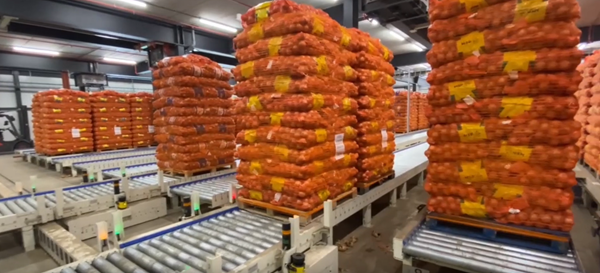
<h2>When Every Square Foot Counts</h2><p>Maximizing end-of-line efficiency often hinges on a single, critical factor: your palletizer floor plan. But how much space do you really need?</p><p>It's a question that trips up more engineering teams than you might expect. You've identified the throughput requirements. You've selected a palletizer that meets your speed and product handling needs. You've even gotten capital approval. Then reality hits: the machine that looked perfect on the spec sheet doesn't actually fit in your facility—at least not when you account for everything else that needs to go around it.</p><p>The palletizer itself is just the beginning. Infeed conveyors, pallet dispensers, stretch wrappers, safety fencing, maintenance access, forklift traffic patterns—all of these require floor space that's easy to underestimate during the planning phase. And the consequences of getting it wrong are expensive: production bottlenecks, safety hazards, costly redesigns, and systems that never achieve their rated throughput because everything is too cramped.</p><p>A well-planned palletizer layout is more than just fitting a machine into available space. It's the cornerstone of unlocking optimal efficiency, optimizing forklift traffic, ensuring operator safety, and future-proofing your packaging operations. Get this right, and your end-of-line becomes a competitive advantage. Get it wrong, and you'll be living with the consequences for years.</p><p>At BW Packaging, we've helped manufacturers across food, pet food, agriculture, and industrial sectors design palletizing systems that maximize performance within real-world space constraints. This guide shares what we've learned about getting floor plans right the first time.</p><h3>Who We Are</h3><p>BW Packaging helps manufacturers across agriculture, pet food, industrial, and bulk ingredients sectors transform their end-of-line operations through flexible bag filling, sealing, and palletizing solutions. Our automated <a href="/products/flexible-bagging-wrapping/bag-filling">Thiele bagging</a>, <a href="/products/palletizing/bag-palletizers">SYMACH conventional palletizing</a>, and <a href="https://www.bwintegratedsystems.com/products/palletizing" data-sf-ec-immutable=""></a><a href="/products/palletizing/case-tray-bulk-package-palletizers">robotic palletizing </a>solutions are known for their efficiency, versatility, precision, and ease of operation. We offer our clients training, service, and a lifetime of support for every solution sold.</p><h2>Why Your Palletizer Floor Plan is More Than Just a Footprint</h2><p>Floor space costs money—whether you're paying rent, maintaining climate control, or simply accounting for opportunity cost of what else could occupy that area. But cramming equipment into the minimum possible footprint creates problems that cost far more than the space you saved.</p><h3>Impact on Workflow and Throughput</h3><p>A palletizer's rated speed means nothing if upstream and downstream constraints prevent it from operating at capacity. Poor layouts create bottlenecks that ripple through your entire production line.</p><p>Without adequate accumulation space on the infeed, your palletizer starves whenever the filling line hiccups. Products back up, sensors trigger stops, and your theoretical 25 bags per minute becomes 18 in actual operation. Without proper buffering at the end of the line, completed pallets stack up waiting for forklifts, and the whole system grinds to a halt while operators scramble to clear the jam.</p><p>The most sophisticated palletizer in the world can't overcome a layout that doesn't allow products and materials to flow smoothly through the system.</p><h3>Safety First</h3><p>Layout decisions directly impact operator safety—and the regulatory compliance that goes with it. Cramped spaces create hazards: operators reaching into pinch points, forklifts navigating tight corners with limited visibility, maintenance technicians working in awkward positions because there's no room to access equipment properly.</p><p>OSHA takes a dim view of layouts that force workers into dangerous situations. Beyond regulatory concerns, manual palletizing is a leading cause of musculoskeletal injuries, costing businesses billions of dollars annually in direct costs. Automated palletizing reduces these injuries—but only if the layout provides adequate safety zoning and keeps operators out of harm's way.</p><h3>The High Cost of Poor Planning</h3><p>Layout problems are most costly when they surface after installation—especially in existing (brownfield) facilities. Failing to account for walls, utilities, access constraints, and legacy infrastructure often leads to reduced throughput, compromised safety, or expensive rework. Experienced layout planning anticipates these realities upfront, avoiding retrofits and ensuring the system performs as intended from day one.<br></p><h4>The Core Components of a Complete Palletizing Cell</h4><p>Palletizers come in two fundamental configurations, each with different space implications.</p><p><a data-sf-ec-immutable=""><strong></strong></a><strong><a href="/products/palletizing/bag-palletizers">Conventional (high-level) palletizers</a></strong> use mechanical layer-forming and placement mechanisms. They tend to have larger footprints but can achieve very high speeds. The <a href="/products/palletizing/bag-palletizers/mach-series-palletizers">MACH series</a> exemplifies this approach—combining robust construction, a compact footprint relative to many robotic alternatives, and speeds of up to 50 bags per minute—with options like the Multi‑gripper to handle bags, boxes, and crates on a single machine.</p><p><strong><a href="/products/palletizing/case-tray-bulk-package-palletizers">Robotic palletizers </a></strong>use articulated arms with end-of-arm tooling. They offer flexibility in handling multiple product types and pallet patterns but require safety cells that add to the overall footprint.<strong> </strong></p><h4>Infeed and Outfeed Conveying Systems</h4><p>Products don't teleport from your filling line to the palletizer. Conveyor systems bridge that gap—and they need space.</p><p><strong>Infeed conveyors</strong> must provide accumulation capacity to buffer variations in upstream production. If your filler runs in batches or experiences periodic slowdowns, the infeed accumulation zone absorbs those fluctuations without stopping the palletizer. Plan for at least 30-60 seconds of accumulation at your target throughput rate.</p><p><strong>Outfeed conveyors</strong> move completed pallets to stretch wrapping, labeling, or pickup points. The length depends on how quickly forklifts can remove finished pallets and whether you're integrating additional end-of-line processes.</p><p>Integration with upstream equipment matters too.<a href="https://bw1.sharepoint.com/products/flexible-filling-closing/bag-filling" data-sf-ec-immutable=""> </a><a href="/products/flexible-bagging-wrapping/bag-filling">Thiele & Symach bag filling systems </a>are designed to work seamlessly with our palletizers, but that integration requires proper conveyor design to maintain product orientation and spacing.</p><h4>Pallet Handling Equipment</h4><p>Empty pallets need to get into the system, and the mechanism for doing so requires dedicated space.</p><p><strong>Pallet dispensers</strong> hold stacks of empty pallets (typically 10-15 high) and feed them into the palletizing position automatically. They eliminate the need for operators to manually place pallets but add to the cell footprint.</p><p><strong>Pallet transport systems</strong> move pallets through the cell—from dispenser to stacking position to outfeed. Options include roller conveyors, chain conveyors, and turntables for changing pallet orientation. Each has different space requirements and traffic flow implications.</p><p><strong>Empty pallet staging</strong> requires space for forklift access to replenish the dispenser. If you're running multiple shifts without stopping, you need enough pallet capacity to avoid frequent replenishment interruptions.</p><h4>End-of-Line Integration</h4><p>Most palletizing systems don't end at the palletizer. Stretch wrapping, labeling, and other processes typically follow.</p><p><strong>Automatic stretch wrappers</strong> secure loads for shipping. Turntable wrappers rotate the pallet while applying film; rotary arm wrappers keep the pallet stationary while the arm orbits around it. Rotary arm systems often work better in tight spaces but have their own clearance requirements.</p><p><strong>Labeling systems</strong> apply shipping labels, barcodes, or RFID tags. While compact, they need integration into the material flow and access for label replenishment.</p><h4>Safety Systems</h4><p>Automated palletizing creates hazards that require proper safety protocol. The safety system often consumes as much floor space as the palletizer itself.</p><p><strong>Physical guarding</strong> (fencing, barriers) creates a perimeter around the automated cell. Standard industrial fencing requires posts every 6-8 feet with adequate clearance from moving equipment inside.</p><p><strong>Light curtains and safety scanners</strong> can reduce physical guarding requirements in some configurations, but they have their own installation requirements and monitored zones.</p><p><strong>Emergency stops</strong> need to be accessible from multiple positions around the cell—which means those positions need to exist in your layout.</p><p><strong>Access gates</strong> with interlocks allow entry for maintenance while ensuring the system stops when someone enters the guarded area. Gate locations influence traffic flow and maintenance accessibility.</p><h2>Four Critical Factors That Determine Your Space Requirements</h2><p>Every palletizing application is different. These four factors drive the specific space requirements for your system.</p><p>Throughput Needs</p><p>Higher throughput generally requires more space—not just for a larger or faster palletizer, but for the supporting systems that keep products flowing.</p><p>At 15 bags per minute, many palletizing setups can run with minimal accumulation and a single pallet position. As rates climb toward 40 bags per minute, continuous operation typically requires more buffer/accumulation and often dual or multiple pallet stations to keep the line running during pallet changeovers. SYMACH changes that equation: the <a href="/products/palletizing/bag-palletizers/mach-series-palletizers">ROTAX palletizing head</a> is designed for capacity, reducing movements and delivering positioning speeds up to 50 BPM so you can often maintain high‑speed bagging performance with less reliance on accumulation, making SYMACH the go‑to choice when throughput and uptime are non‑negotiable.</p><p>The relationship isn't linear. Doubling throughput might require tripling floor space once you account for all the supporting equipment.</p><h3>Product and Pallet Specifications</h3><p>The physical characteristics of what you're palletizing directly impact space requirements.</p><p><strong>Product dimensions</strong> determine how much accumulation space you need per unit of time. Large bags take more conveyor length than small cases at the same throughput rate.</p><p><strong>Product weight</strong> affects conveyor specifications and structural requirements. Heavy products need more robust (and often larger) equipment.</p><p><strong>Pallet dimensions</strong> set the baseline for the stacking area. Standard GMA pallets (48" x 40") are common, but if you're also handling Euro pallets (800mm x 1200mm) or other sizes, your system needs to accommodate the largest option.</p><p><strong>Stack height</strong> determines vertical clearance requirements. A 2650mm stack height (common for SYMACH systems) needs adequate overhead clearance plus room for the palletizer mechanisms above the stack.</p><h3>Number of Production Lines Served</h3><p>A palletizer that receives product from a single filling line has straightforward infeed requirements. A palletizer serving multiple lines requires merge conveying, traffic management, and potentially product identification systems—all of which consume floor space.</p><p>Each additional line feeding the palletizer adds complexity. Plan for the routing, merging, and buffering required to handle products from all sources without creating conflicts. Robotic palletizers often provide the most efficient use of floor space when flexibility, multi‑line feeding, or SKU variety is required.</p><h3>Level of Automation and Flexibility</h3><p>More automation typically means more equipment—and more space. But it also means less manual intervention, fewer operators, and more consistent operation.</p><p><strong>Automatic changeovers</strong> eliminate manual adjustments when switching products but require space for the mechanisms that enable them.</p><p><strong>Multiple pallet positions</strong> allow continuous operation (building one pallet while removing another) but double the space requirement in the stacking area.</p><p><strong>Integrated controls and sensors</strong> for automatic operation need cabinet space and wire routing that manual systems don't require.</p><p>The flexibility to handle multiple products, pallet patterns, and packaging formats adds value—but it also adds equipment. Plan accordingly.</p><h2>Partner with BW Packaging for an Optimized End-of-Line Solution</h2><p>Navigating the complexities of palletizer floor planning requires expertise that most facilities don't have in-house. The interactions between throughput requirements, product characteristics, safety systems, and physical constraints create a multidimensional puzzle that benefits from experienced guidance.</p><p>BW Packaging brings specific capabilities to this challenge:</p><p><strong>Technical expertise across diverse applications.</strong> We've designed palletizing systems for pet food, agricultural products, industrial chemicals, and food processing—each with unique requirements. That breadth of experience informs solutions that address your specific challenges.</p><p><strong>Integrated solutions from filling to palletizing.</strong> Our Thiele bag filling systems and SYMACH palletizers are designed to work together. That integration simplifies layout planning because we understand how the complete system functions, not just individual machines.</p><p><strong>Focus on total cost of ownership.</strong> The cheapest palletizer isn't the best value if layout compromises force you to accept reduced throughput or increased maintenance costs. We design for long-term performance, not just initial price.</p><p><strong>Lifetime support for sustained performance.</strong><a href="https://www.bwflexiblesystems.com/customer-services" data-sf-ec-immutable=""> Our service teams</a> support your system throughout its operational life. That ongoing relationship means we're invested in designs that work well over time, not just on day one.</p><p>Ready to design a palletizing system that maximizes your floor space and boosts end-of-line efficiency? <a href="/contact">Contact our integrated end-of-line automation experts</a> at BW Packaging today for a personalized layout consultation.</p><div align="center"></div><h2>Frequently Asked Questions</h2><p><strong>How much floor space does an automatic palletizer actually need?</strong></p><p>Space requirements vary significantly based on palletizer type, throughput, and required peripherals. A typical palletizing cell—including the machine, safety guarding, conveyors, and buffer zones—might range from 15' x 15' to 25' x 25' or more. High-speed applications or those with extensive pallet handling requirements need additional space. The most accurate answer comes from a detailed assessment of your specific application.</p><p><strong>What components must be included in a palletizer system floor plan besides the machine itself?</strong></p><p>Essential components include infeed and outfeed conveyors (with appropriate accumulation zones), pallet dispensers, pallet transport conveyors or turntables, stretch wrappers, safety guarding (fencing, light curtains, or scanners), maintenance access clearances, and staging areas for empty and full pallets. Depending on your application, you may also need labeling systems, inspection stations, or product conditioning equipment.</p><p><strong>How do you design a palletizer layout for maximum safety and efficiency?</strong></p><p>Start by mapping product flow from upstream processes through palletizing to shipping. Then map personnel flow for operators, maintenance technicians, and forklift drivers. Ensure these flows don't conflict. Define clear safety zones with appropriate guarding that doesn't impede necessary access. Position operator interfaces where they're accessible without entering hazardous areas. Design maintenance access that allows service without excessive disassembly. Finally, validate the layout against throughput requirements to ensure the system can actually achieve target performance.</p><p><strong>Can a palletizing system be integrated into an existing line with limited space?</strong></p><p>Yes, especially with compact solutions designed for space-constrained applications. The SYMACH 3500S palletizer, for example, combines high throughput with a compact footprint specifically suited to challenging installations. Careful planning of infeed/outfeed routing, creative use of vertical space, and selection of appropriately sized components can enable palletizing automation in facilities that seem too small for traditional systems. An experienced integration partner can identify opportunities that might not be obvious from catalog specifications alone.</p>
 The Hidden Costs of a Bad Pallet
May 4, 2026
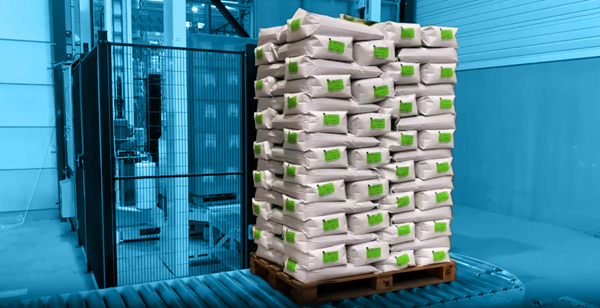
<h2><strong>The Perfect Pallet: Built for the Automated Warehouse</strong></h2><p>What's changed isn't your product, it's the environment your pallets are entering.</p><p>More and more customers are moving toward highly automated warehouses equipped with AS/RS systems, robotic pallet handling, automated depalletizing, and zero tolerance for instability or variation. In these environments, there is no forklift operator compensating for a soft corner or a slightly uneven layer. Every movement is programmed. Every handoff is precise. The system assumes one thing: every pallet is perfect.</p><p>If a load shifts, overhangs, or deviates even slightly from specification, the automation doesn't adapt, it stops. What might pass in a manual operation becomes a rejection in an automated one: delayed shipments, rework, and added cost.</p><p>As automated warehousing becomes the standard, pallet quality is emerging as a critical success factor. Variability that once went unnoticed now directly impacts throughput, warehouse acceptance, and customer satisfaction. Pallet pattern optimization is no longer optional, it's the foundation for building stable, dimensionally consistent, automation-ready loads that move seamlessly through today's most demanding distribution environments.</p><h2>Who We Are</h2><p>BW Packaging helps manufacturers across agriculture, pet food, industrial, and bulk ingredients sectors transform their end-of-line operations through flexible bag filling, sealing, and palletizing solutions. Our automated <a href="/products/palletizing/bag-palletizers">SYMACH conventional palletizing</a>, and <a href="/products/palletizing/case-tray-bulk-package-palletizers">robotic palletizing</a> solutions are known for their efficiency, versatility, precision, and ease of operation. We offer our clients training, service, and a lifetime of support for every solution sold.</p><h2>What is Pallet Overhang (And Why Is It Costing You Money)?</h2><p>Pallet overhang occurs when products extend beyond the edge of the pallet footprint. You might see bags or cases hanging over by just an inch or two and think it's not a big deal. But that small overhang creates a cascade of expensive problems.</p><p>Products extending beyond the pallet edge are highly susceptible to compression damage. When pallets are stacked in a warehouse or truck, the weight doesn't rest on the pallet deck, it rests on your product. That overhang gets crushed, compressed, and damaged before it ever reaches your customer. During transit, those exposed edges are vulnerable to punctures and impacts from other pallets, warehouse equipment, and handling.</p><p>The flip side - underhang - creates its own problems. When products are placed too far inside the pallet edge, you're wasting valuable space and creating instability. The load becomes unbalanced and is more likely to shift during transport.</p><p>Here's where it gets expensive. Many distribution centers now use automated storage and retrieval systems (AS/RS) that require precise pallet dimensions. A load with overhang won't fit properly and will be automatically rejected. Your shipment goes back, your customer waits, and you absorb the cost of rework.</p><p>Industry research shows that up to 11% of products arriving at distribution centers have some level of damage, according to <a href="https://www.packagingdigest.com/trends-issues/mitigating-packaging-damage-in-the-supply-chain" data-sf-ec-immutable="">Packaging Digest,</a> with a significant portion attributed to poor palletizing and transit-related issues. In the CPG and grocery sectors alone, damaged goods result in an estimated $1 billion to $2 billion in annual losses in the U.S. That's money coming directly out of manufacturers' margins, and much of it is preventable.</p><h2>The Pillars of an Optimized Pallet Pattern</h2><p>Getting palletization right requires balancing three interconnected factors: stability, density, and integrity. Each one impacts the others, and all three affect your costs.</p><h3>Stability: The Foundation of Safe Shipping</h3><p>The way you arrange products on a pallet determines whether that load arrives intact or becomes a mess in the back of a truck. There are two primary stacking approaches and understanding when to use each is critical.</p><p>Columnar stacking places products directly on top of each other in vertical columns. This approach offers excellent compression strength because the weight transfers straight down through aligned units. However, it provides poor lateral stability, meaning loads can topple sideways if they shift during transit.</p><p>Interlocking patterns rotate product orientation between layers, so units overlap, creating a unified block that resists lateral movement. This approach sacrifices some compression strength but dramatically improves stability during handling and transport.</p><p>For most applications, interlocking patterns deliver superior results. Our experience with agricultural products, pet food, and industrial materials has taught us that this stacking method guarantees the best stability for challenging products like filled bags that can shift and settle.</p><h3>Density: Maximizing Every Shipment</h3><p>Cube utilization—how efficiently you fill available space—directly impacts your shipping costs. Every inch of wasted space on a pallet translates to more pallets shipped, more trucks on the road, and higher freight expenses.</p><p>Optimizing pallet density means calculating the ideal arrangement to achieve the highest product count per pallet while respecting weight limits and stability requirements. When done correctly, companies can improve truckload space utilization by 5-10%, directly reducing fuel consumption and freight costs. For a facility shipping thousands of pallets annually, those percentage points translate into substantial savings.</p><h3>Integrity: Protecting Products from Bottom to Top</h3><p>A proper pallet pattern maintains the structural integrity of every unit in the stack. Products at the bottom bear the weight of everything above them, and a poorly designed pattern can crush lower layers while leaving space wasted at the top.</p><p>Pattern optimization considers product characteristics—bag stiffness, settling behavior, surface friction—to distribute weight appropriately and prevent damage at every level. This is especially critical for products like pet food or agricultural commodities where bag contents can shift during handling.</p><h2>From Manual Chaos to Automated Consistency: Solving the Optimization Puzzle</h2><p>If you're still relying on manual pallet stacking, you're fighting an uphill battle. Human error introduces inconsistency into every load—varying techniques between operators, fatigue-related mistakes during long shifts, and the simple reality that people can't maintain machine-level precision over thousands of repetitions.</p><p>Traditional slide valve systems or conventional grippers can stack inaccurately and damage packaging. You might achieve a good pattern on one pallet and find the next one off by inches. That inconsistency creates quality issues, rework, and customer complaints that are impossible to eliminate through training alone.</p><p>Automated palletizing solves this problem at its root. Modern systems execute patterns with precision every single time, eliminating the variability that causes problems downstream. For operations requiring maximum pallet pattern flexibility, robotic palletizers provide virtually unlimited pattern combinations and rapid changeovers—particularly for case‑packed products.</p><h2>What Makes SYMACH Palletizers Different</h2><p>Not all automated palletizers are created equal. SYMACH solutions incorporate unique features specifically designed to address the challenges of pallet pattern optimization.</p><p><strong>Product-Friendly Handling with the Manipulator: </strong>A unique and important feature of SYMACH palletizers is the manipulator, which handles each bag individually. Unlike systems that drop or slide products into position, bags glide horizontally into the manipulator over a smooth surface. Once inside, bags are stopped by a fixed final partition and carefully centered. The position is secured before the bag is released exactly over the programmed position. This method enables precise stacking with overlaps while protecting product and packaging integrity.</p><p><strong>The Stacking Cage: Eliminating Overhang at the Source: </strong>The optional stacking cage is a SYMACH innovation that prevents overlapping stacked bags from gliding on one another and causing the load to extend beyond the pallet. By completely enclosing bags when stacking them onto the pallet, bag gliding is prevented. The load maintains the desired measurements and has a tight, professional appearance that meets AS/RS requirements and impresses customers.</p><p><strong>Intuitive Software for Fast Changeovers: </strong>SYMACH palletizers feature user-friendly software with intuitive drag-and-drop operation. Operators can create and switch patterns for different SKUs quickly—critical for facilities managing multiple products. The system stores up to 250 programs and 350 sack configurations, enabling rapid changeovers without reprogramming.</p><p><strong>Flexibility Across Product Types: </strong>The Symach philosophy is that any palletizer should be capable of producing the same level of stacking quality, regardless of speed. Unlike other palletizer systems, SYMACH will stack any bag, regardless of type. Whether you're handling pet food, onions, carrots, potatoes, grass seed, cartons, or bakery products, the system adapts without compromising quality.</p><p>For high-speed applications, the <a href="/products/palletizing/bag-palletizers/mach-series-palletizers">MACH series with Rotax technology</a> achieves speeds of up to 50 bags per minute without compromising stacking quality. The Rotax technology enables bags to be positioned quickly and accurately, resulting in stable pallets without overhang.</p><p>For facilities with space constraints or those primarily handling boxes and crates, the <a href="/products/palletizing/bag-palletizers/symach-3500s-palletizer">3500S palletizer</a> combines a compact footprint with the stacking cage technology to ensure tight, stable stacks even at higher speeds.</p><h2>The ROI of Getting It Right: Quantifying the Benefits</h2><p>When you move from manual or inconsistent palletizing to an optimized, automated approach, the benefits compound across your operation:</p><p><strong>Reduced Product Damage: </strong>Fewer unsaleable goods, improved customer satisfaction, and reduced returns. Every bag that arrives intact is revenue protected.</p><p><strong>Lower Shipping Costs: </strong>Maximize truckload capacity through optimized cube utilization, leading to fewer shipments and reduced freight expenses.</p><p><strong>Improved Warehouse Safety: </strong>Eliminate unstable loads and the risk of collapses. Protect your workers and avoid costly incidents.</p><p><strong>Enhanced Sustainability: </strong>Reduce product waste from damage and decrease your carbon footprint through optimized transportation. Fewer trucks, less fuel, smaller environmental impact.</p><p><strong>Increased Throughput: </strong>Automate what's often a manual bottleneck at the end of the line. Companies that implement automated palletizing can see a 10-15% reduction in packaging material costs due to more stable, uniform loads, and can increase end-of-line throughput by over 25%.</p><p><strong>Material Savings: </strong>Stable, uniform loads require less stretch wrap to secure. Those material savings add up across thousands of pallets.</p><h2>Build a Better Pallet, Build a Better Bottom Line</h2><p>A well-built, optimized pallet is more than just the last step in your production process, it's a competitive advantage that impacts profitability with every shipment. The pallet that arrives at your customer's dock is often the first physical impression they have of your operation. A tight, stable, professional-looking load communicates quality. A shifted, damaged mess communicates the opposite.</p><p>Moving from manual methods to an automated, optimized approach isn't just about preventing problems. It's about transforming the end of your line from a potential liability into a calling card you can be proud of.</p><p>The technology exists today to solve pallet pattern challenges at their root—with precision, consistency, and features like the stacking cage and product-friendly manipulator that address the specific problems manufacturers face. The question isn't whether you can afford to upgrade your palletizing operation. It's whether you can afford not to.</p><p>Ready to see how an optimized pallet pattern can transform your end-of-line efficiency and reduce costs? <a href="/contact">Contact BW Packaging </a>to learn more about our integrated palletizing solutions and how they can benefit your operation.</p>
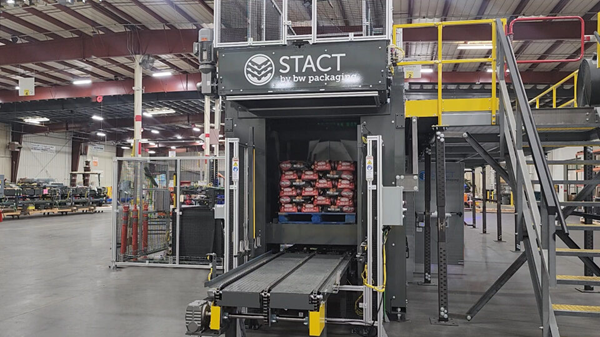 Palletizing: How to Recognize the Right Opportunity — and Ask the Right Questions
April 26, 2026
<p>Most palletizing conversations don't start with palletizing.</p><p><a data-sf-ec-immutable=""></a>They start with a problem. A safety incident on the end-of-line that triggers a corrective action. A <a data-sf-ec-immutable="" target="_blank" href="https://www.uschamber.com/workforce/understanding-americas-labor-shortage">labor shortage</a> that's finally forced the issue everyone has been deferring for two years. A complaint about a damaged product arriving at a distribution center. A new line is being planned for a plant expansion that doesn't have room for a manual palletizing crew.</p><p>These aren't isolated events. They're signals, and they almost always point to the same place: the end-of-line has become a constraint, and palletizing is where that constraint is doing the most damage.</p><p>If you recognize any of these situations in your own facility, you're not looking palletizing problem. You're looking at a palletizing opportunity.</p><p>One of the most common misconceptions plant managers carry into a palletizing conversation is that it only applies to a specific type of product or operation. A bag line. A case packer. A beverage facility.</p><p>In reality, it doesn't matter whether your product arrives at the end-of-line in a bag, box, carton, can, crate, or bottle, there is always a viable solution. What changes is the application: how the product needs to be handled, how the pallet needs to be built, and what level of automation is right for your throughput and operating environment.</p><p>That's why the best palletizing projects don't start with a technology discussion. They start with an application discussion—one grounded in the specifics of what you're running, what you're trying to solve, and what your facility can realistically support.</p><p>Across every market BW Packaging serves, from agricultural bags of carrots and potatoes to industrial sacks of cement and fertilizer, from retail cases of food products to bulk bags of coffee, salt, and sugar, the same principle applies: if pallets are leaving your facility, palletizing is worth evaluating.</p><h3><strong>The Signals That Tell You It's Time</strong><strong></strong></h3><p>Palletizing typically surfaces as an opportunity when one or more of the following situations exists in your operation. These aren't hypotheticals, they're the conversations we have with plant managers every day.</p><table style="margin-right: auto" cellspacing="5"><tbody><tr><td style="width: 50%; padding-left: 5px; padding-right: 5px"><p><strong>Product Damage in Transit:</strong> Bags, cases, or cartons arriving at customer docks damaged, collapsed, or out of pattern are often a direct result of inconsistent manual pallet building. When people build pallets by hand under production pressure, consistency suffers, and so do your customer relationships.</p><p><strong>End-of-Line Congestion:</strong> When your upstream equipment is running well but product is backing up at the end-of-line, palletizing is usually the bottleneck. Automated palletizing solves this by maintaining a consistent, uninterrupted output rate that keeps pace with your line.</p><p><strong>Labor Shortages and Safety Concerns:</strong> Manual palletizing is one of the most physically demanding jobs in a packaging facility, and one of the hardest to staff reliably. Repetitive heavy lifting creates ergonomic risk, drives injury claims, and makes it increasingly difficult to maintain consistent end-of-line performance. Automation removes the physical burden and the staffing vulnerability at the same time.</p><p><strong>Capacity Expansion or New Line Investment:</strong> When you're adding a line or expanding a facility, building manual palletizing into the plan is building a future constraint into your investment. Automated palletizing designed into a new line from the start is almost always more cost-effective, and more capable than retrofitting it later.<br></p></td><td style="width: 50%; padding-left: 5px; padding-right: 5px"><img src="https://www.bwpackaging.com/images/default-source/blog/palletizing-blog-graphic-5-signals-it's-time-to-revisit-palletizing.png?sfvrsn=96792658_1" sf-image-responsive="true" sf-size="221266" data-sf-ec-immutable="" width="2250" height="2814" alt="5 Signals it's time to revisit palletizing" title="Palletizing Blog Graphic 5 Signals it's time to revisit palletizing" style="max-width: 100%; height: auto"><p><br></p></td></tr></tbody></table><p><strong>Moves Toward Automated Warehousing or AGVs:</strong> If your distribution network is evolving toward automated storage and retrieval or automated guided vehicles, pallet quality and consistency aren't optional. Automated palletizing ensures every pallet meets the dimensional and stability requirements those systems demand.</p><p>If any of these descriptions fits a situation in your facility, the question isn't whether palletizing is worth exploring. The question is where to start.</p><h3><strong>The Questions That Define a Palletizing Project</strong></h3><p>Before any solution is discussed, before equipment types, automation levels, or footprints enter the conversation, there are a small number of fundamentals that determine what a palletizing application actually requires. These questions are deliberately straightforward. They surface what matters.</p><img style="max-width: 100%; height: auto" width="500" title="Palletizing Blog Graphic 4 questions that define a palletizing opportunity" height="261" src="/images/default-source/blog/palletizing-blog-graphic-4-questions-that-define-a-palletizing-opportunity.png?sfvrsn=deaefef6_1" sf-image-responsive="true" sf-size="275186" alt="4 questions that define a palletizing opportunity"><p><br></p><p><strong>What Is Being Palletized?</strong><strong></strong></p><p>Packaging format is the foundation of every palletizing application. A bag of cat litter handles differently than a case of canned goods. A carton of frozen food stacks differently than a crate of produce. A bottle palletizes differently than a barrel. Understanding the format, and the product characteristics that affect handling, stability, and orientation is step one in every application qualification.</p><p><strong>What Performance Is Required?</strong></p><p>Line speed determines the throughput demands the palletizer must meet. More importantly, it reveals whether palletizing has already become the constraint limiting your overall line output. If your upstream equipment is capable of running faster than your end-of-line can keep up, the throughput gap is costing you production you've already paid for in upstream equipment capacity.</p><p><strong>How Does the Pallet Need to Be Built?</strong></p><p>Pallet size, stacking pattern, and build height aren't aesthetic preferences, they're engineering requirements. They determine the mechanical and control complexity of the palletizing solution, the pallet stability needed to survive your supply chain, and the consistency expectations your customers or distribution centers have placed on incoming loads.</p><p><strong>What Problem Is Actually Being Solved?</strong><strong></strong></p><p>This is the most important question in a palletizing discussion, and the one most often skipped in favor of jumping straight to equipment specifications. Palletizing projects that succeed are anchored in a clear understanding of why the customer is changing, not just what they're buying.</p><p>Labor reduction, safety improvement, pallet quality, capacity growth, and distribution network integration are all legitimate drivers, but they point toward different solution priorities. Understanding the primary driver shapes everything from the automation level to the support model to the metrics that will define project success.</p><h3><strong>The Factors That Shape Complexity</strong></h3><p>Two operations with identical line speeds can require entirely different palletizing approaches. Understanding what creates that difference early in the conversation prevents over-engineering, under-engineering, and expensive surprises later.</p><p><strong>Variability and SKU Complexity</strong></p><p>The number of SKUs running through a line, the frequency of changeovers, and the need to build multiple pallet configurations simultaneously all effect palletizing complexity in ways that throughput alone doesn't reveal. An operation running one product into one pallet pattern has fundamentally different requirements than one running twenty SKUs across multiple pallet configurations throughout a shift. Identifying variability early is what separates a well-matched solution from one that creates new problems while solving old ones.</p><p><strong>Space and Environment</strong></p><p>Many palletizing projects become expensive late because physical constraints are discovered after a solution has already been specified. Available floor space, ceiling height, access for maintenance, and the presence of environmental challenges, dust, washdown requirements, extreme temperatures, corrosive materials, all directly influence layout, equipment selection, and long-term reliability.</p><p>In agricultural and industrial environments, dust and moisture exposure are daily realities that equipment must be built to handle. In food applications, cleanability and hygienic design are non-negotiable. In bulk ingredients facilities, ceiling height and pallet staging space often determine what palletizing configurations are even feasible.</p><p>These are not secondary details to sort out after a solution is selected. They are qualification criteria that belong at the beginning of the conversation.</p><h3><strong>When a Discussion Becomes a Project</strong></h3><p>A palletizing inquiry moves from exploratory to active when the operational pressure behind it reaches a tipping point. That typically happens when one or more of the following is true:</p><p>Manual palletizing can no longer support the throughput your upstream equipment is capable of producing. A new line or plant expansion is being planned and palletizing needs to be included from the start. Labor availability or ergonomic safety requirements have made manual end-of-line operations unsustainable. End-of-line performance is limiting the output of an otherwise well-running production operation.</p><p>At that point, a structured qualification process is what separates projects that move forward cleanly from those that stall on redesigns, budget revisions, and misaligned expectations.</p><h3><strong>A Practical Way to Move Forward</strong></h3><p>The fastest path to clarity on a palletizing project isn't a full RFQ or a lengthy specification document. It's a focused qualification conversation that captures the essentials: what's being palletized, what performance is required, how the pallet needs to be built, what space and environment constraints exist, and what's driving the project.</p><p>With those inputs, our palletizing specialists can assess feasible approaches, evaluate layout implications, and determine how and whether the opportunity should move forward without wasting your time or ours on solutions that aren't the right fit.</p><p>The rule of thumb is simple: if pallets are involved in your operation, palletizing is worth a conversation. The value isn't in pushing automation for its own sake. It's in identifying the right application, at the right time, with the right level of complexity, and making sure the solution you invest in actually solves the problem you're facing.</p><h3><strong>How BW Packaging Approaches Palletizing</strong></h3><p>At BW Packaging, our Symach, Goldco, and Stact palletizing solutions serve operations across every market we support agricultural, food, industrial, bulk ingredients, and animal nutrition. Bags, cases, cartons, cans, crates, if it ends up on a pallet, we've palletized it.</p><p>What makes our approach different isn't just the equipment. It's the application knowledge that comes from decades of experience across industries, products, and operating environments. We don't lead with automation levels or equipment catalogs. We lead with questions, the right questions to make sure what we recommend is what you need.</p><p>Our palletizing specialists work with you through qualification, layout, implementation, and beyond. Because our commitment to every solution we sell doesn't end at installation. It lasts as long as your equipment runs.</p><p>If you're seeing any of the signals: damage complaints, end-of-line congestion, labor challenges, capacity constraints, or a new line on the horizon, it's worth having the conversation.</p><p><a href="/contact">Contact our palletizing specialists </a>to discuss your application and find out what the right next step looks like for your operation.</p><div align="center"> </div><h3><strong>Who We Are</strong></h3><p>BW Packaging helps producers and packagers across agriculture, food, industrial, bulk ingredients, and animal nutrition markets transform their end-of-line operations through proven Symach palletizing solutions. Our systems handle bags, cases, cartons, cans, crates, and more. <a data-sf-ec-immutable="" href="https://www.bwflexiblesystems.com/products/symach-palletizers"></a><a href="/products/palletizing/bag-palletizers">Symach conventional palletizers</a> and<a data-sf-ec-immutable="" href="https://www.bwintegratedsystems.com/products/palletizing"> </a> <a href="/products/palletizing/case-tray-bulk-package-palletizers">robotic palletizers</a> are known for their reliability, flexibility, and ability to perform across the full range of operating environments our customers work in. We offer training, service, and a lifetime of support for every solution sold.</p>
 Open-Source HMIs for Packaging Machines
April 25, 2022
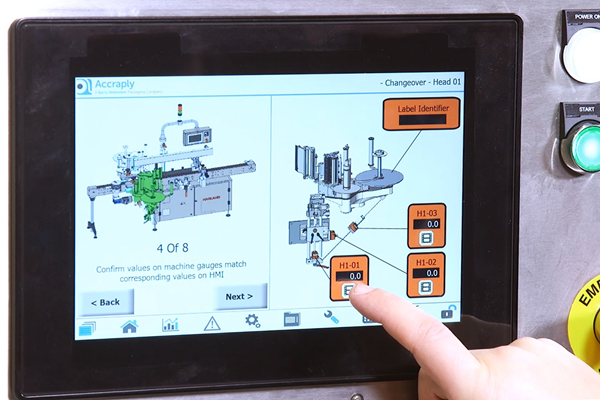
<p><strong>Joe Ambrose is the <a name="_Hlk101431123" data-sf-ec-immutable="">Digital Innovation Program Manager for BW Packaging Systems. </a>The following content contains excerpts from his interview with </strong><a href="https://www.controldesign.com/articles/2022/is-open-source-hmi-software-the-way" data-sf-ec-immutable=""><strong>Control Design</strong></a><strong>, which originally appeared on controldesign.com on February 25, 2022. </strong></p><p>Earlier this year, Control Design invited me to answer a reader's question about open-source HMI software. The reader asked, “What are the advantages and drawbacks of open-source HMI software? And what sorts of additional hardware might be necessary?” After conferring with our larger digital innovation team, we shared the following insights with Control Design’s readers.<br></p><h2>How Familiarity Impacts HMI Selection</h2><p>One of the key design elements is knowing what the end-users are comfortable with. In many cases, our organizations want a particular <span style="text-decoration: underline">HMI<sup>A human-machine interface (HMI) is the dashboard through which an operator interacts with packaging systems or equipment. Modern HMIs can offer operator training resources, provide preventative maintenance reminders, assist in troubleshooting machine malfunctions, and much more.</sup></span> based on previously installed equipment or familiarity. This can limit the available options when considering open-source development platforms as most HMIs are purpose-built and require a specific, commercially available development platform. When there is flexibility or requirements to use open-source development platforms there are 2 key advantages: Flexibility and Licensing costs. Full control and configuration of the software is possible as the source code of the development software is available. A sufficiently skilled engineer would be able to create software tailored to a much more unique end-user experience, or bespoke solutions for a customer request. Open-source software usually means no licensing costs for development software. This may be an advantage but would be dependent on the implementation. Most open-source solutions will require an IPC-centric solution, which may require additional equipment (UPS, data concentrator, hosts, screens, etc.) that would offset the savings. </p><h2>Considering HMI Total Cost of Ownership (TCO)</h2><p>For the developers and the end-user, <span style="text-decoration: underline">total cost of ownership (TCO)<sup>Total cost of ownership (TCO) refers to the long-term costs associated with owning and maintaining a packaging line or machine throughout its entire lifecycle. TCO includes costs associated with the purchasing process, plant operation, machine maintenance, and technical support.</sup></span> is always important to balance when considering open-source platforms. As with any open-source community development, there is a nice starting point to build upon new functionality and capabilities into the code for the specific application or use case. However, unless contributions are made back to the community, there is a risk of compatibility issues with updates to the open-source environment. Furthermore, forking from the community puts a larger burden on the adopter to maintain and address issues with the starting point. There is a need to consider whether an organization has the right blend of software and controls engineers to support the development and maintenance of a system, which can add up to a big expense in the long term. Getting a team trained and then appropriately staffed can take a lot of resources away from the development of the solution.<br></p><h2>PLC Integration and Other Technical Considerations</h2><p>In addition to cost, there are a few other technical considerations including <span style="text-decoration: underline">fault tolerance<sup>Fault tolerance refers to the ability of a piece of equipment (or of a system) to continue to operate even if one (or more) of its components has failed.</sup></span>, security, and additional software. Controls systems tend to have high fault tolerance with the ability to quickly replace hardware and redeploy applications where PC-based solutions are not so friendly. Most commercially available solutions come with cyber security certifications that open-source solutions cannot offer or may not maintain. This is particularly worth evaluating when handling data. Open-source software may not natively support required <span style="text-decoration: underline">PLC<sup>A programmable logic controller (PLC) is a hardened controller engineered to control manufacturing equipment and processes.</sup></span> communication protocols, necessitating additional software to translate this into a format that is supported. Generally, there is a cost associated with this software which would be a per-unit cost.</p><p><br></p>
 8 Must-have HMI Features When Comparing Automatic Labeling Machines
April 7, 2021
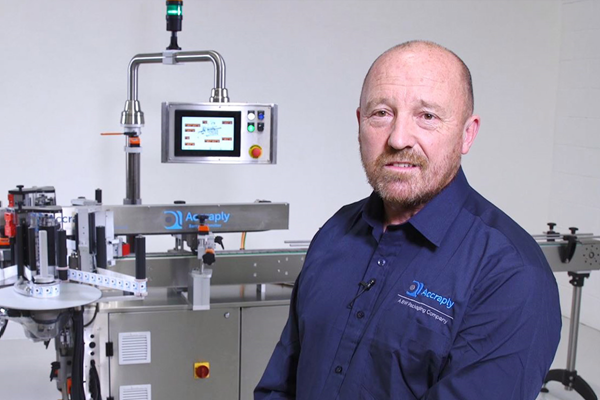
<h2>Improving OEE</h2><p>Consumer products manufacturers are always exploring ways to improve operational efficiency. Improving overall equipment effectiveness (OEE) requires procurement and engineering leaders to solve a handful of key challenges, which include improving operator training, quickly resolving unplanned downtime, and streamlining access to technical support services.</p><p>With consideration of these challenges, today’s manufacturers of automatic labeling machines have invested in developing human-machine interfaces (HMIs) that can significantly improve OEE. These HMIs can provide greater access to training resources, intuitive technical documentation, and technical support for on-the-spot troubleshooting.</p><p>In this post, I’ll explain how smart HMIs can improve operational efficiency for consumer products companies and provide a list of HMI features to consider when purchasing a new labeling machine.</p><h2>How Smart HMIs are Changing the Market</h2><p>HMI technology has improved rapidly over the past three years. Instead of the flashing warning light of years gone by, today’s HMIs can display an image of the machine, place an indicator where the exact fault is, and provide instructions for how to resolve the issue. They offer significant advances in user experience, including improved graphics, enhanced connectivity, larger screen sizes, and multi-touch functionality. They also provide greater access, not only to a machine in its current state but also to information that can be used to improve the machine’s performance throughout its lifecycle.</p><p>Advanced panel-based HMIs, such as BW Packaging's award-winning Opview™ HMI, are forecasted to achieve a high market growth rate due to the demand for mobile HMIs. The ability to connect with a machine remotely and to access all the information required to provide greater insight into labeling operations, and thereby increase the overall productivity of the plant, is more desirable than ever. COVID-19 has also reinforced the importance of remote connectivity and simplification of operations.</p><h2>Labeling HMI Checklist</h2><p>When choosing an automatic labeling machine, there are several HMI-related criteria that should be considered that can improve OEE. Below is a list of questions that can be used to evaluate labeling machine HMIs and compare options from various suppliers.</p><h3>1. Operator Training Resources</h3><p>How will this HMI improve operator training? Some HMIs include video tutorials and on-demand training guides to make setup and operations simple. They can also come with step-by-step onboarding for key functions, maintenance, and fault recovery processes, including how to maximize machine speed. They may even be available in multiple languages for today's multi-national workforce.</p><h3>2. Streamlined Troubleshooting</h3><p>Does the HMI provide links and instructional steps to help you clear faults? HMIs can walk operators through the steps to resolve the fault and reset the machine. Having this functionality as a part of the HMI means operators don’t have to consult manuals. They can address the issue on the spot, keeping downtime to a minimum.</p><h3>3. Preventive Maintenance Reminders</h3><p>Does it allow you to schedule preventive maintenance reminders? Reminders can appear as daily, weekly, and monthly tasks for your operator and maintenance team. By taking a proactive approach to machine maintenance, operators are better able to avoid unplanned downtime.</p><h3>4. User Levels</h3><p>Can you control access and accountability? To drive consistency of performance, some HMIs allow you to set different user levels, limiting access to parameters and/or range of adjustments, as you deem necessary.</p><h3>5. Offsite Connectivity</h3><p>Can the HMI connect remotely? For example, some HMIs allow operators to access machine configuration off-site and even allow them to set up audit trail information from a computer, tablet, or smartphone.</p><h3>6. Remote Support</h3><p>Does the labeling machine manufacturer provide remote support via the HMI? Having your OEM remote in the machine via the HMI can help operators resolve issues more quickly and cost-effectively.</p><h3>7. Rapid Changeovers</h3><p>Is the HMI designed to accommodate rapid changeovers? Some HMIs store recipes and provide video changeover guides to assist operators in reducing downtime between changeovers and to start up faster.</p><h3>8. Productivity Reporting</h3><p>Can the HMI show complex data, such as machine OEE, in real-time? This feature can show operators where a fault lies and offer remedies to fix that fault, which can help improve the long-term effectiveness of the machine. This feature can be accessed on-screen and in real-time via video assistance.</p><h2>BW Packaging's OpView™ HMI</h2><p>BW Packaging has designed an HMI that satisfies all of the criteria listed above. OpView™ HMI simplifies operation and training and provides greater access to an advanced analytics dashboard. In addition, because the OpView™ is now standard on BW Packaging equipment, operators transition easily from one machine to the next as they move through the guided onboarding, intuitive navigation, and clear functional parameters.</p><p>The OpView™ HMI was recognized for design excellence with its smart user interface (UI), earning two IF Design awards in the prestigious global design competition that evaluates design excellence across many industries. The award called out the Opview™ HMI for “an outstanding focus on the interlinked factors of human, task, process, and machine.” It provides one interface for all machine types, fast access to all information, and user-friendly navigation. Adding to the package the clear alarm system and easy-to-understand troubleshooting workflows, the Opview™ HMI makes a whole new level of operation easily accessible for customers.</p>